
Heat Conduction · Thermal conductivity & rate of heat flow
The coefficient of thermal conductivity of a metal rod depends on its
Show answer and solution
Answer: (c)
Loading the solution…
Home›Practice Hub›Chapters›Heat Transfer and Radiation›Heat Conduction
Heat Transfer and Radiation PYQs · MHT CET · JEE Main · NEET
Heat Conduction · Thermal conductivity & rate of heat flow
The coefficient of thermal conductivity of a metal rod depends on its
Answer: (c)
Heat Conduction · Composite rods, slabs & junction temperature
Two rods A and B are of equal lengths. Their ends are kept between the same temperatures and their area cross-sections are and , thermal conductivities are and . The rate of heat transmission in the two rods will be equal if
Answer: (b)
Heat Conduction · Composite rods, slabs & junction temperature
The ratio of thermal conductivity of two rods of different materials is . The two rods have same area of cross-section and same thermal resistance. The lengths of rods are in the ratio
Answer: (b)
Heat Conduction · Composite rods, slabs & junction temperature
The ratio of the thermal conductivity of two rods of different materials is 6:5. The two rods of same area of cross section and same thermal resistance will have the length in the ratio
Answer: (b)
Heat Conduction · Thermal conductivity & rate of heat flow
Rate of flow of heat through a cylindrical rod is ' '. The temperature at the ends of the rod are and . If all the dimensions of the rod become double and the temperature difference remains the same and if the rate of flow of heat becomes ' ' then
Answer: (c)
Heat Conduction · Composite rods, slabs & junction temperature
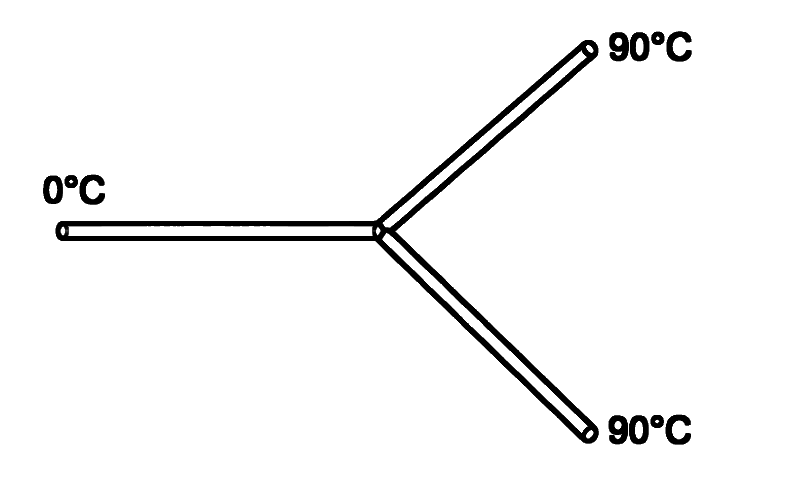
Three rods made of the same material and the same cross-sectional areas have been joined as shown in the figure. Each rod is of the same length. The temperature of the junction is
Answer: (a)
Heat Conduction · Composite rods, slabs & junction temperature
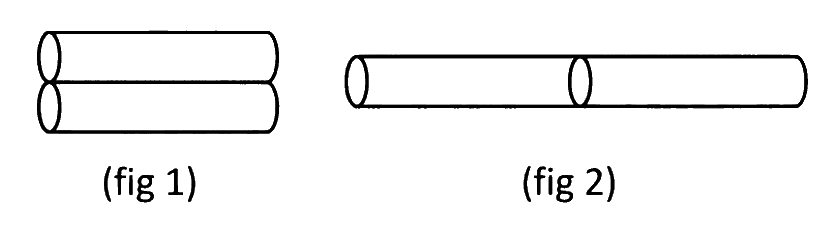
Two rods of same length, radius and material transfer a given amount of heat in 't' second when they are joined as shown in fig (1). But when they are joined as shown in fig (2) then they will transfer same heat in same condition in time
Answer: (c)
Heat Conduction · Composite rods, slabs & junction temperature
In a composite slab there are two materials having coefficients of thermal conductivity K and 2K, thickness x and 4x repectively. The temperature of the two outer surfaces of a composite slab are and is on side K and is on side 2K. The rate of heat transfer through the slab in a steady state is , where f is equal to
Answer: (d)
Heat Conduction · Composite rods, slabs & junction temperature
Consider two rods 1 and 2 of same length. They have different specific heats , thermal conductivities and area of cross-section respectively. Both the rods have temperatures at their ends. If their rate of loss of heat due to conduction is equal, then
Answer: (b)
Heat Conduction · Composite rods, slabs & junction temperature
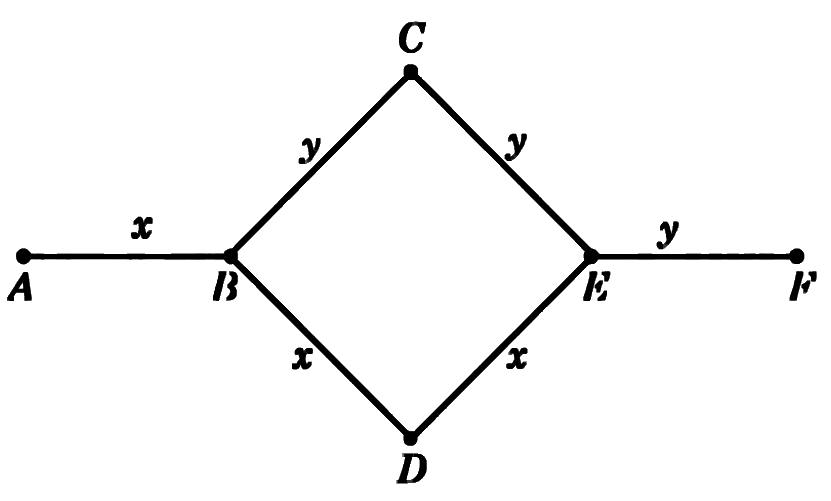
Rods and of equal dimensions but of different materials are joined as shown in figure. Temperatures of end points and are maintained at and respectively. Given the thermal conductivity of is three times of that of , the temperature at junction points and are (close to):
Answer: (c)
Heat Conduction · Composite rods, slabs & junction temperature
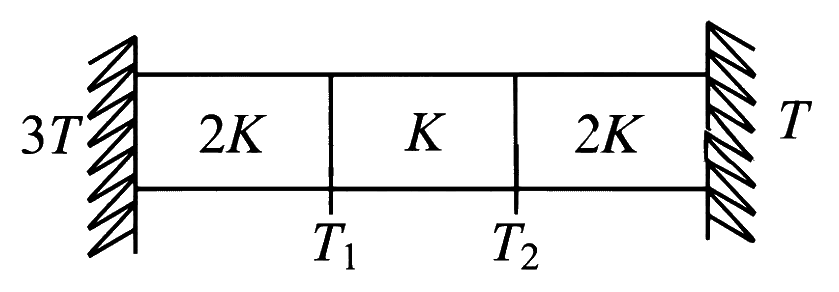
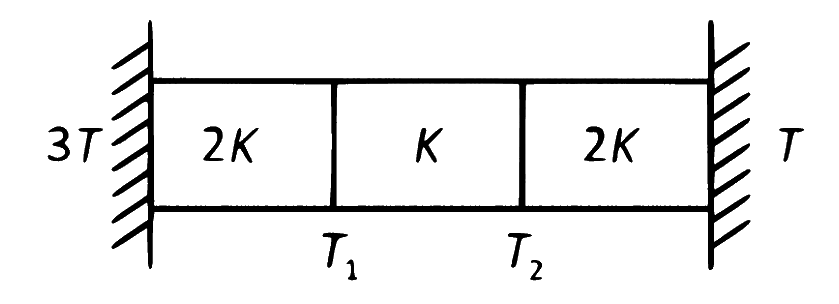
Three identical heat conducting rods are connected in series as shown in the figure. The rods on the side have thermal conductivity while that in the middle has thermal conductivity . The left end of the combination is maintained at temperature and the right end at . The rods are thermally insulated from outside. In steady state, temperature at the left junction is and that at the right junctions is . The ratio is
Answer: (c)
Heat Conduction · Thermal conductivity & rate of heat flow
The two ends of a rod of length ' ' and uniform cross-sectional area ' A ' are kept at temperatures ' ' and ' ' respectively ( ). If the rate of heat transfer is ' ', through the rod in steady state, then the coefficient of thermal conductivity ' K ' is
Answer: (b)
Heat Conduction · Thermal conductivity & rate of heat flow
The difference of temperature in a material can convert heat energy into electrical energy. To harvest the heat energy, the material should have
Answer: (a)
Heat Conduction · Composite rods, slabs & junction temperature
A composite slab consists of two materials having coefficients of thermal conductivity K and , thickness and respectively. The temperatures of two outer surfaces of a composite slab are and respectively . The rate of heat transfer through the slab in a steady state is , where is equal to
Answer: (d)
Heat Conduction · Composite rods, slabs & junction temperature
Three identical heat conducting rods are connected in series as shown in the figure. The rods on the sides have thermal conductivity while that in the middle has thermal conductivity . The left end of the combination is maintained at temperature and the right end at . The rods are thermally insulated from outside. In steady state, temperature at the left junction is and that at the right junction is . The ratio is
Answer: (a)
Heat Conduction · Composite rods, slabs & junction temperature
Two cylindrical rods A and B made of different materials, are joined in a straight line. The ratios of lengths, radii and thermal conductivities of these rods are: and . The free ends of rods A and B are maintained at 400 K, 200 K, respectively. The temperature of rods interface is ______________ , when equilibrium is established.
Numerical answer type. Work it out, then open the answer.
Answer: 360
Heat Conduction · Thermal conductivity & rate of heat flow
Three conductors of same length having thermal conductivity and are connected as shown in figure.
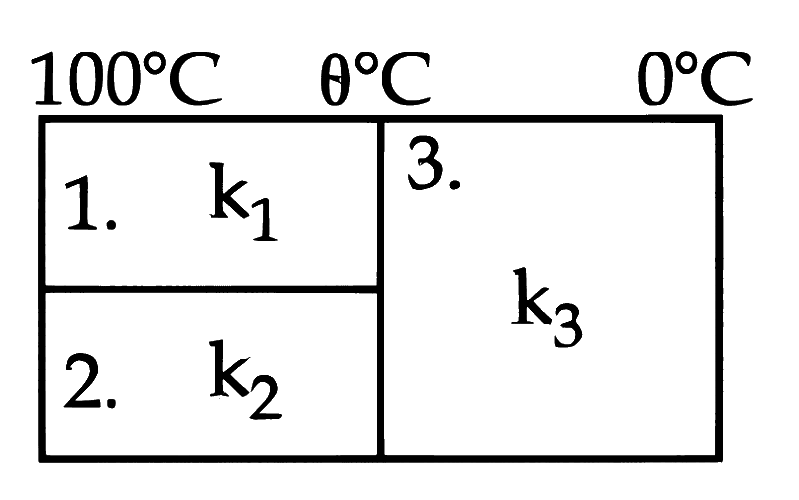
Area of cross sections of st and nd conductor are same and for rd conductor it is double of the st conductor. The temperatures are given in the figure. In steady state condition, the value of is _________ . (Given: )
Numerical answer type. Work it out, then open the answer.
Answer: 40
Heat Conduction · Thermal conductivity & rate of heat flow
Given below are two statements: One is labelled as Assertion and the other is labelled as Reason .
Assertion A: Houses made of concrete roofs overlaid with foam keep the room hotter during summer.
Reason R: The layer of foam insulation prohibits heat transfer, as it contains air pockets. In the light of the above statements, choose the correct answer from the options given below.
Answer: (b)
Heat Conduction · Thermal conductivity & rate of heat flow
A cylindrical rod is having temperatures and at its ends. The rate of heat flow is . All the linear dimensions of the rod are doubled by keeping the temperature constant. The new rate of flow of heat is
Answer: (b)
Heat Conduction · Thermal conductivity & rate of heat flow
Rate of flow of heat through a cylindrical rod is ' '. The temperature at the ends of the rod are ' ' and ' '. If all the dimensions of the rod become double and the temperature difference remains the same, the rate of flow of heat becomes ' '. Then
Answer: (b)
Heat Conduction · Composite rods, slabs & junction temperature
Two rods of same length \& material transfer a given amount of heat in 12 s when they are joined end to end. But when they are joined length wise parallel to each other they will transfer same amount of heat in same condition in time
Answer: (b)
Heat Conduction · Thermal conductivity & rate of heat flow
Which one of the following is based on convection?
Answer: (b)
Heat Conduction · Thermal conductivity & rate of heat flow
The temperature gradient in a rod of length is . If the temperature of cooler end of the rod is , then the temperature of hotter end is
Answer: (b)
Heat Conduction · Thermal conductivity & rate of heat flow
The rate of flow of heat through a metal rod with temperature difference is . The thermal resistance of metal rod in is
Answer: (a)
Heat Conduction · Composite rods, slabs & junction temperature
A composite slab consists of two materials having coefficient of thermal conductivity and , thickness and respectively. The temperature of the two outer surfaces of a composite slab are and . The rate of heat transfer through the slab in a steady state is where '' is equal to
Answer: (d)
Heat Conduction · Composite rods, slabs & junction temperature
Two plates and have thermal conductivities and respectively. They have same surface area and same thickness. They are placed in contact along their surfaces. If the temperatures of the outer surfaces of and are kept at and respectively, then the temperature of the surface of contact in steady state is _____________ .
Numerical answer type. Work it out, then open the answer.
Answer: 40
Heat Conduction · Thermal conductivity & rate of heat flow
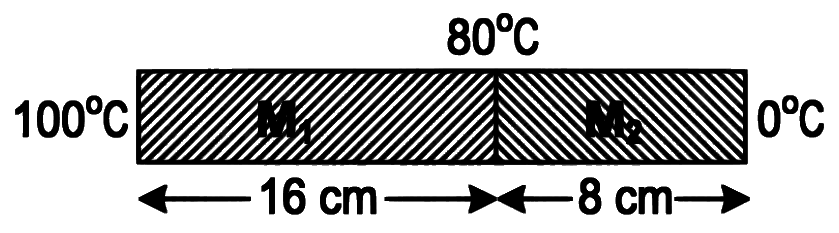
Two metallic blocks M1 and M2 of same area of cross-section are connected to each other (as shown in figure). If the thermal conductivity of M2 is K then the thermal conductivity of M1 will be: [Assume steady state heat conduction]
Answer: (b)
Heat Conduction · Composite rods, slabs & junction temperature
Two rods one made of copper and other made of steel of same length and same cross sectional area are joined together. The thermal conductivity of copper and steel are 385 J s K m and 50 J s K m respectively. The free ends of copper and steel are held at 100C and 0 C respectively. The temperature at the junction is, nearly:
Answer: (a)
Heat Conduction · Composite rods, slabs & junction temperature
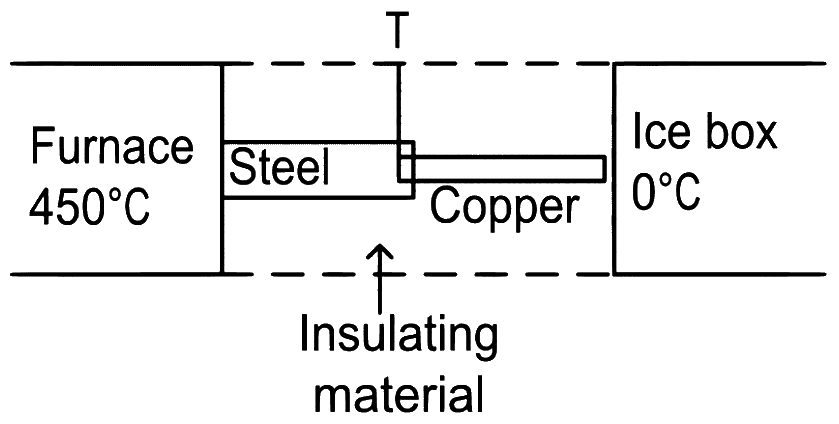
If and are the thermal conductivities, and are the lengths and and are the cross sectional areas of steel and copper rods respectively such that . Then, for the arrangement as shown in the figure, the value of temperature of the steel - copper junction in the steady state will be:
Answer: (c)
Heat Conduction · Composite rods, slabs & junction temperature
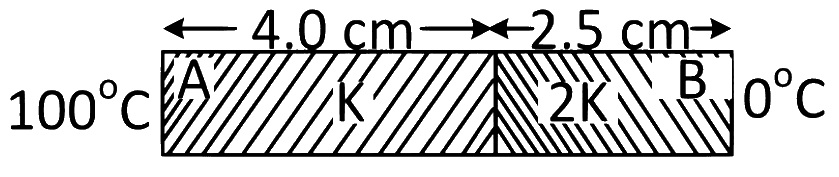
As per the given figure, two plates A and B of thermal conductivity K and 2 K are joined together to form a compound plate. The thickness of plates are 4.0 cm and 2.5 cm respectively and the area of cross-section is 120 cm2 for each plate. The equivalent thermal conductivity of the compound plate is K, then the value of will be ______________.
Numerical answer type. Work it out, then open the answer.
Answer: 21
Heat Conduction · Thermal conductivity & rate of heat flow
An ice cube of dimensions is placed in an insulation box of wall thickness . The box keeping the ice cube at of temperature is brought to a room of temperature . The rate of melting of ice is approximately:
(Latent heat of fusion of ice is and thermal conducting of insulation wall is )
Answer: (b)
Heat Conduction · Thermal conductivity & rate of heat flow
The temperature difference between two sides of an iron plate, thick is . Heat is transmitted through the plate at steady state. The thermal conductivity of iron is
Answer: (a)
Heat Conduction · Thermal conductivity & rate of heat flow
The rate of flow of heat through a copper rod with temperature difference is . The thermal resistance of copper rod will be
Answer: (b)
Heat Conduction · Thermal conductivity & rate of heat flow
A cylindrical rod has temperatures ' ' and '' at its ends. The rate of flow of heat is ' ' cal . If length and radius of the rod are doubled keeping temperature constant, then the rate of flow of heat '' will be
Answer: (d)
Heat Conduction · Thermal conductivity & rate of heat flow
A cylindrical rod is having temperatures and at its ends. The rate of heat flow is '' . All the linear dimensions of the rod are doubled by keeping the temperatures constant. What is the new rate of flow of heat?
Answer: (c)
Heat Conduction · Thermal conductivity & rate of heat flow
The temperature difference bewtween two sides of metal plate, thick is . Heat is transmitted through plate at the rate of per minute per at steady state. The thermal conductivity of metal is
Answer: (c)
Heat Conduction · Composite rods, slabs & junction temperature
Two rods of same length and material are joined end to end. They transfer heat in 8 second. When they are joined in parallel they transfer same amount of heat in same conditions in time
Answer: (b)
Heat Conduction · Composite rods, slabs & junction temperature
Two identical metal wires of thermal conductivities K1 and K2 respectively are connected in series. The effective thermal conductivity of the combination is:
Answer: (a)
Heat Conduction · Composite rods, slabs & junction temperature
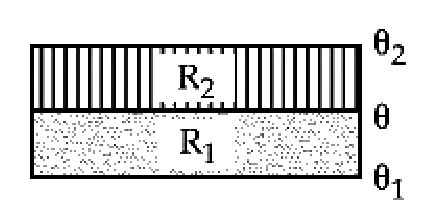
The temperature at the junction of two insulating sheets, having thermal resistances R1 and R2 as well as top and bottom temperatures 1 and 2 (as shown in figure) is given by:
Answer: (a)
Heat Conduction · Composite rods, slabs & junction temperature
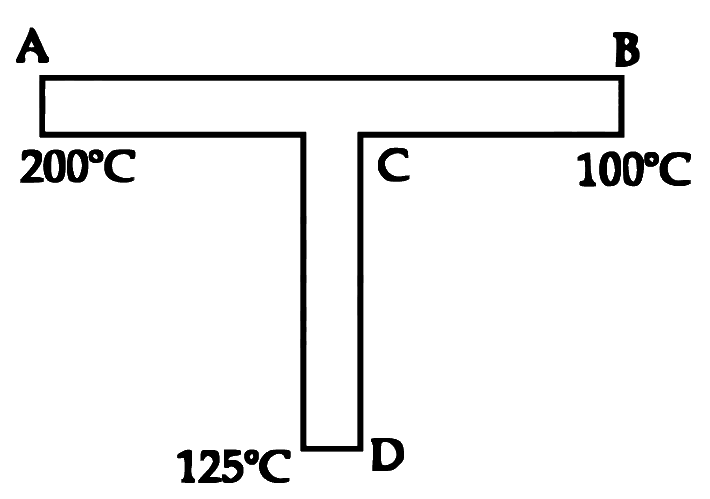
A rod CD of thermal resistance 10.0 KW is joined at the middle of an identical rod AB as shown in figure. The end A, B and D are maintained at 200C, 100C and 125C respectively. The heat current in CD is P watt. The value of P is ..................
Numerical answer type. Work it out, then open the answer.
Answer: 2
Heat Conduction · Thermal conductivity & rate of heat flow
A conducting rod of length has area of cross-section . One end is immersed in boiling water and the other end in Ice . If coefficient of thermal conductivity of is and latent heat for ice is then the amount of ice which will melt in one minute is
Answer: (b)
Heat Conduction · Composite rods, slabs & junction temperature
Two thin metallic spherical shells of radii r1 and r2 (r1 < r2) are placed with their centres coinciding. A material of thermal conductivity K is filled in the space between the shells. The inner shell is maintained at temperature 1 and the outer shell at temperature 1 < 2). The rate at which heat flows radially through the material is :-
Answer: (a)
Heat Conduction · Composite rods, slabs & junction temperature
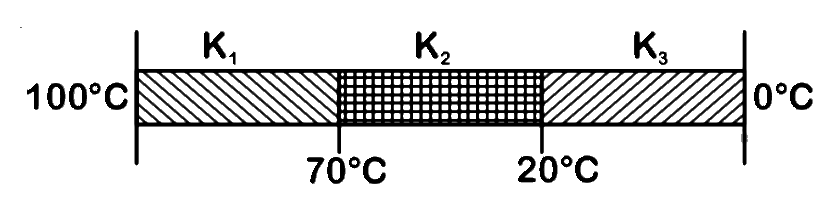
Three rods of identical cross-section and lengths are made of three different materials of thermal conductivity K1, K2 and K3, respectively. They are joined together at their ends to make a long rod (see figure). One end of the long rod is maintained at 100oC and the other at 0oC (see figure). If the joints of the rod are at 70oC and 20oC in steady state and there is no loss of energy from the surface of the rod, the correct relationship between K1, K2 and K3 is:
Answer: (a)
Heat Conduction · Composite rods, slabs & junction temperature
A heat source at T = 103 K is connected to another heat reservoir at T = 102 K by a copper slab which is 1 m thick. Given that the thermal conductivity of copper is 0.1 WK–1m–1, the energy flux through it in the steady state is -
Answer: (d)
Heat Conduction · Composite rods, slabs & junction temperature
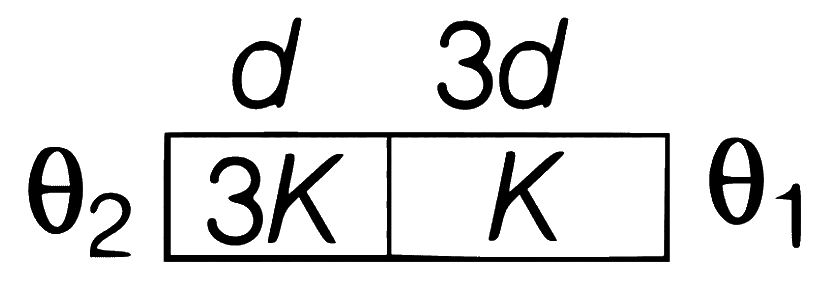
Two materials having coefficients of thermal conductivity '3K' and 'K' and thickness 'd' and '3d', respectively, are joined to form a slab as shown in the figure. The temperatures of the outer surfaces are '2' and '1' respectively, (2 > 1). The temperature at the interface is :-
Answer: (a)
Heat Conduction · Thermal conductivity & rate of heat flow
A deep rectangular pond of surface area , containing water (density = ), specific heat capacity = ), is located in a region where the outside air temperature is at a steady value of . The thickness of the frozen ice layer in this pond, at a certain instant is .
Taking the thermal conductivity of ice as , and its specific latent heat of fusion as , the rate of increase of the thickness of ice layer, at this instant, would be given by
Answer: (d)
Heat Conduction · Thermal conductivity & rate of heat flow
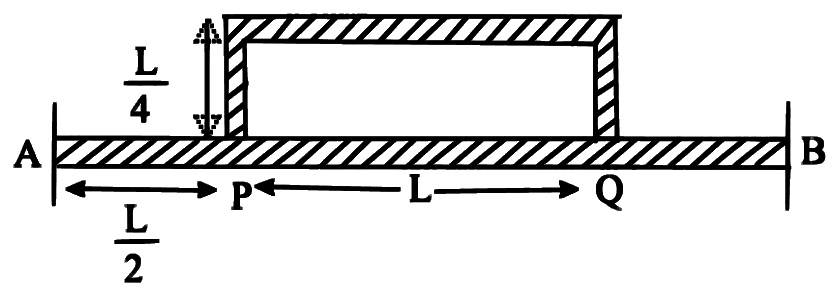
Temperature difference of 120oC is maintained between ends of a uniform rod AB of length 2L. Another bent rod PQ, of same cross-section as AB and length is connected across AB (see figure). In steady state, temperature difference between P and Q will be close to:
Answer: (a)
Heat Conduction · Composite rods, slabs & junction temperature
A cylinder of radius R is surrounded by a cylindrical shell of inner radius R and outer radius 2R. The thermal conductivity of the material of the inner cylinder is K1 and the of the outer cylinder is K2. Assuming no loss of heat, the effective thermal conductivity of the system for heat flowing along the length of the cylinder is:
Answer: (b)
Heat Conduction · Composite rods, slabs & junction temperature
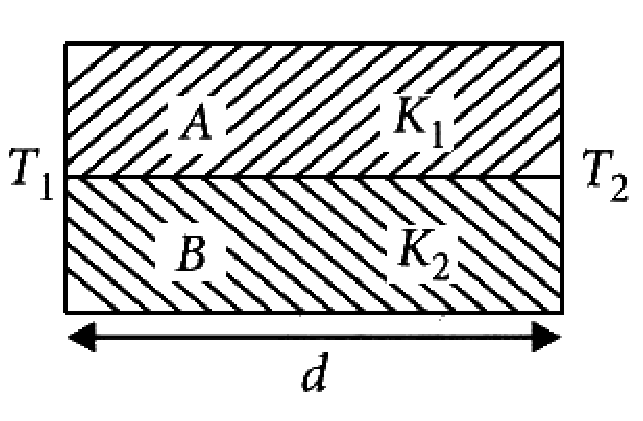
Two rods A and B of different materials are welded together as shown in figure. Their thermal conductivities are K1 and K2. The thermal conductivity of the composite will be
Answer: (d)
Heat Conduction · Composite rods, slabs & junction temperature
Three rods of Copper, Brass and Steel are welded together to form a shaped structure. Area of cross - section of each rod End of copper rod is maintained at where as ends of brass and steel are kept at . Lengths of the copper, brass and steel rods are and respectively. The rods are thermally insulated from surroundings excepts at ends. Thermal conductivities of copper, brass and steel are and units respectively. Rate of heat flow through copper rod is:
Answer: (c)
Heat Conduction · Thermal conductivity & rate of heat flow
A long metallic bar is carrying heat from one of its ends to the other end under steady-state. The variation of temperature along the length of the bar from its hot end is best described by which of the following figures?
Answer: (a)
Heat Conduction · Composite rods, slabs & junction temperature
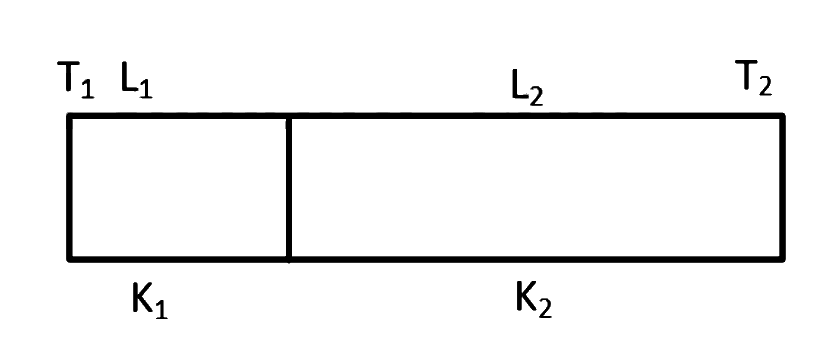
One end of a thermally insulated rod is kept at a temperature and the other at . The rod is composed of two sections of length and and thermal conductivities and respectively. The temperature at the interface of the two section is
Answer: (d)
Heat Conduction · Composite rods, slabs & junction temperature
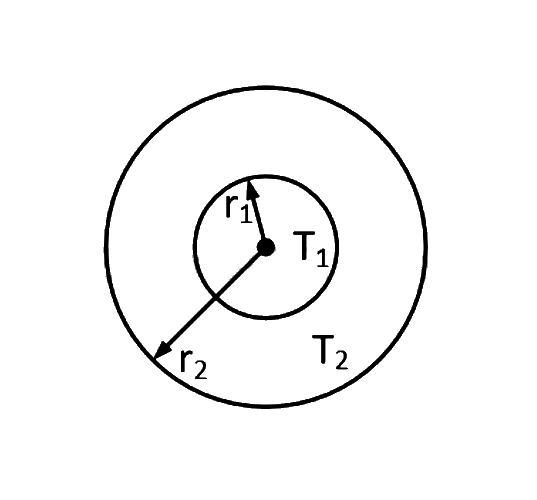
The figure shows a system of two concentric spheres of radii and are kept at temperatures and , respectively. The radial rate of flow of heat in a substance between the two concentric spheres is proportional to
Answer: (d)
Heat Conduction · Composite rods, slabs & junction temperature
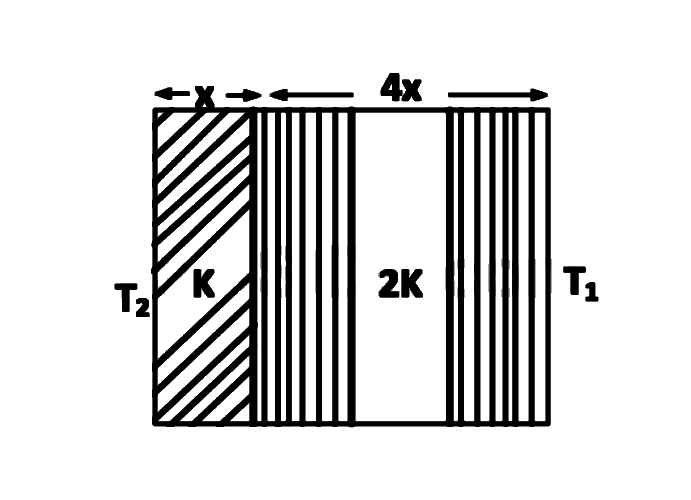
The temperature of the two outer surfaces of a composite slab, consisting of two materials having coefficients of thermal conductivity and and thickness and respectively, are and The rate of heat transfer through the slab, in a steady state is with equal to
Answer: (d)
Heat Conduction · Thermal conductivity & rate of heat flow
Heat is flowing through two cylindrical rods of the same material. The diameters of the rods are in the ratio and the lengths in the ratio . If the temperature difference between the ends is same, then ratio of the rate of flow of heat through them will be
Answer: (d)
No questions match these filters.