Rotational Motion PYQs · MHT CET · JEE Main · NEET
Rotational Kinetic Energy, Work & Power
Questions
56
MHT CET
36
JEE Main
12
NEET
8
Years
1988–2026
0 of 56 attemptedPick an answer to see the solution
Q1MHT CET 2026 · 20 APR · SHIFT 1Easy
Rotational Kinetic Energy, Work & Power · KE–L–I relations
A body is rotating about its own axis. Its rotational kinetic energy is 'x' and its angular momentum is 'y'. Hence its moment of inertia about its own axis is
Rotational Kinetic Energy, Work & Power · Work, power & flywheels
A flywheel rotating about a fixed axis has a kinetic energy of 500 joule, if its angular frequency is 5 Hz, then calculate the moment of inertia of the wheel about the axis of rotation. (π2=10)
Rotational Kinetic Energy, Work & Power · KE–L–I relations
The moment of inertia of two rotating bodies 'X' and 'Y' are I1 and I2 respectively where I2>I1. If Kx and Ky are their rotational kinetic energies and their angular momenta are equal, then
Rotational Kinetic Energy, Work & Power · KE–L–I relations
Two bodies rotate with kinetic energies E1 and E2, moment of inertia about their axes of rotation is I1 and I2. If 3I1=I2 and E1=27E2 then the ratio of the angular momenta L1 to L2 is
Rotational Kinetic Energy, Work & Power · KE–L–I relations
The angular momentum of a rotating body is 'L'. When the frequency of rotating body is tripled and its kinetic energy is made one-third, the new angular momentum becomes
Rotational Kinetic Energy, Work & Power · KE–L–I relations
Two bodies A and B have moment of inertia IA and IB, and angular momenta LA and LB respectively. Both of them have same kinetic energy of rotation. So the ratio LA to LB is
Rotational Kinetic Energy, Work & Power · KE–L–I relations
If the earth suddenly contracts to (31)rd of its present size without change in its mass, the ratio kinetic energy of the earth after and before contraction will be (Earth is assumed to be a rotating sphere about itself)
Rotational Kinetic Energy, Work & Power · Energy of pivoted rods & pendulums
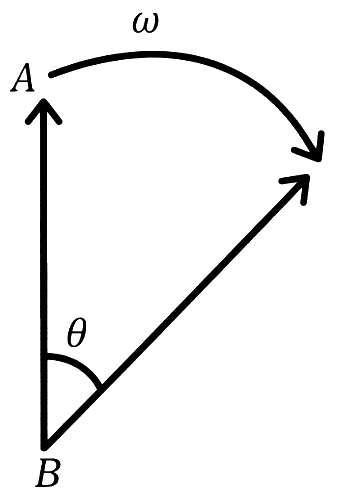
A uniform rod of length l is free to rotate in a vertical plane about a fixed horizontal axis through point B. The rod begins rotating from rest, from its unstable equilibrium position. The angular velocity ω, when it has turned through an angle θ, is
Rotational Kinetic Energy, Work & Power · Energy of pivoted rods & pendulums
A thin uniform rod of length L and mass m is swinging freely about a horizontal axis passing through its end. Its maximum angular speed is ω. Its centre of mass rises to a maximum height of (g = acceleration due to gravity)
Rotational Kinetic Energy, Work & Power · Energy of pivoted rods & pendulums
A thin uniform rod AB of mass 'm' and length 'l' is hinged at one end A to the ground level. Initially the rod stands vertically and is allowed to fall freely to the ground in the vertical plane. The angular velocity of the rod when its B end strikes the ground is
Rotational Kinetic Energy, Work & Power · Energy of pivoted rods & pendulums
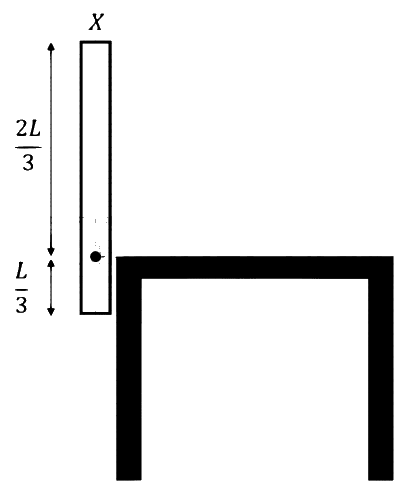
A thin uniform rod (X) of mass M and length L is pivoted at a height (3L) as shown in the figure. The rod is allowed to fall from a vertical position and lie horizontally on the table. The angular velocity of this rod when it hits the table top, is ______.
Rotational Kinetic Energy, Work & Power · KE–L–I relations
A body is rotating about its own axis. Its rotational kinetic energy is ' x ' and its angular momentum is ' y '. Hence its moment of inertia about its own axis is
Rotational Kinetic Energy, Work & Power · KE–L–I relations
The angular momentum of a rotating body is ' L '. When the frequency of rotating body is tripled and its kinetic energy is made one-third, the new angular momentum becomes
Rotational Kinetic Energy, Work & Power · KE–L–I relations
A solid cylinder of mass ' M ' and radius ' R ' is rotating about its geometrical axis. A solid sphere of same mass and same radius is also rotating about its diameter with an angular speed half that of the cylinder. The ratio of the kinetic energy of rotation of the sphere to that of the cylinder will be
Rotational Kinetic Energy, Work & Power · KE–L–I relations
A solid sphere of mass ' m ' and radius ' R ' is rotating about its diameter. A solid cylinder of the same mass and same radius is also rotating about its geometrical axis with angular speed twice that of sphere. The ratio of kinetic energy of sphere to kinetic energy of cylinder will be
Rotational Kinetic Energy, Work & Power · Energy of pivoted rods & pendulums
A thin uniform rod of length ' L ' and mass ' M ' is swinging freely about a horizontal axis passing through its end. Its maximum angular speed is ' ω '. Its centre of mass rises to a maximum height of ( g= acceleration due gravity)
Rotational Kinetic Energy, Work & Power · Energy of pivoted rods & pendulums
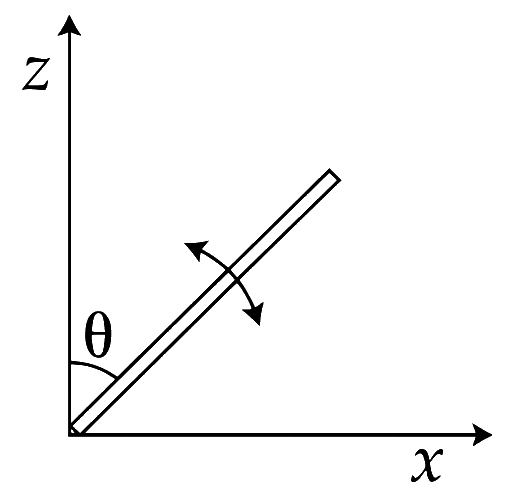
A thin uniform rod of mass ' m ' and length ' L ' is pivoted at one end so that it can rotate in a vertical plane. The free end is held vertically above pivot and then released. The angular acceleration of the rod when it makes an angle ' θ ' with the vertical is [consider negligible friction at the pivot] ( g= acceleration due to gravity)
Rotational Kinetic Energy, Work & Power · KE–L–I relations
Two bodies A and B have their moments of inertia I1 and I2 respectively about their axis of rotation. If their kinetic energies of rotation are equal and their angular momenta L1 and L2 respectively are in the ratio 1:3, then I2 will be
Rotational Kinetic Energy, Work & Power · KE–L–I relations
A solid cylinder of mass M and radius R is rotating about its geometrical axis. A solid sphere of the same mass and same radius is also rotating about its diameter with an angular speed half that of the cylinder. The ratio of the kinetic energy of rotation of the sphere to that of the cylinder will be
Rotational Kinetic Energy, Work & Power · Work, power & flywheels
A string is wrapped around the rim of a wheel of moment of inertia 0.40 kg m2 and radius 10 cm. The wheel is free to rotate about its axis. Initially the wheel is at rest. The string is now pulled by a force of 40 N. The angular velocity of the wheel after 10 s is x rad/s, where x is __________.
Numerical answer type. Work it out, then open the answer.
Rotational Kinetic Energy, Work & Power · Energy of pivoted rods & pendulums
A thin uniform metal rod of mass ' M ' and length ' L ' is swinging about a horizontal axis passing through its end. Its maximum angular velocity is ' ω '. Its centre of mass rises to a maximum height of ( g= Acceleration due to gravity)
Rotational Kinetic Energy, Work & Power · Energy of pivoted rods & pendulums
A thin uniform rod of length ' L ' and mass ' M ' is swinging freely along a horizontal axis passing through its centre. Its maximum angular speed is ' ω '. Its centre of mass rises to a maximum height of [ g= gravitational acceleration]
Rotational Kinetic Energy, Work & Power · KE–L–I relations
Two bodies have their moments of inertia I and 2I respectively about their axis of rotation. If their kinetic energies of rotation are equal, their angular momenta will be in the ratio
Rotational Kinetic Energy, Work & Power · Work, power & flywheels
A solid sphere of mass 500 g and radius 5 cm is rotated about one of its diameters with angular speed of 10 rad s−1. If the moment of inertia of the sphere about its tangent is x×10−2 times its angular momentum about the diameter. Then the value of x will be ___________.
Numerical answer type. Work it out, then open the answer.
Rotational Kinetic Energy, Work & Power · Energy of pivoted rods & pendulums
A thin uniform rod of mass 'm' and length 'l' is suspended from one end which can oscillate in a vertical plane about the point of suspension. It is pulled to one side and then released. It passes through the equilibrium position with angular speed 'ω'. The kinetic energy while passing through mean position is
Rotational Kinetic Energy, Work & Power · Energy of pivoted rods & pendulums
A thin uniform rod AB of mass m and length l is hinged at one end A to the ground level. Initially the rod stands vertically and is allowed to fall freely to the ground in the vertical plane. The angular velocity of the rod when its end B strikes the ground is ( g= acceleration due to gravity)
Rotational Kinetic Energy, Work & Power · KE–L–I relations
The moment of inertia of a body about the given axis, rotating with angular velocity 1 rad/s is numerically equal to 'P' times its rotational kinetic energy. The value of 'P' is
Rotational Kinetic Energy, Work & Power · KE–L–I relations
A molecule consists of two atoms each of mass 'm' and separated by a distance 'd'. At room temperature, if the average rotational kinetic energy is 'E' then the angular frequency is
Rotational Kinetic Energy, Work & Power · KE–L–I relations
Two rotating bodies P and Q of masses 'm' and '2m' with moment of inertia IP and IQ(IQ>IP) have equal Kinetic energy of rotation. If LP and LQ be their angular momenta respectively then
Rotational Kinetic Energy, Work & Power · KE–L–I relations
A solid sphere of mass 'M' and radius 'R' is rotating about its diameter. A solid cylinder of same mass and same radius is also rotating about its geometrical axis with an angular speet twice that of the sphere. The ratio of the kinetic energy of rotation of the sphere to that of the cylinder is
Rotational Kinetic Energy, Work & Power · KE–L–I relations
A particle performs rotational motion with an angular momentum 'L'. If frequency of rotation is doubled and its kinetic energy becomes one fourth, the angular momentum becomes.
Rotational Kinetic Energy, Work & Power · KE–L–I relations
Two bodies rotate with kinetic energies 'E1' and 'E2'. Moments of inertia about their axis of rotation are 'I 1' and 'I2'. If I1=3I2 and E 1 = 27 E2, then the ratio of angular momenta 'L 1' to 'L2' is
Rotational Kinetic Energy, Work & Power · Work, power & flywheels
The moment of inertia of a body about a given axis is 1.2 kg m2. Initially the body is at rest. In order to produce rotational kinetic energy of 1500 J, an angular acceleration of 25 rad/s2 must be applied about an axis for a time duration of
Rotational Kinetic Energy, Work & Power · Work, power & flywheels
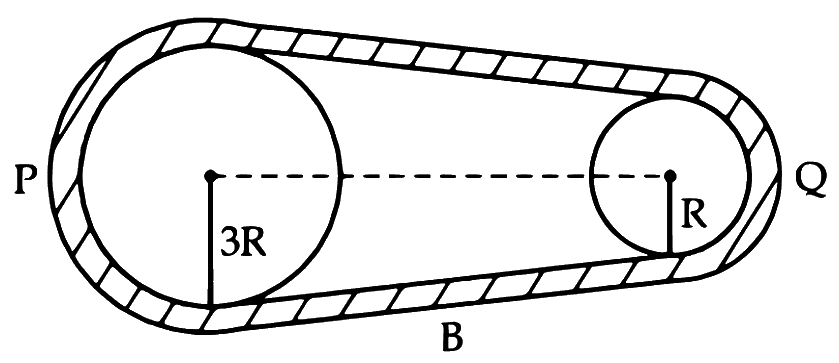
In the given figure, two wheels P and Q are connected by a belt B. The radius of P is three times as that of Q. In case of same rotational kinetic energy, the ratio of rotational inertias (I2I1) will be x: 1. The value of x will be _____________.
Numerical answer type. Work it out, then open the answer.
Rotational Kinetic Energy, Work & Power · Energy of pivoted rods & pendulums
A 2 kg steel rod of length 0.6 m is clamped on a table vertically at its lower end and is free to rotate in vertical plane. The upper end is pushed so that the rod falls under gravity, ignoring the friction due to clamping at its lower end, the speed of the free end of rod when it passes through its lowest position is ____________ ms______1. (Take g = 10 ms______2)
Numerical answer type. Work it out, then open the answer.
Rotational Kinetic Energy, Work & Power · KE–L–I relations
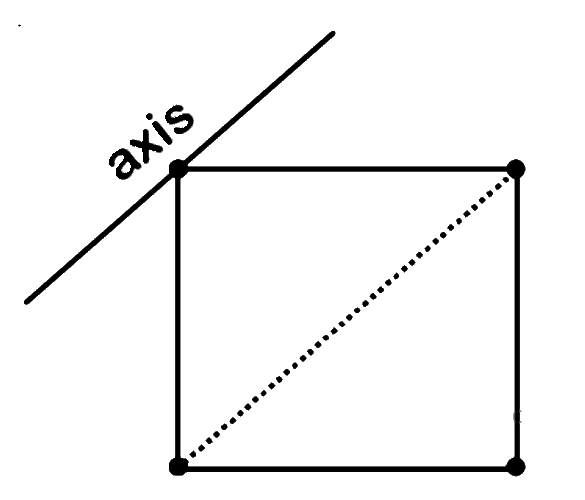
Four point masses, each of mass m, are fixed at the corners of a square of side l. The square is rotating with angular frequency ω, about an axis passing through one of the corners of the square and parallel to its diagonal, as shown in the figure. The angular momentum of the square about this axis is:
Rotational Kinetic Energy, Work & Power · Energy of pivoted rods & pendulums
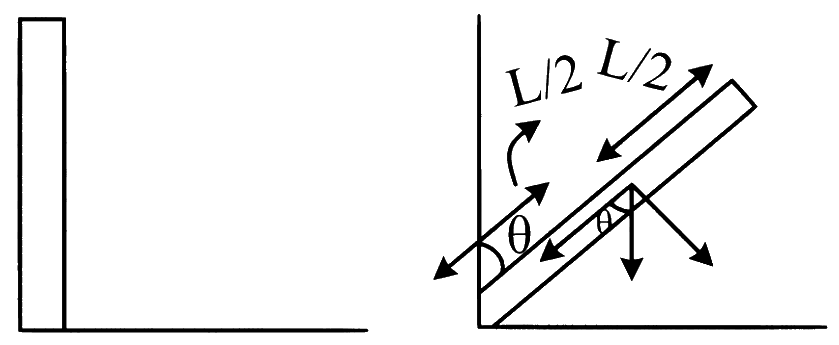
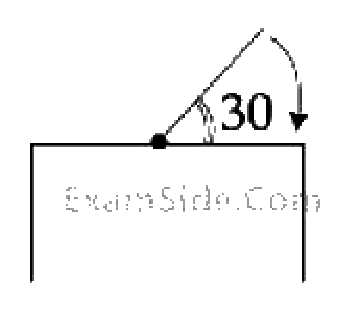
One end of a straight uniform 1m long bar is pivoted on horizontal table. It is released from rest when it makes an angle 30° from the horizontal (see figure). Its angular speed when it hits the table is given as n s-1, where n is an integer. The value of n is _________.
Numerical answer type. Work it out, then open the answer.
Rotational Kinetic Energy, Work & Power · Work, power & flywheels
When a 12000 joule of work is done on a flywheel, its frequency of rotation increases from 10 Hz to 20 Hz. The moment of inertia of flywheel about its axis of rotation is (π2=10)
Rotational Kinetic Energy, Work & Power · Work, power & flywheels
Moment of inertia of a body about a given axis is 1.5 kg m2. Initially the body is at rest. In order to produce a rotational kinetic energy of 1200 J, the angular accleration of 20 rad/s2 must be applied about the axis for a duration of :-
Rotational Kinetic Energy, Work & Power · Work, power & flywheels
Three objects, A: (a solid sphere), B: (a thin circular disk) and C: (a circular ring), each have the same mass M and radius R. They all spin with the same angular speed ω about their own symmetry axes. The amounts of work (W) required to bring them to rest, would satisfy the relation
Rotational Kinetic Energy, Work & Power · Energy of pivoted rods & pendulums
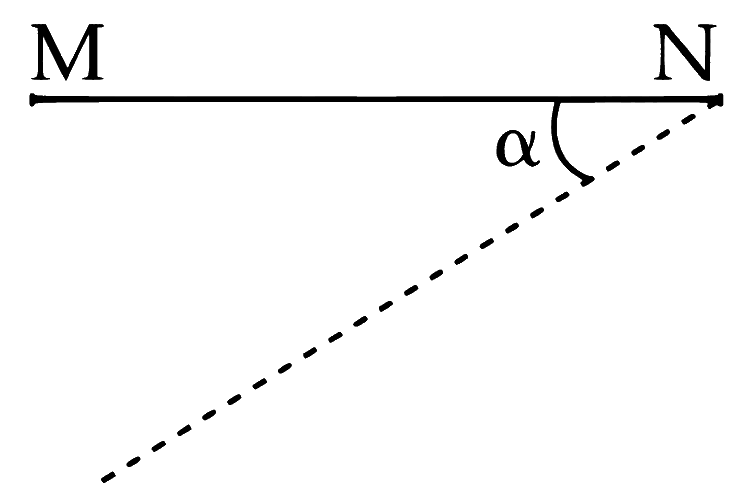
A thin rod MN, free to rotate in the vertical plane about the fixed end N, is held horizontal. When the end M is released the speed of this end, when the rod makes an angle α with the horizontal, will be proportional to: (see figure)
Rotational Kinetic Energy, Work & Power · Energy of pivoted rods & pendulums
A slender uniform rod of mass M and length l is pivoted at one end so that it can rotate in a vertical plane (see figure). There is negligible friction at the pivot. The free end is held vertically above the pivot and then released. The angular acceleration of the rod when it makes an angle θ with the vertical is
Rotational Kinetic Energy, Work & Power · KE–L–I relations
Two rotating bodies A and B of masses m and 2m with moments of inertia IA and IB (IB > IA) have equal kinetic energy of rotation. If LA and LB be their angular momenta respectively, then
Rotational Kinetic Energy, Work & Power · KE–L–I relations
A solid sphere of mass m and radius R is rotating about its diameter. A solid cylinder of same mass and same radius is also rotating about its geometrical axis with an angular speed twice that of the sphere. The ratio of their kinetic energies of rotation (Esphere / Ecylinder) will be
Rotational Kinetic Energy, Work & Power · Energy of pivoted rods & pendulums
A thin uniform rod of length l and mass m is swinging freely about a horizontal axis passing through its end. Its maximum angular speed is ω. Its center of mass rises to a maximum height of:
Rotational Kinetic Energy, Work & Power · KE–L–I relations
Two bodies have their moments of inertia I and 2I respectively about their axis of rotation. If their kinetic energies of rotation are equal, their angular velocity will be in the ratio
Rotational Kinetic Energy, Work & Power · KE–L–I relations
A particle performing uniform circular motion has angular momentum L. If its angular frequency is doubled & its kinetic energy halved, then the new angular momentum is
Rotational Kinetic Energy, Work & Power · Work, power & flywheels
A fly wheel rotating about fixed axis has a kinetic energy of 360 joule when its angular speed is 30 radian/sec. The moment of inertia of the wheel about the axis of rotation is
Rotational Kinetic Energy, Work & Power · Work, power & flywheels
The moment of inertia of a body about a given axis is 1.2 kg m2. Initially, the body is at rest. In order to produce a rotational kinetic energy of 1500 joule, an angular acceleration of 25 radian/sec2 must be applied about that axis for a duration of
Rotational Kinetic Energy, Work & Power · KE–L–I relations
A ring of mass m and radius r rotates about an axis passing through its centre and perpendicular to its plane with angular velocity ω. Its kinetic energy is