0 of 80 attemptedPick an answer to see the solution
Q1MHT CET 2026 · 17 APR · SHIFT 2Easy
Satellites - Orbital Velocity & Period · Orbital velocity
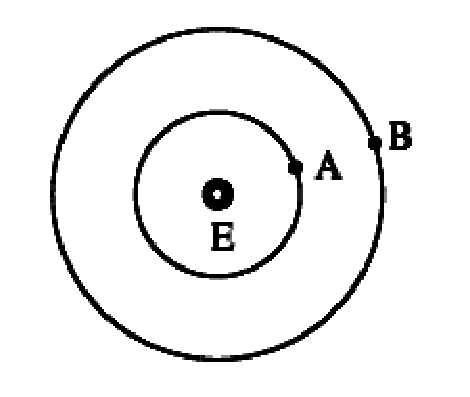
Two planets A and B are orbiting around the sun. The distances of the two planets A and B from the sun are rA and rB respectively. Also rB=225rA. If the orbital speed of the planet A is 'V' then the orbital speed of planet B will be
Satellites - Orbital Velocity & Period · Orbital velocity
The distance of the two planets A and B from the sun are 'rA' and 'rB' respectively such that rB=100rA. The ratio of the speed of planet A to that of planet B is (both the planets are revolving around the sun)
Satellites - Orbital Velocity & Period · Time period of a satellite
A satellite is revolving around a planet in a circular orbit close to its surface. Let ρ be mean density and R be the radius of the planet; then the period of the satellite is
Satellites - Orbital Velocity & Period · Time period of a satellite
Given below are two statements:
Statement I: A satellite is moving around earth in the orbit very close to the earth surface. The time period of revolution of satellite depends upon the density of earth.
Statement II: The time period of revolution of the satellite is T=2πgRe (for satellite very close to the earth surface), where Re radius of earth and g acceleration due to gravity. In the light of the above statements, choose the correct answer from the options given below:
Satellites - Orbital Velocity & Period · Height of a satellite & geostationary orbit
The geostationary satellite is revolving round the earth of mean radius R. If g is the acceleration due to gravity at earth's surface, ω is the angular speed of rotation of earth about its own axis and r is the radius of orbit of a satellite, then the correct relation between r, ω, g and R is
Satellites - Orbital Velocity & Period · Height of a satellite & geostationary orbit
If mean radius of earth is 'R', its angular velocity is 'ω' and acceleration due to gravity at the surface of the earth is 'g' then the cube of the radius of the orbit of geostationary satellite will be
Satellites - Orbital Velocity & Period · Height of a satellite & geostationary orbit
A geostationary satellite is orbiting the earth at a height of 4R above the surface of the earth, where R is the radius of the earth. Another satellite is orbiting the earth at a height 1.5R from the surface of the earth with periodic time 'T' in hour. The value of 'T' in hour is
Satellites - Orbital Velocity & Period · Orbits under mutual gravity
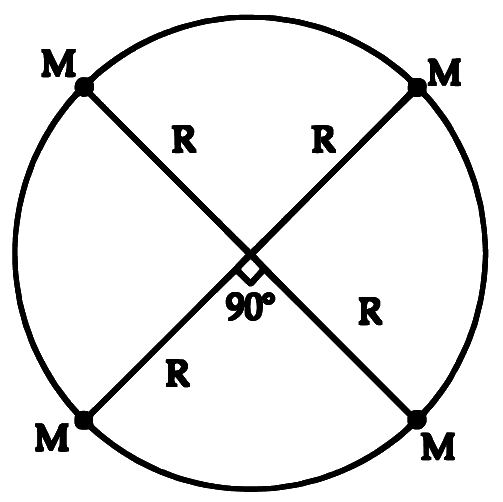
Four particles, each of mass M and equidistant from each other, move along a circle of radius R under the action of their gravitational attraction, the speed of each particle is
Satellites - Orbital Velocity & Period · Orbital velocity
Two satellites P and Q go round a planet in circular orbits having radii ' 3R ' and ' R ' respectively. If the speed of satellite P is ' 2V ', the speed of the satellite Q will be
Satellites - Orbital Velocity & Period · Orbital velocity
The radii of circular orbits of two satellites A and B of the earth are ' 4R ' and ' R ' respectively, where R is the radius of earth. If the speed of satellite B is 6 V, then the speed of satellite A will be
Satellites - Orbital Velocity & Period · Time period of a satellite
The time period of a satellite of earth is 24 hours. If the separation between the earth and the satellite is decreased to one fourth of the previous value then its new time period will become
Satellites - Orbital Velocity & Period · Time period of a satellite
If a satellite orbiting the Earth is 9 times closer to the Earth than the Moon, what is the time period of rotation of the satellite? Given rotational time period of Moon =27 days and gravitational attraction between the satellite and the moon is neglected.
Satellites - Orbital Velocity & Period · Time period of a satellite
A satellite is launched into a circular orbit of radius ' R ' around the earth. A second satellite is launched into an orbit of radius 1.03 R. The time period of revolution of the second satellite is larger than the first one approximately by
Satellites - Orbital Velocity & Period · Orbits under mutual gravity
Two particles of equal mass ' m ' move in a circle of radius ' r ' under the action of their mutual gravitational attraction. The speed of each particle will be ( G= Universal gravitational constant)
Satellites - Orbital Velocity & Period · Angular momentum of a satellite
Two planets, A and B are orbiting a common star in circular orbits of radii RA and RB, respectively, with RB=2RA. The planet B is 42 times more massive than planet A. The ratio (LALB) of angular momentum (LB) of planet B to that of planet A(LA) is closest to integer ________.
Numerical answer type. Work it out, then open the answer.
Satellites - Orbital Velocity & Period · Angular momentum of a satellite
A satellite of mass 2M is revolving around earth in a circular orbit at a height of 3R from earth surface. The angular momentum of the satellite is MxGMR. The value of x is _________, where M and R are the mass and radius of earth, respectively. ( G is the gravitational constant)
Numerical answer type. Work it out, then open the answer.
Satellites - Orbital Velocity & Period · Orbital velocity
The distance of the two planets A and B from the sun are rA and rB respectively. Also rB is equal to 100rA. If the orbital speed of the planet A is ' v ' then the orbital speed of the planet B is
Satellites - Orbital Velocity & Period · Time period of a satellite
A satellite is orbiting just above the surface of the planet of density ' ρ ' with periodic time ' T '. The quantity T2ρ is equal to ( G= universal gravitational constant)
Satellites - Orbital Velocity & Period · Time period of a satellite
A satellite is revolving around a planet in a circular orbit close to its surface. Let ' ρ ' be the mean density and ' R ' be the radius of the planet. Then the period of the satellite is ( G= universal constant of gravitation)
Satellites - Orbital Velocity & Period · Other force laws
A small planet is revolving around a very massive star in a circular orbit of radius ' R ' with a period of revolution ' T '. If the gravitational force between the planet and the star were proportional to 'R−5/2', then 'T' would be proportional to
Satellites - Orbital Velocity & Period · Other force laws
A light planet is revolving around a massive star in a circular orbit of radius R with a period of revolution T. If the force of attraction between planet and star is proportional to R−3/2 then choose the correct option:
Satellites - Orbital Velocity & Period · Height of a satellite & geostationary orbit
A satellite revolving around a planet in stationary orbit has time period 6 hours. The mass of planet is one-fourth the mass of earth. The radius of orbit of the satellite is:
(Given = Radius of geo-stationary orbit for earth is 4.2×10⁴ km)
Satellites - Orbital Velocity & Period · Angular momentum of a satellite
A satellite of mass ' m ' is revolving around the earth of mass ' M ' in an orbit of radius ' r ' with constant angular velocity ' ω '. The angular momentum of satellite is ( G= Universal constant of gravitation)
Satellites - Orbital Velocity & Period · Angular momentum of a satellite
Assuming that the earth is revolving around the sun in circular orbit of radius R, the angular momentum is directly proportional to Rn. The value of ' n ' is
Satellites - Orbital Velocity & Period · Angular momentum of a satellite
Two planets A and B having masses m1 and m2 move around the sun in circular orbits of r1 and r2 radii respectively. If angular momentum of A is L and that of B is 3L, the ratio of time period (TBTA) is:
Satellites - Orbital Velocity & Period · Orbital velocity
A satellite moves in a stable circular orbit round the earth if (where VH,Vc and Ve are the horizontal velocity, critical velocity and escape velocity respectively)
Satellites - Orbital Velocity & Period · Orbital velocity
Two satellites A and B move round the earth in the same orbit. The mass of A is twice the mass of B. The quantity which is same for the two satellites will be
Satellites - Orbital Velocity & Period · Orbital velocity
Two satellites of masses m and 3m revolve around the earth in circular orbits of radii r & 3r respectively. The ratio of orbital speeds of the satellites respectively is
Satellites - Orbital Velocity & Period · Time period of a satellite
A satellite is orbiting just above the surface of the earth with period T. If d is the density of the earth and G is the universal constant of gravitation, the quantity Gd3π represents:
Satellites - Orbital Velocity & Period · Time period of a satellite
The time period of a satellite of earth is 24 hours. If the separation between the earth and the satellite is decreased to one fourth of the previous value, then its new time period will become.
Satellites - Orbital Velocity & Period · Height of a satellite & geostationary orbit
The radius of the orbit of a geostationary satellite is (mean radius of earth is 'R', angular velocity about own axis is 'ω' and acceleration due to gravity on earth's surface is 'g')
Satellites - Orbital Velocity & Period · Other force laws
Consider a light planet revolving around a massive star in a circular orbit of radius 'r' with time period 'T'. If the gravitational force of attraction between the planet and the star is proportional to r−27, then T2 is proportional to
Satellites - Orbital Velocity & Period · Orbits under mutual gravity
Two identical particles each of mass ' m ' go round a circle of radius a under the action of their mutual gravitational attraction. The angular speed of each particle will be:
Satellites - Orbital Velocity & Period · Orbits under mutual gravity
Two particles of equal mass 'm' move in a circle of radius 'r' under the action of their mutual gravitational attraction. The speed of each particle will be:
Satellites - Orbital Velocity & Period · Angular momentum of a satellite
The orbital angular momentum of a satellite is L, when it is revolving in a circular orbit at height h from earth surface. If the distance of satellite from the earth centre is increased by eight times to its initial value, then the new angular momentum will be -
Satellites - Orbital Velocity & Period · Orbital velocity
Two satellites S1 and S2 are revolving in circular orbits around a planet with radius R1 = 3200 km and R2 = 800 km respectively. The ratio of speed of satellite S1 to be speed of satellite S2 in their respective orbits would be x1 where x = ___________.
Numerical answer type. Work it out, then open the answer.
Satellites - Orbital Velocity & Period · Time period of a satellite
The time period of a satellite revolving around earth in a given orbit is 7 hours. If the radius of orbit is increased to three times its previous value, then approximate new time period of the satellite will be
Satellites - Orbital Velocity & Period · Time period of a satellite
The time period of a satellite of earth is 5 hours. If the separation between the earth and the satellite is increased to four times the previous value, the new time period of the satellite will be
Satellites - Orbital Velocity & Period · Time period of a satellite
Consider two satellites S1 and S2 with periods of revolution 1 hr. and 8 hr. respectively revolving around a planet in circular orbits. The ratio of angular velocity of satellite S1 to the angular velocity of satellite S2 is:
Satellites - Orbital Velocity & Period · Orbital velocity
If the horizontal velocity given to a satellite is greater than critical velocity but less than the escape velocity at the height, then the satellite will
Satellites - Orbital Velocity & Period · Orbital velocity
The orbital velocity of an artificial satellite in a circular orbit just above the earth's surface is 'V'. For the satellite orbiting at an altitude of half the earth's radius, the orbital velocity is
Satellites - Orbital Velocity & Period · Time period of a satellite
A satellite is launched into a circular orbit of radius R around earth, while a second satellite is launched into a circular orbit of radius 1.02 R. The percentage difference in the time periods of the two satellites is:
Satellites - Orbital Velocity & Period · Orbits under mutual gravity
Two identical particles of mass 1 kg each go round a circle of radius R, under the action of their mutual gravitational attraction. The angular speed of each particle is:
Satellites - Orbital Velocity & Period · Orbits under mutual gravity
Consider a binary star system of star A and star B with masses mA and mB revolving in a circular orbit of radii rA an rB, respectively. If TA and TB are the time period of star A and star B, respectively, Then:
Satellites - Orbital Velocity & Period · Height of a satellite & geostationary orbit
A geostationary satellite is orbiting around an arbitrary planet 'P' at a height of 11R above the surface of 'P', R being the radius of 'P'. The time period of another satellite in hours at a height of 2R from the surface of 'P' is _________. 'P' has the time period of 24 hours.
Satellites - Orbital Velocity & Period · Time period of a satellite
Two satellites revolve around a planet in coplanar circular orbits in anticlockwise direction. Their period of revolutions are 1 hour and 8 hours respectively. The radius of the orbit of nearer satellite is 2 × 10³ km. The angular speed of the farther satellite as observed from the nearer satellite at the instant when both the satellites are closest is xπ rad h−1 where x is ____________.
Numerical answer type. Work it out, then open the answer.
Satellites - Orbital Velocity & Period · Orbits under mutual gravity
Three point masses, each of mass 'm' are kept at the corners of an equilateral triangle of side 'L'. The system rotates about the centre of the triangle without any change in the separation of masses during rotation. The period of rotation is directly proportional to (cos30∘=23)
Satellites - Orbital Velocity & Period · Orbits under mutual gravity
Four particles each of mass M, move along a circle of radius R under the action of their mutual gravitational attraction as shown in figure. The speed of each particle is:
Satellites - Orbital Velocity & Period · Orbits under mutual gravity
Four identical particles of equal masses 1 kg made to move along the circumference of a circle of radius 1 m under the action of their own mutual gravitational attraction. The speed of each particle will be:
Satellites - Orbital Velocity & Period · Other force laws
The mass density of a spherical galaxy varies as rK over a large distance ‘r’ from its centre. In that region, a small star is in a circular orbit of radius R. Then the period of revolution, T depends on R as:
Satellites - Orbital Velocity & Period · Time period of a satellite
A spaceship orbits around a planet at a height of 20 km from its surface. Assuming that only gravitational field of the planet acts on the spaceship, what will be the number of complete revolutions made by the spaceship in 24 hours around the planet?
[Given; Mass of planet = 8 × 10²² kg, Radius of planet = 2 × 10⁶ m, Gravitational constant G = 6.67 × 10⁻¹¹ Nm2 /kg2]
Satellites - Orbital Velocity & Period · Height of a satellite & geostationary orbit
The time period of a geostationary satellite is 24 h, at a height 6RE (RE is radius of earth) from surface of earth. The time period of another satellite whose height is 2.5RE from surface will be,
Satellites - Orbital Velocity & Period · Other force laws
A test particle is moving in a circular orbit in the gravitational field produced by a mass density ρ(r)=r2K. Identify the correct relation between the radius R of the particle's orbit and its period T
Satellites - Orbital Velocity & Period · Orbits under mutual gravity
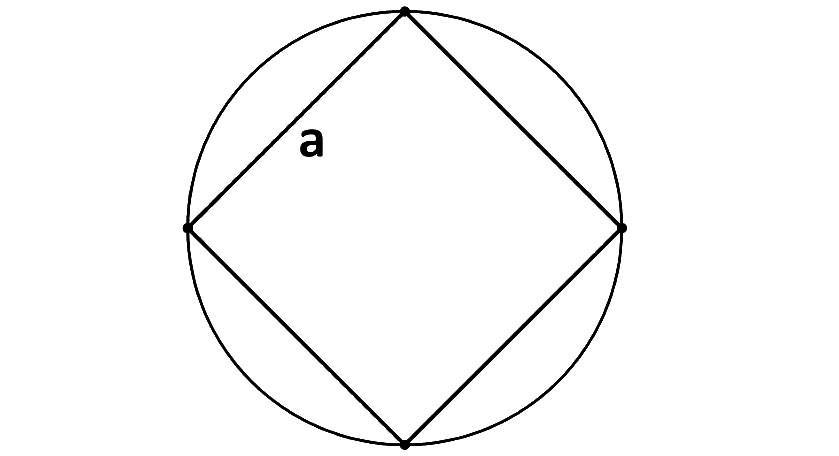
Four identical particles of mass M are located at the corners of a square of side 'a'. What should be their speed if each of them revolves under the influence of other's gravitational field in a circular orbit circumscribing the square?
Satellites - Orbital Velocity & Period · Other force laws
A particle is moving with a uniform speed in a circular orbit of radius R in a central force inversely proportional to the nth power of R. If the period of rotation of the particle is T, then:
Satellites - Orbital Velocity & Period · Orbital velocity
A remote-sensing satellite of earth revolves in a circular orbit at a height of 0.25 × 10⁶ m above the surface of earth. If earth's radius is 6.38 × 10⁶ m and g = 9.8 ms−2, then the orbital speed of the satellite is
Satellites - Orbital Velocity & Period · Other force laws
A very long (length L) cylindrical galaxy is made of uniformly distributed mass and has radius R ( R < < L). A star outside the galaxy is orbiting the galaxy in a plane perpendicular to the galaxy and passing through its centre. If the time period of star is T and its distance from the galaxy's axis is r, then:
Satellites - Orbital Velocity & Period · Orbits under mutual gravity
Four particles, each of mass M and equidistant from each other, move along a circle of radius R under the action of their mutual gravitational attraction. The speed of each particle is:
Satellites - Orbital Velocity & Period · Height of a satellite & geostationary orbit
A geostationary satellite is orbiting the earth at a height of 5R above the surface of the earth, R being the radius of the earth. The time period of another satellite in hours at a height of 2R from the surface of the earth is
Satellites - Orbital Velocity & Period · Orbital velocity
The radii of circular orbits of two satellites A and B of the earth, are 4R and R, respectively. If the speed of satellite A is 3V, then the speed of satellite B will be
Satellites - Orbital Velocity & Period · Orbital velocity
Two satellites of earth, S1 and S2 are moving in the same orbit. The mass of S1 is four times the mass of S2. Which one of the following statements is true?
Satellites - Orbital Velocity & Period · Orbital velocity
A satellite of mass m revolves around the earth of radius R at a height x from its surface. If g is the acceleration due to gravity on the surface of the earth, the orbital speed of the satellite is
Satellites - Orbital Velocity & Period · Other force laws
Suppose the gravitational force varies inversely as the nth power of distance. Then the time period of a planet in circular orbit of radius R around the sun will be proportional to
Satellites - Orbital Velocity & Period · Time period of a satellite
The time period of satellite of earth is 5 hours. If the separation between the earth and the satellite is increased to 4 times the previous value, the new time period will become
Satellites - Orbital Velocity & Period · Other force laws
If the gravitational force between two objects were proportional to 1/R (and not as 1/R2), where R is the distance between them, then a particle in a circular path (under such a force) would have its orbital speed v, proportional to
Satellites - Orbital Velocity & Period · Time period of a satellite
A satellite A of mass m is at a distance of r from the surface of the earth. Another satellite B of mass 2m is at a distance of 2r from the earth's centre. Their time periods are in the ratio of
Satellites - Orbital Velocity & Period · Height of a satellite & geostationary orbit
The mean radius of earth is R, its angular speed on its own axis is ω and the acceleration due to gravity at earth's surface is g. What will be the radius of the orbit of a geostationary satellite?
Satellites - Orbital Velocity & Period · Other force laws
If the gravitational force between two objects were proportional to 1/R (and not as 1/R2), where R is the distance between them, then a particle in a circular path (under such a force) would have its orbital speed v, proportional to