Q1 MHT CET 2026 · 17 APR · SHIFT 1 Easy ☆
Addition & Subtraction of Vectors
Resultant of two vectors P ⃗ \vec{P} P Q ⃗ \vec{Q} Q Q ⃗ \vec{Q} Q A 2 + B 2 A^2 + B^2 A 2 + B 2
(a) P 2 + Q 2 P^2 + Q^2 P 2 + Q 2 (b) P 2 − Q 2 P^2 - Q^2 P 2 − Q 2 (c) 2 ( P 2 + Q 2 ) 2(P^2 + Q^2) 2 ( P 2 + Q 2 ) (d) 2 ( P 2 − Q 2 ) 2(P^2 - Q^2) 2 ( P 2 − Q 2 ) Show answer and solution
Answer: (c)
Loading the solution…
Report a mistake Open question page Q2 MHT CET 2026 · 20 MAY · SHIFT 1 Easy ☆
Addition & Subtraction of Vectors
Let P ⃗ = i ^ + j ^ + k ^ \vec{P} = \hat{i} + \hat{j} + \hat{k} P = i ^ + j ^ + k ^ Q ⃗ = − i ^ − j ^ − k ^ \vec{Q} = -\hat{i} - \hat{j} - \hat{k} Q = − i ^ − j ^ − k ^ ( P ⃗ − Q ⃗ ) (\vec{P} - \vec{Q}) ( P − Q ) P ⃗ \vec{P} P
(a) 9 0 ∘ 90^\circ 9 0 ∘ (b) 3 0 ∘ 30^\circ 3 0 ∘ (c) 6 0 ∘ 60^\circ 6 0 ∘ (d) 0 ∘ 0^\circ 0 ∘ Show answer and solution
Answer: (d)
Loading the solution…
Report a mistake Open question page Q3 MHT CET 2026 · 16 APR · SHIFT 1 Easy ☆
Addition & Subtraction of Vectors
Let P ⃗ = i ^ + j ^ + k ^ \vec{P} = \hat{i} + \hat{j} + \hat{k} P = i ^ + j ^ + k ^ Q ⃗ = − ( i ^ + j ^ + k ^ ) \vec{Q} = -(\hat{i} + \hat{j} + \hat{k}) Q = − ( i ^ + j ^ + k ^ ) ( P ⃗ − Q ⃗ ) (\vec{P} - \vec{Q}) ( P − Q ) P ⃗ \vec{P} P
(a) 9 0 ∘ 90^\circ 9 0 ∘ (b) 6 0 ∘ 60^\circ 6 0 ∘ (c) 0 ∘ 0^\circ 0 ∘ (d) 3 0 ∘ 30^\circ 3 0 ∘ Show answer and solution
Answer: (c)
Loading the solution…
Report a mistake Open question page Q4 MHT CET 2026 · 14 MAY · SHIFT 2 Medium ☆
Addition & Subtraction of Vectors
The resultant R ⃗ \vec{R} R P ⃗ \vec{P} P Q ⃗ \vec{Q} Q P ⃗ \vec{P} P ∣ P ⃗ ∣ = ∣ R ⃗ ∣ |\vec{P}| = |\vec{R}| ∣ P ∣ = ∣ R ∣ P ⃗ \vec{P} P Q ⃗ \vec{Q} Q tan 4 5 ∘ = 1 \tan 45^\circ = 1 tan 4 5 ∘ = 1
(a) π 4 \frac{\pi}{4} 4 π (b) 3 π 4 \frac{3\pi}{4} 4 3 π (c) 5 π 4 \frac{5\pi}{4} 4 5 π (d) 7 π 4 \frac{7\pi}{4} 4 7 π Show answer and solution
Answer: (b)
Loading the solution…
Report a mistake Open question page Q5 MHT CET 2026 · 14 MAY · SHIFT 1 Medium ☆
Addition & Subtraction of Vectors
A vector A ⃗ \vec{A} A 6 6 6 B ⃗ \vec{B} B x x x A ⃗ \vec{A} A B ⃗ \vec{B} B y y y A ⃗ \vec{A} A B ⃗ \vec{B} B 3 3 3 B ⃗ \vec{B} B B ⃗ \vec{B} B
(a) 3 3 3 (b) 3.6 \sqrt{3.6} 3.6 (c) 6 6 6 (d) 4 4 4 Show answer and solution
Answer: (b)
Loading the solution…
Report a mistake Open question page Q6 MHT CET 2026 · 12 MAY · SHIFT 2 Medium ☆
Addition & Subtraction of Vectors
The resultant of two vectors A ⃗ \vec{A} A B ⃗ \vec{B} B C ⃗ \vec{C} C B ⃗ \vec{B} B A ⃗ \vec{A} A C ⃗ \vec{C} C
(a) B B B (b) 2 B 2B 2 B (c) 3 B 3B 3 B (d) 4 B 4B 4 B Show answer and solution
Answer: (a)
Loading the solution…
Report a mistake Open question page Q7 MHT CET 2025 · 19 APR · SHIFT 2 Medium ☆
Addition & Subtraction of Vectors
The resultant of two vectors A ⃗ \vec{A} A B ⃗ \vec{B} B C ⃗ \vec{C} C B ⃗ \vec{B} B A ⃗ \vec{A} A C ⃗ \vec{C} C
Show answer and solution
Answer: (c)
Loading the solution…
Report a mistake Open question page Q8 MHT CET 2025 · 21 APR · SHIFT 1 Medium ☆
Addition & Subtraction of Vectors
The three vector A ⃗ = 3 i ^ − 2 j ^ + k ^ , B ⃗ = i ^ − 3 j ^ + 5 k ^ \vec{A} = 3\hat{i} - 2\hat{j} + \hat{k}, \vec{B} = \hat{i} - 3\hat{j} + 5\hat{k} A = 3 i ^ − 2 j ^ + k ^ , B = i ^ − 3 j ^ + 5 k ^ C ⃗ = 2 i ^ − j ^ + 4 k ^ \vec{C} = 2\hat{i} - \hat{j} + 4\hat{k} C = 2 i ^ − j ^ + 4 k ^
(a) isosceles triangle. (b) equilateral triangle. (c) no triangle. (d) right angled triangle. Show answer and solution
Answer: (c)
Loading the solution…
Report a mistake Open question page Q9 JEE Main 2024 · 5 APR · SHIFT 1 Easy ☆
Addition & Subtraction of Vectors
The angle between vector Q ⃗ \vec{Q} Q ( 2 Q ⃗ + 2 P ⃗ ) (2\vec{Q} + 2\vec{P}) ( 2 Q + 2 P ) ( 2 Q ⃗ − 2 P ⃗ ) (2\vec{Q} - 2\vec{P}) ( 2 Q − 2 P )
(a) tan − 1 ( P / Q ) \tan^{-1}(P/Q) tan − 1 ( P / Q ) (b) 0∘ {}^\circ ∘ (c) tan − 1 ( 2 Q ⃗ − 2 P ⃗ ) 2 Q ⃗ + 2 P ⃗ \tan^{-1}\frac{(2\vec{Q} - 2\vec{P})}{2\vec{Q} + 2\vec{P}} tan − 1 2 Q + 2 P ( 2 Q − 2 P ) (d) tan − 1 ( 2 Q / P ) \tan^{-1}(2Q/P) tan − 1 ( 2 Q / P ) Show answer and solution
Answer: (b)
Loading the solution…
Report a mistake Open question page Q10 JEE Main 2024 · 31 JAN · SHIFT 2 Easy ☆
Addition & Subtraction of Vectors
If two vectors A ⃗ \vec{A} A B ⃗ \vec{B} B R R R θ \theta θ
(a) ∣ A ⃗ + B ⃗ ∣ = 2 R cos ( θ 2 ) |\vec{A} + \vec{B}| = 2R\cos\left(\frac{\theta}{2}\right) ∣ A + B ∣ = 2 R cos ( 2 θ ) (b) ∣ A ⃗ − B ⃗ ∣ = 2 R cos ( θ 2 ) |\vec{A} - \vec{B}| = 2R\cos\left(\frac{\theta}{2}\right) ∣ A − B ∣ = 2 R cos ( 2 θ ) (c) ∣ A ⃗ − B ⃗ ∣ = 2 R sin ( θ 2 ) |\vec{A} - \vec{B}| = \sqrt{2}R\sin\left(\frac{\theta}{2}\right) ∣ A − B ∣ = 2 R sin ( 2 θ ) (d) ∣ A ⃗ + B ⃗ ∣ = 2 R sin ( θ 2 ) |\vec{A} + \vec{B}| = 2R\sin\left(\frac{\theta}{2}\right) ∣ A + B ∣ = 2 R sin ( 2 θ ) Show answer and solution
Answer: (a)
Loading the solution…
Report a mistake Open question page Q11 JEE Main 2024 · 9 APR · SHIFT 2 Medium ☆
Addition & Subtraction of Vectors
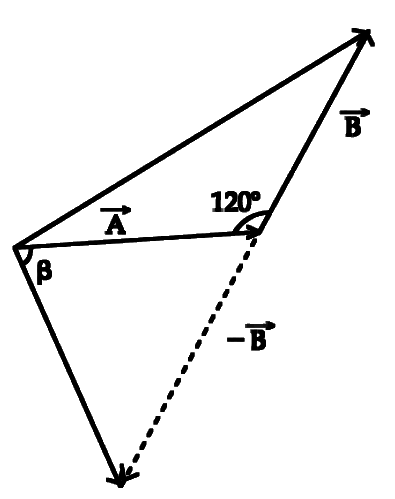
The resultant of two vectors A ⃗ \vec{A} A B ⃗ \vec{B} B A ⃗ \vec{A} A B ⃗ \vec{B} B A ⃗ \vec{A} A B ⃗ \vec{B} B ∘ {}^\circ ∘
Numerical answer type. Work it out, then open the answer.
Show answer and solution
Answer: 150
Loading the solution…
Report a mistake Open question page Q12 JEE Main 2024 · 9 APR · SHIFT 1 Medium ☆
Addition & Subtraction of Vectors
If a ⃗ \vec{a} a b ⃗ \vec{b} b cos − 1 ( 5 9 ) \cos^{-1}\left(\frac{5}{9}\right) cos − 1 ( 9 5 ) ∣ a ⃗ + b ⃗ ∣ = 2 ∣ a ⃗ − b ⃗ ∣ |\vec{a} + \vec{b}| = \sqrt{2}|\vec{a} - \vec{b}| ∣ a + b ∣ = 2 ∣ a − b ∣ ∣ a ⃗ ∣ = n ∣ b ⃗ ∣ |\vec{a}| = n|\vec{b}| ∣ a ∣ = n ∣ b ∣ n n n
Numerical answer type. Work it out, then open the answer.
Show answer and solution
Answer: 3
Loading the solution…
Report a mistake Open question page Q13 JEE Main 2024 · 4 APR · SHIFT 1 Medium ☆
Addition & Subtraction of Vectors
Two forcesF ‾ 1 \overline{F}_1 F 1 F ‾ 2 \overline{F}_2 F 2 F ⃗ 1 \vec{F}_1 F 1 F ⃗ 2 \vec{F}_2 F 2 cos − 1 ( 1 n ) \cos^{-1}\left(\frac{1}{n}\right) cos − 1 ( n 1 ) ∣ n ∣ |n| ∣ n ∣
Numerical answer type. Work it out, then open the answer.
Show answer and solution
Answer: 6
Loading the solution…
Report a mistake Open question page Q14 JEE Main 2023 · 8 APR · SHIFT 1 Easy ☆
Addition & Subtraction of Vectors
Two forces having magnitude A A A A 2 \frac{A}{2} 2 A
(a) 5 A 2 \frac{5A}{2} 2 5 A (b) 5 A 4 \frac{\sqrt{5}A}{4} 4 5 A (c) 5 A 2 \frac{\sqrt{5}A}{2} 2 5 A (d) 5 A 2 2 \frac{\sqrt{5}A^2}{2} 2 5 A 2 Show answer and solution
Answer: (c)
Loading the solution…
Report a mistake Open question page Q15 JEE Main 2022 · 29 JUN · SHIFT 1 Medium ☆
Addition & Subtraction of Vectors
Two vectors A ⃗ \vec{A} A B ⃗ \vec{B} B A ⃗ + B ⃗ \vec{A} + \vec{B} A + B A ⃗ − B ⃗ \vec{A} - \vec{B} A − B A ⃗ \vec{A} A B ⃗ \vec{B} B
(a) sin − 1 ( 3 5 ) \sin^{-1}\left(\frac{3}{5}\right) sin − 1 ( 5 3 ) (b) sin − 1 ( 1 3 ) \sin^{-1}\left(\frac{1}{3}\right) sin − 1 ( 3 1 ) (c) cos − 1 ( 3 5 ) \cos^{-1}\left(\frac{3}{5}\right) cos − 1 ( 5 3 ) (d) cos − 1 ( 1 3 ) \cos^{-1}\left(\frac{1}{3}\right) cos − 1 ( 3 1 ) Show answer and solution
Answer: (c)
Loading the solution…
Report a mistake Open question page Q16 JEE Main 2022 · 25 JUN · SHIFT 1 Medium ☆
Addition & Subtraction of Vectors
Which of the following relations is true for two unit vectors A ^ \hat{A} A ^ B ^ \hat{B} B ^ θ \theta θ
(a) ∣ A ^ + B ^ ∣ = ∣ A ^ − B ^ ∣ tan θ 2 |\hat{A} + \hat{B}| = |\hat{A} - \hat{B}| \tan\frac{\theta}{2} ∣ A ^ + B ^ ∣ = ∣ A ^ − B ^ ∣ tan 2 θ (b) ∣ A ^ − B ^ ∣ = ∣ A ^ + B ^ ∣ tan θ 2 |\hat{A} - \hat{B}| = |\hat{A} + \hat{B}| \tan\frac{\theta}{2} ∣ A ^ − B ^ ∣ = ∣ A ^ + B ^ ∣ tan 2 θ (c) ∣ A ^ + B ^ ∣ = ∣ A ^ − B ^ ∣ cos θ 2 |\hat{A} + \hat{B}| = |\hat{A} - \hat{B}| \cos\frac{\theta}{2} ∣ A ^ + B ^ ∣ = ∣ A ^ − B ^ ∣ cos 2 θ (d) ∣ A ^ − B ^ ∣ = ∣ A ^ + B ^ ∣ cos θ 2 |\hat{A} - \hat{B}| = |\hat{A} + \hat{B}| \cos\frac{\theta}{2} ∣ A ^ − B ^ ∣ = ∣ A ^ + B ^ ∣ cos 2 θ Show answer and solution
Answer: (b)
Loading the solution…
Report a mistake Open question page Q17 JEE Main 2021 · 25 JUL · SHIFT 1 Easy ☆
Addition & Subtraction of Vectors
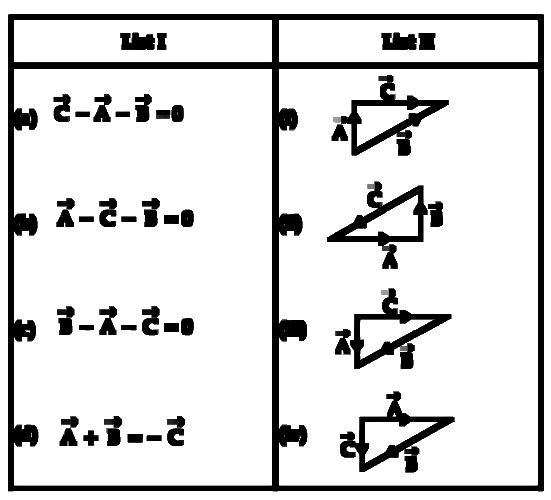
Match List - I with List - II
Choose the correct answer from the options given below:
(a) (a) → \rightarrow → → \rightarrow → → \rightarrow → → \rightarrow → (b) (a) → \rightarrow → → \rightarrow → → \rightarrow → → \rightarrow → (c) (a) → \rightarrow → → \rightarrow → → \rightarrow → → \rightarrow → (d) (a) → \rightarrow → → \rightarrow → → \rightarrow → → \rightarrow → Show answer and solution
Answer: (b)
Loading the solution…
Report a mistake Open question page Q18 JEE Main 2021 · 25 JUL · SHIFT 2 Medium ☆
Addition & Subtraction of Vectors
Two vectors X ⃗ \vec{X} X Y ⃗ \vec{Y} Y X ⃗ − Y ⃗ \vec{X} - \vec{Y} X − Y X ⃗ + Y ⃗ \vec{X} + \vec{Y} X + Y X ⃗ \vec{X} X Y ⃗ \vec{Y} Y
(a) cos − 1 ( − n 2 − 1 n 2 − 1 ) \cos^{-1}\left(\frac{-n^2 - 1}{n^2 - 1}\right) cos − 1 ( n 2 − 1 − n 2 − 1 ) (b) cos − 1 ( n 2 − 1 − n 2 − 1 ) \cos^{-1}\left(\frac{n^2 - 1}{-n^2 - 1}\right) cos − 1 ( − n 2 − 1 n 2 − 1 ) (c) cos − 1 ( n 2 + 1 − n 2 − 1 ) \cos^{-1}\left(\frac{n^2 + 1}{-n^2 - 1}\right) cos − 1 ( − n 2 − 1 n 2 + 1 ) (d) cos − 1 ( n 2 + 1 n 2 − 1 ) \cos^{-1}\left(\frac{n^2 + 1}{n^2 - 1}\right) cos − 1 ( n 2 − 1 n 2 + 1 ) Show answer and solution
Answer: (b)
Loading the solution…
Report a mistake Open question page Q19 JEE Main 2021 · 20 JUL · SHIFT 2 Medium ☆
Addition & Subtraction of Vectors
Two vectors P ⃗ \vec{P} P Q ⃗ \vec{Q} Q P ⃗ + Q ⃗ \vec{P} + \vec{Q} P + Q P ⃗ − Q ⃗ \vec{P} - \vec{Q} P − Q P ⃗ \vec{P} P Q ⃗ \vec{Q} Q
(a) sin − 1 ( n − 1 n + 1 ) \sin^{-1}\left(\frac{n-1}{n+1}\right) sin − 1 ( n + 1 n − 1 ) (b) cos − 1 ( n − 1 n + 1 ) \cos^{-1}\left(\frac{n-1}{n+1}\right) cos − 1 ( n + 1 n − 1 ) (c) sin − 1 ( n 2 − 1 n 2 + 1 ) \sin^{-1}\left(\frac{n^2-1}{n^2+1}\right) sin − 1 ( n 2 + 1 n 2 − 1 ) (d) cos − 1 ( n 2 − 1 n 2 + 1 ) \cos^{-1}\left(\frac{n^2-1}{n^2+1}\right) cos − 1 ( n 2 + 1 n 2 − 1 ) Show answer and solution
Answer: (d)
Loading the solution…
Report a mistake Open question page Q20 JEE Main 2021 · 26 AUG · SHIFT 2 Medium ☆
Addition & Subtraction of Vectors
The angle between vector ( A ⃗ ) \left(\vec{A}\right) ( A ) ( A ⃗ − B ⃗ ) \left(\vec{A} - \vec{B}\right) ( A − B )
(a) tan − 1 ( − B 2 A − B 3 2 ) \tan^{-1}\left(\frac{-\frac{B}{2}}{A - B\frac{\sqrt{3}}{2}}\right) tan − 1 ( A − B 2 3 − 2 B ) (b) tan − 1 ( A 0.7 B ) \tan^{-1}\left(\frac{A}{0.7B}\right) tan − 1 ( 0.7 B A ) (c) tan − 1 ( 3 B 2 A − B ) \tan^{-1}\left(\frac{\sqrt{3}B}{2A - B}\right) tan − 1 ( 2 A − B 3 B ) (d) tan − 1 ( B cos θ A − B sin θ ) \tan^{-1}\left(\frac{B\cos\theta}{A - B\sin\theta}\right) tan − 1 ( A − B s i n θ B c o s θ ) Show answer and solution
Answer: (c)
Loading the solution…
Report a mistake Open question page Q21 JEE Main 2021 · 31 AUG · SHIFT 2 Difficult ☆
Addition & Subtraction of Vectors
Statement I:
Two forces ( P ⃗ + Q ⃗ ) \left(\vec{P} + \vec{Q}\right) ( P + Q ) ( P ⃗ − Q ⃗ ) \left(\vec{P} - \vec{Q}\right) ( P − Q ) P ⃗ ⊥ Q ⃗ \vec{P} \perp \vec{Q} P ⊥ Q θ \theta θ 3 ( P 2 + Q 2 ) \sqrt{3(P^2 + Q^2)} 3 ( P 2 + Q 2 ) θ \theta θ 2 ( P 2 + Q 2 ) \sqrt{2(P^2 + Q^2)} 2 ( P 2 + Q 2 ) θ 1 < θ 2 \theta_1 < \theta_2 θ 1 < θ 2
Statement II:
In the situation given above.
θ \theta θ ∘ {}^\circ ∘ θ \theta θ ∘ {}^\circ ∘
In the light of the above statements, choose the most appropriate answer from the options given below :-
(a) Statement I is false but Statement II is true (b) Both Statement I and Statement II are true (c) Statement I is true but Statement II is false (d) Both Statement I and Statement II are false. Show answer and solution
Answer: (b)
Loading the solution…
Report a mistake Open question page Q22 JEE Main 2021 · 27 JUL · SHIFT 1 Difficult ☆
Addition & Subtraction of Vectors
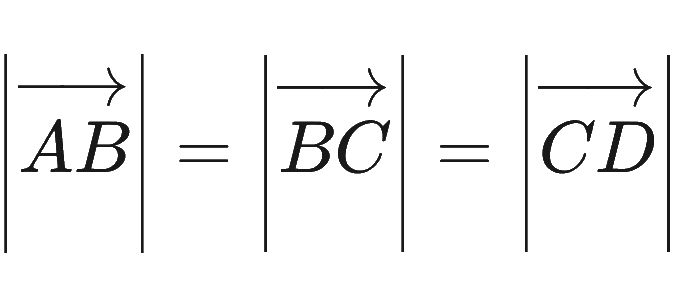
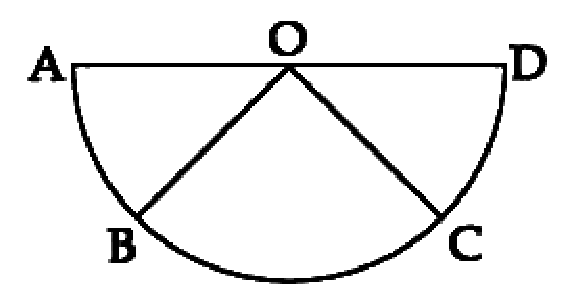
Assertion A: If A, B, C, D are four points on a semi-circular arc with centre at 'O' such that A B → + A C → + A D → = 4 A O → + O B → + O C → \overrightarrow{AB} + \overrightarrow{AC} + \overrightarrow{AD} = 4\overrightarrow{AO} + \overrightarrow{OB} + \overrightarrow{OC} A B + A C + A D = 4 A O + OB + OC
Reason R: Polygon law of vector addition yields A B → + B C → + C D → + A D → = 2 A O → \overrightarrow{AB} + \overrightarrow{BC} + \overrightarrow{CD} + \overrightarrow{AD} = 2\overrightarrow{AO} A B + BC + C D + A D = 2 A O
In the light of the above statements, choose the most appropriate answer from the options given below:
(a) A is correct but R is not correct. (b) A is not correct but R is correct. (c) Both A and R are correct and R is the correct explanation of A. (d) Both A and R are correct but R is not the correct explanation of A. Show answer and solution
Answer: (a)
Loading the solution…
Report a mistake Open question page Q23 JEE Main 2021 · 25 FEB · SHIFT 1 Difficult ☆
Addition & Subtraction of Vectors
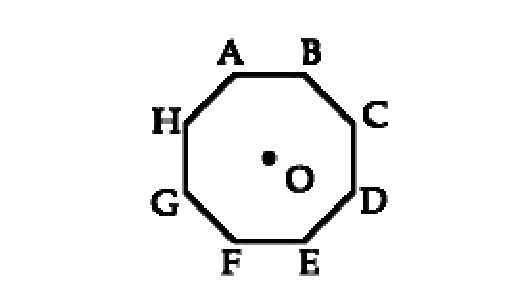
In an octagon ABCDEFGH of equal side, what is the sum of
A B → + A C → + A D → + A E → + A F → + A G → + A H → \overrightarrow{AB} + \overrightarrow{AC} + \overrightarrow{AD} + \overrightarrow{AE} + \overrightarrow{AF} + \overrightarrow{AG} + \overrightarrow{AH} A B + A C + A D + A E + A F + A G + A H
if, A O → = 2 i ^ + 3 j ^ − 4 k ^ \overrightarrow{AO} = 2\hat{i} + 3\hat{j} - 4\hat{k} A O = 2 i ^ + 3 j ^ − 4 k ^
(a) − 16 i ^ − 24 j ^ + 32 k ^ -16\hat{i} - 24\hat{j} + 32\hat{k} − 16 i ^ − 24 j ^ + 32 k ^ (b) 16 i ^ + 24 j ^ − 32 k ^ 16\hat{i} + 24\hat{j} - 32\hat{k} 16 i ^ + 24 j ^ − 32 k ^ (c) 16 i ^ + 24 j ^ + 32 k ^ 16\hat{i} + 24\hat{j} + 32\hat{k} 16 i ^ + 24 j ^ + 32 k ^ (d) 16 i ^ − 24 j ^ + 32 k ^ 16\hat{i} - 24\hat{j} + 32\hat{k} 16 i ^ − 24 j ^ + 32 k ^ Show answer and solution
Answer: (b)
Loading the solution…
Report a mistake Open question page Q24 MHT CET 2020 · 16 OCT · SHIFT 1 Easy ☆
Addition & Subtraction of Vectors
Two vectors of same magnitude have a resultant equal to either of the two vectors. The angle between two vectors is
(a) cos − 1 ( − 0.5 ) \cos^{-1}(-0.5) cos − 1 ( − 0.5 ) (b) cos − 1 ( − 0.4 ) \cos^{-1}(-0.4) cos − 1 ( − 0.4 ) (c) cos − 1 ( − 0.3 ) \cos^{-1}(-0.3) cos − 1 ( − 0.3 ) (d) cos − 1 ( − 0.6 ) \cos^{-1}(-0.6) cos − 1 ( − 0.6 ) Show answer and solution
Answer: (a)
Loading the solution…
Report a mistake Open question page Q25 MHT CET 2020 · 16 OCT · SHIFT 2 Medium ☆
Addition & Subtraction of Vectors
The resultant of two vector A \mathbf{A} A B \mathbf{B} B C \mathbf{C} C B \mathbf{B} B C \mathbf{C} C
Show answer and solution
Answer: (b)
Loading the solution…
Report a mistake Open question page Q26 JEE Main 2020 · 7 JAN · SHIFT 2 Difficult ☆
Addition & Subtraction of Vectors
The sum of two forces P ⃗ \vec{P} P Q ⃗ \vec{Q} Q R ⃗ \vec{R} R ∣ R ⃗ ∣ = ∣ P ⃗ ∣ \left|\vec{R}\right| = \left|\vec{P}\right| R = P θ \theta θ P ⃗ \vec{P} P Q ⃗ \vec{Q} Q Q ⃗ \vec{Q} Q
Numerical answer type. Work it out, then open the answer.
Show answer and solution
Answer: 90
Loading the solution…
Report a mistake Open question page Q27 MHT CET 2019 · 2 MAY · SHIFT 1 Medium ☆
Addition & Subtraction of Vectors
The resultant R \mathbf{R} R P \mathbf{P} P Q \mathbf{Q} Q P \mathbf{P} P ∣ P ∣ = ∣ R ∣ |\mathbf{P}| = |\mathbf{R}| ∣ P ∣ = ∣ R ∣ P \mathbf{P} P Q \mathbf{Q} Q [ tan 4 5 ∘ = 1 ] \left[\tan 45^\circ = 1\right] [ tan 4 5 ∘ = 1 ]
(a) 5 π 4 \frac{5\pi}{4} 4 5 π (b) 7 π 4 \frac{7\pi}{4} 4 7 π (c) π 4 \frac{\pi}{4} 4 π (d) 3 π 4 \frac{3\pi}{4} 4 3 π Show answer and solution
Answer: (d)
Loading the solution…
Report a mistake Open question page Q28 MHT CET 2019 · 2 MAY · SHIFT 1 Medium ☆
Addition & Subtraction of Vectors
If A 2 + B 2 \sqrt{A^2 + B^2} A 2 + B 2 ( A + B ) (\mathbf{A} + \mathbf{B}) ( A + B ) ( A − B ) (\mathbf{A} - \mathbf{B}) ( A − B )
(a) cos − 1 [ − 2 ( A 2 − B 2 ) ( A 2 + B 2 ) ] \cos^{-1}\left[-\frac{2(A^2 - B^2)}{(A^2 + B^2)}\right] cos − 1 [ − ( A 2 + B 2 ) 2 ( A 2 − B 2 ) ] (b) cos − 1 [ − A 2 − B 2 A 2 B 2 ] \cos^{-1}\left[-\frac{A^2 - B^2}{A^2 B^2}\right] cos − 1 [ − A 2 B 2 A 2 − B 2 ] (c) cos − 1 [ − ( A 2 + B 2 ) 2 ( A 2 − B 2 ) ] \cos^{-1}\left[-\frac{(A^2 + B^2)}{2(A^2 - B^2)}\right] cos − 1 [ − 2 ( A 2 − B 2 ) ( A 2 + B 2 ) ] (d) cos − 1 [ − ( A 2 − B 2 ) A 2 + B 2 ] \cos^{-1}\left[-\frac{(A^2 - B^2)}{A^2 + B^2}\right] cos − 1 [ − A 2 + B 2 ( A 2 − B 2 ) ] Show answer and solution
Answer: (c)
Loading the solution…
Report a mistake Open question page Q29 JEE Main 2019 · 10 JAN · SHIFT 2 Medium ☆
Addition & Subtraction of Vectors
Two vectors A ⃗ \vec{A} A B ⃗ \vec{B} B ( A ⃗ + B ⃗ ) \left(\vec{A} + \vec{B}\right) ( A + B ) ( A ⃗ − B ⃗ ) \left(\vec{A} - \vec{B}\right) ( A − B ) A ⃗ \vec{A} A B ⃗ \vec{B} B
(a) sin − 1 [ n − 1 n + 1 ] \sin^{-1}\left[\frac{n-1}{n+1}\right] sin − 1 [ n + 1 n − 1 ] (b) sin − 1 [ n 2 − 1 n 2 + 1 ] \sin^{-1}\left[\frac{n^2-1}{n^2+1}\right] sin − 1 [ n 2 + 1 n 2 − 1 ] (c) cos − 1 [ n 2 − 1 n 2 + 1 ] \cos^{-1}\left[\frac{n^2-1}{n^2+1}\right] cos − 1 [ n 2 + 1 n 2 − 1 ] (d) cos − 1 [ n − 1 n + 1 ] \cos^{-1}\left[\frac{n-1}{n+1}\right] cos − 1 [ n + 1 n − 1 ] Show answer and solution
Answer: (c)
Loading the solution…
Report a mistake Open question page Q30 JEE Main 2019 · 10 JAN · SHIFT 2 Medium ☆
Addition & Subtraction of Vectors
Two forces P and Q, of magnitude 2F and 3F, respectively, are at an angle θ \theta θ θ \theta θ
(a) 90o (b) 60o (c) 30o (d) 120o Show answer and solution
Answer: (d)
Loading the solution…
Report a mistake Open question page Q31 JEE Main 2015 · 11 APR · SHIFT 1 Medium ☆
Addition & Subtraction of Vectors
A vector A ⃗ \vec{A} A Δ θ \Delta\theta Δ θ Δ θ \Delta\theta Δ θ B ⃗ \vec{B} B
Show answer and solution
Answer: (c)
Loading the solution…
Report a mistake Open question page Q32 NDA 2026 Medium ☆
Addition & Subtraction of Vectors
Two forces of equal magnitude simultaneously act at a point. It is observed that the resultant force is equal in magnitude to the individual forces. Which of the following statements is/are correct?π / 3 \pi/3 π /3 2 π / 3 2\pi/3 2 π /3
(a) I only (b) II only (c) Both I and II (d) Neither I nor II Show answer
Answer: (c)
Step-by-step solution coming soon.
Report a mistake Q33 NDA 2023 Easy ☆
Addition & Subtraction of Vectors
Two forces of 5.0 N 5.0\,\text{N} 5.0 N 6 0 ∘ 60^\circ 6 0 ∘
(a) 8.6 N 8.6\,\text{N} 8.6 N (b) 4.3 N 4.3\,\text{N} 4.3 N (c) 5.0 N 5.0\,\text{N} 5.0 N (d) 6.7 N 6.7\,\text{N} 6.7 N Show answer
Answer: (a)
Step-by-step solution coming soon.
Report a mistake Q34 VITEEE 2024 Easy ☆
Addition & Subtraction of Vectors
The resultant of A \mathbf{A} A B \mathbf{B} B R 1 \mathbf{R}_1 R 1 B \mathbf{B} B R 2 \mathbf{R}_2 R 2 R 1 2 + R 2 2 R_1^2 + R_2^2 R 1 2 + R 2 2
(a) A 2 + B 2 A^2 + B^2 A 2 + B 2 (b) A 2 − B 2 A^2 - B^2 A 2 − B 2 (c) 2 ( A 2 + B 2 ) 2\left(A^2 + B^2\right) 2 ( A 2 + B 2 ) (d) 2 ( A 2 − B 2 ) 2\left(A^2 - B^2\right) 2 ( A 2 − B 2 ) Show answer
Answer: (c)
Step-by-step solution coming soon.
Report a mistake Q35 VITEEE 2019 Medium ☆
Addition & Subtraction of Vectors
A person swims in a river aiming to reach exactly on the opposite point on the bank of a river. His speed of swimming is 0.5 m/s 0.5\,\text{m/s} 0.5 m/s 12 0 ∘ 120^\circ 12 0 ∘
(a) 1.0 m/s 1.0\,\text{m/s} 1.0 m/s (b) 0.5 m/s 0.5\,\text{m/s} 0.5 m/s (c) 0.25 m/s 0.25\,\text{m/s} 0.25 m/s (d) 0.43 m/s 0.43\,\text{m/s} 0.43 m/s Show answer
Answer: (c)
Step-by-step solution coming soon.
Report a mistake Q36 VITEEE 2007 Easy ☆
Addition & Subtraction of Vectors
Two electrons one moving in opposite direction with speeds 0.8 c 0.8c 0.8 c 0.4 c 0.4c 0.4 c c c c
(a) 0.4 c 0.4c 0.4 c (b) 0.8 c 0.8c 0.8 c (c) 0.9 c 0.9c 0.9 c (d) 1.2 c 1.2c 1.2 c Show answer
Answer: (c)
Step-by-step solution coming soon.
Report a mistake Q37 COMEDK 2026 Easy ☆
Addition & Subtraction of Vectors
Which of the following statements is/are true?
(a) Statements (B) and (C) (b) Statements (A) and (C) (c) Statement (B) (d) Statement (A) Show answer
Answer: (c)
Step-by-step solution coming soon.
Report a mistake Q38 COMEDK 2026 Medium ☆
Addition & Subtraction of Vectors
Forces A and B act at a point. The sum of their magnitudes is 50 N 50\,\text{N} 50 N 20 N 20\,\text{N} 20 N 9 0 ∘ 90^\circ 9 0 ∘
(a) 28 , 20 28, 20 28 , 20 (b) 40 , 8 40, 8 40 , 8 (c) 29 , 21 29, 21 29 , 21 (d) 35 , 13 35, 13 35 , 13 Show answer
Answer: (c)
Step-by-step solution coming soon.
Report a mistake Q39 COMEDK 2025 Easy ☆
Addition & Subtraction of Vectors
The square of the resultant of two equal electric field vectors is three times their product. The angle between them is
(a) π 5 \dfrac{\pi}{5} 5 π (b) π 6 \dfrac{\pi}{6} 6 π (c) π 8 \dfrac{\pi}{8} 8 π (d) π 3 \dfrac{\pi}{3} 3 π Show answer
Answer: (d)
Step-by-step solution coming soon.
Report a mistake Q40 COMEDK 2022 Medium ☆
Addition & Subtraction of Vectors
The resultant of two forces acting at an angle of 12 0 ∘ 120^\circ 12 0 ∘ 10 kg-W 10\,\text{kg-W} 10 kg-W
(a) 10 3 kg-W \dfrac{10}{\sqrt{3}}\,\text{kg-W} 3 10 kg-W (b) 10 kg-W 10\,\text{kg-W} 10 kg-W (c) 20 3 kg-W 20\sqrt{3}\,\text{kg-W} 20 3 kg-W (d) 10 3 kg-W 10\sqrt{3}\,\text{kg-W} 10 3 kg-W Show answer
Answer: (a)
Step-by-step solution coming soon.
Report a mistake Q41 KCET 2024 Easy ☆
Addition & Subtraction of Vectors
Among the given pair of vectors, the resultant of two vectors can never be 3 3 3
(a) 1 1 1 2 2 2 (b) 3 3 3 6 6 6 (c) 2 2 2 5 5 5 (d) 4 4 4 8 8 8 Show answer
Answer: (d)
Step-by-step solution coming soon.
Report a mistake Q42 AP EAPCET 2026 Easy ☆
Addition & Subtraction of Vectors
The resultant magnitude of two vectors is equal to the magnitude of both the vectors separately, then the angle between the two vectors is
(a) 6 0 ∘ 60^\circ 6 0 ∘ (b) 8 0 ∘ 80^\circ 8 0 ∘ (c) 12 0 ∘ 120^\circ 12 0 ∘ (d) 4 5 ∘ 45^\circ 4 5 ∘ Show answer
Answer: (c)
Step-by-step solution coming soon.
Report a mistake Q43 AP EAPCET 2026 Easy ☆
Addition & Subtraction of Vectors
If the resultant of three vectors A ‾ = − i ^ + 2 j ^ + 3 k ^ \overline{A} = -\hat{i} + 2\hat{j} + 3\hat{k} A = − i ^ + 2 j ^ + 3 k ^ B ‾ = − 2 i ^ − j ^ − 4 k ^ \overline{B} = -2\hat{i} - \hat{j} - 4\hat{k} B = − 2 i ^ − j ^ − 4 k ^ C ‾ \overline{C} C z z z 2 2 2 C ‾ = \overline{C} = C =
(a) 3 i ^ − j ^ + 3 k ^ 3\hat{i} - \hat{j} + 3\hat{k} 3 i ^ − j ^ + 3 k ^ (b) 3 i ^ − 2 j ^ − 3 k ^ 3\hat{i} - 2\hat{j} - 3\hat{k} 3 i ^ − 2 j ^ − 3 k ^ (c) 2 i ^ − 3 j ^ + 2 k ^ 2\hat{i} - 3\hat{j} + 2\hat{k} 2 i ^ − 3 j ^ + 2 k ^ (d) 2 i ^ + 3 j ^ − 2 k ^ 2\hat{i} + 3\hat{j} - 2\hat{k} 2 i ^ + 3 j ^ − 2 k ^ Show answer
Answer: (a)
Step-by-step solution coming soon.
Report a mistake Q44 AP EAPCET 2025 Medium ☆
Addition & Subtraction of Vectors
Three vectors each of magnitude 3 1.5 3\sqrt{1.5} 3 1.5 π 3 \dfrac{\pi}{3} 3 π
(a) 9 3 9\sqrt{3} 9 3 (b) 9 9 9 (c) 6 \sqrt{6} 6 (d) 3 3 3 Show answer
Answer: (b)
Step-by-step solution coming soon.
Report a mistake Q45 AP EAPCET 2025 Medium ☆
Addition & Subtraction of Vectors
The magnitudes of two vectors are A A A B B B A > B A > B A > B n n n A B = \dfrac{A}{B} = B A =
(a) n n − 1 \dfrac{n}{n-1} n − 1 n (b) n + 1 n \dfrac{n+1}{n} n n + 1 (c) n 2 + 1 n − 1 \dfrac{n^2+1}{n-1} n − 1 n 2 + 1 (d) n + 1 n − 1 \dfrac{n+1}{n-1} n − 1 n + 1 Show answer
Answer: (d)
Step-by-step solution coming soon.
Report a mistake Q46 AP EAPCET 2024 Easy ☆
Addition & Subtraction of Vectors
If ∣ P + Q ∣ = ∣ P ∣ = ∣ Q ∣ |\mathbf{P} + \mathbf{Q}| = |\mathbf{P}| = |\mathbf{Q}| ∣ P + Q ∣ = ∣ P ∣ = ∣ Q ∣ P \mathbf{P} P Q \mathbf{Q} Q
(a) 0 ∘ 0^\circ 0 ∘ (b) 12 0 ∘ 120^\circ 12 0 ∘ (c) 6 0 ∘ 60^\circ 6 0 ∘ (d) 9 0 ∘ 90^\circ 9 0 ∘ Show answer
Answer: (b)
Step-by-step solution coming soon.
Report a mistake Q47 AP EAPCET 2023 Easy ☆
Addition & Subtraction of Vectors
Two vectors of same magnitude act at a point. Twice the product of the magnitudes of the two vectors is equal to the square of the magnitude of their resultant. The angle between the two vectors is
(a) 6 0 ∘ 60^\circ 6 0 ∘ (b) 3 0 ∘ 30^\circ 3 0 ∘ (c) 9 0 ∘ 90^\circ 9 0 ∘ (d) 12 0 ∘ 120^\circ 12 0 ∘ Show answer
Answer: (c)
Step-by-step solution coming soon.
Report a mistake Q48 AP EAPCET 2023 Medium ☆
Addition & Subtraction of Vectors
The sum of the magnitudes of two vectors acting at a point is 18 18 18 12 12 12 9 0 ∘ 90^\circ 9 0 ∘
(a) 5 , 13 5, 13 5 , 13 (b) 2 , 16 2, 16 2 , 16 (c) 6 , 12 6, 12 6 , 12 (d) 8 , 10 8, 10 8 , 10 Show answer
Answer: (a)
Step-by-step solution coming soon.
Report a mistake Q49 AP EAPCET 2023 Medium ☆
Addition & Subtraction of Vectors
Two forces whose magnitudes are in the ratio 5 : 3 5:3 5 : 3 6 0 ∘ 60^\circ 6 0 ∘ 35 N 35\,\text{N} 35 N
(a) 3 N , 5 N 3\,\text{N}, 5\,\text{N} 3 N , 5 N (b) 25 N , 9 N 25\,\text{N}, 9\,\text{N} 25 N , 9 N (c) 25 N , 15 N 25\,\text{N}, 15\,\text{N} 25 N , 15 N (d) 12 N , 20 N 12\,\text{N}, 20\,\text{N} 12 N , 20 N Show answer
Answer: (c)
Step-by-step solution coming soon.
Report a mistake Q50 AP EAPCET 2022 Medium ☆
Addition & Subtraction of Vectors
A force F 1 \mathbf{F}_1 F 1 4 N 4\,\text{N} 4 N 1 kg 1\,\text{kg} 1 kg 3 0 ∘ 30^\circ 3 0 ∘ X X X F 2 \mathbf{F}_2 F 2 4 N 4\,\text{N} 4 N Y Y Y
(a) 6.9 m s − 2 6.9\,\text{m s}^{-2} 6.9 m s − 2 (b) 7.6 m s − 2 7.6\,\text{m s}^{-2} 7.6 m s − 2 (c) 4.3 m s − 2 4.3\,\text{m s}^{-2} 4.3 m s − 2 (d) 8.0 m s − 2 8.0\,\text{m s}^{-2} 8.0 m s − 2 Show answer
Answer: (a)
Step-by-step solution coming soon.
Report a mistake Q51 TS EAMCET 2023 Medium ☆
Addition & Subtraction of Vectors
A person walks in such a way that he covers equal distance in each step. The person takes 2 steps forwards towards east, then takes a right turn and walks 4 steps towards south, then takes a right turn and walks 6 steps towards west and then takes a right turn and walks further. The direction of his final position after a total of 20 steps walk with respect to his initial position is
(a) North-West (b) 6 0 ∘ 60^\circ 6 0 ∘ (c) 6 0 ∘ 60^\circ 6 0 ∘ (d) South-East Show answer
Answer: (a)
Step-by-step solution coming soon.
Report a mistake Q52 TS EAMCET 2020 Easy ☆
Addition & Subtraction of Vectors
If r 1 = 2 x ^ \mathbf{r}_1 = 2\hat{\mathbf{x}} r 1 = 2 x ^ r 2 = 2 y ^ \mathbf{r}_2 = 2\hat{\mathbf{y}} r 2 = 2 y ^ x ^ \hat{\mathbf{x}} x ^ y ^ \hat{\mathbf{y}} y ^ X X X Y Y Y r 1 + r 2 \mathbf{r}_1 + \mathbf{r}_2 r 1 + r 2
(a) 2 2 2\sqrt{2} 2 2 (b) 2 3 2\sqrt{3} 2 3 (c) 3 2 3\sqrt{2} 3 2 (d) 3 \sqrt{3} 3 Show answer
Answer: (a)
Step-by-step solution coming soon.
Report a mistake Q53 TS EAMCET 2020 Easy ☆
Addition & Subtraction of Vectors
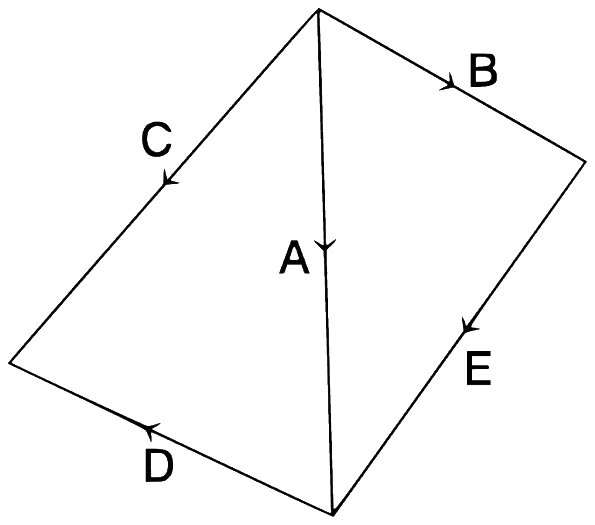
Consider the following vectors. Choose the correct statement.
(A) E = A − B \mathbf{E} = \mathbf{A} - \mathbf{B} E = A − B A = D + C \mathbf{A} = \mathbf{D} + \mathbf{C} A = D + C − E = − A + B -\mathbf{E} = -\mathbf{A} + \mathbf{B} − E = − A + B A = − D + C \mathbf{A} = -\mathbf{D} + \mathbf{C} A = − D + C E = − A − B \mathbf{E} = -\mathbf{A} - \mathbf{B} E = − A − B E = − B + D + C \mathbf{E} = -\mathbf{B} + \mathbf{D} + \mathbf{C} E = − B + D + C E = − A − B \mathbf{E} = -\mathbf{A} - \mathbf{B} E = − A − B E = − B + C − D \mathbf{E} = -\mathbf{B} + \mathbf{C} - \mathbf{D} E = − B + C − D
(a) E = A − B \mathbf{E} = \mathbf{A} - \mathbf{B} E = A − B A = D + C \mathbf{A} = \mathbf{D} + \mathbf{C} A = D + C (b) − E = − A + B -\mathbf{E} = -\mathbf{A} + \mathbf{B} − E = − A + B A = − D + C \mathbf{A} = -\mathbf{D} + \mathbf{C} A = − D + C (c) E = − A − B \mathbf{E} = -\mathbf{A} - \mathbf{B} E = − A − B E = − B + D + C \mathbf{E} = -\mathbf{B} + \mathbf{D} + \mathbf{C} E = − B + D + C (d) E = − A − B \mathbf{E} = -\mathbf{A} - \mathbf{B} E = − A − B E = − B + C − D \mathbf{E} = -\mathbf{B} + \mathbf{C} - \mathbf{D} E = − B + C − D Show answer
Answer: (b)
Step-by-step solution coming soon.
Report a mistake Q54 TS EAMCET 2020 Medium ☆
Addition & Subtraction of Vectors
Let A 1 + A 2 = 5 A 3 \mathbf{A}_1 + \mathbf{A}_2 = 5\mathbf{A}_3 A 1 + A 2 = 5 A 3 A 1 − A 2 = 3 A 3 \mathbf{A}_1 - \mathbf{A}_2 = 3\mathbf{A}_3 A 1 − A 2 = 3 A 3 A 3 = 2 i ^ + 4 j ^ \mathbf{A}_3 = 2\hat{\mathbf{i}} + 4\hat{\mathbf{j}} A 3 = 2 i ^ + 4 j ^ ∣ A 1 ∣ ∣ A 2 ∣ \dfrac{|\mathbf{A}_1|}{|\mathbf{A}_2|} ∣ A 2 ∣ ∣ A 1 ∣
Show answer
Answer: (a)
Step-by-step solution coming soon.
Report a mistake Q55 TS EAMCET 2020 Medium ☆
Addition & Subtraction of Vectors
A person moves 30 m 30\,\text{m} 30 m 20 m 20\,\text{m} 20 m 30 2 m 30\sqrt{2}\,\text{m} 30 2 m
(a) 10 m 10\,\text{m} 10 m (b) 10 m 10\,\text{m} 10 m (c) 10 m 10\,\text{m} 10 m (d) zero Show answer
Answer: (c)
Step-by-step solution coming soon.
Report a mistake Q56 WB JEE 2025 Easy ☆
Addition & Subtraction of Vectors
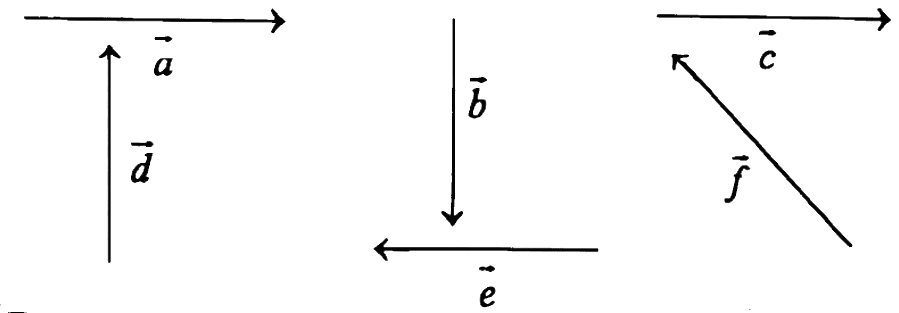
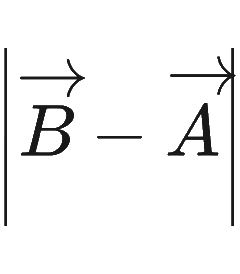
Six vectors a ⃗ , b ⃗ , c ⃗ , d ⃗ , e ⃗ \vec{a}, \vec{b}, \vec{c}, \vec{d}, \vec{e} a , b , c , d , e f ⃗ \vec{f} f
(a) b ˉ + e ˉ = f ˉ \bar{b} + \bar{e} = \bar{f} b ˉ + e ˉ = f ˉ (b) b ˉ + c ˉ = f ˉ \bar{b} + \bar{c} = \bar{f} b ˉ + c ˉ = f ˉ (c) d ˉ + c ˉ = f ˉ \bar{d} + \bar{c} = \bar{f} d ˉ + c ˉ = f ˉ (d) d ˉ + e ˉ = f ˉ \bar{d} + \bar{e} = \bar{f} d ˉ + e ˉ = f ˉ Show answer
Answer: (d)
Step-by-step solution coming soon.
Report a mistake
No questions match these filters.

 , then
 is: