Current Electricity PYQs · MHT CET · JEE Main · NEET
Wheatstone Bridge & Metre Bridge
Questions
87
MHT CET
38
JEE Main
35
NEET
14
Years
1999–2026
0 of 87 attemptedPick an answer to see the solution
Q1MHT CET 2026 · 16 APR · SHIFT 1Easy
Wheatstone Bridge & Metre Bridge · Metre bridge
A metre bridge experiment, the resistance in the left gap is 20Ω and in the right gap is 60Ω. The bridge is balanced. The distance of the null point from the centre of the wire is
In metre bridge experiment, the resistance in the left gap is 15 Ω and in the right gap is 45 Ω. The bridge is balanced. The distance of the null point from the centre of the wire is
Wheatstone Bridge & Metre Bridge · Wheatstone bridge balance
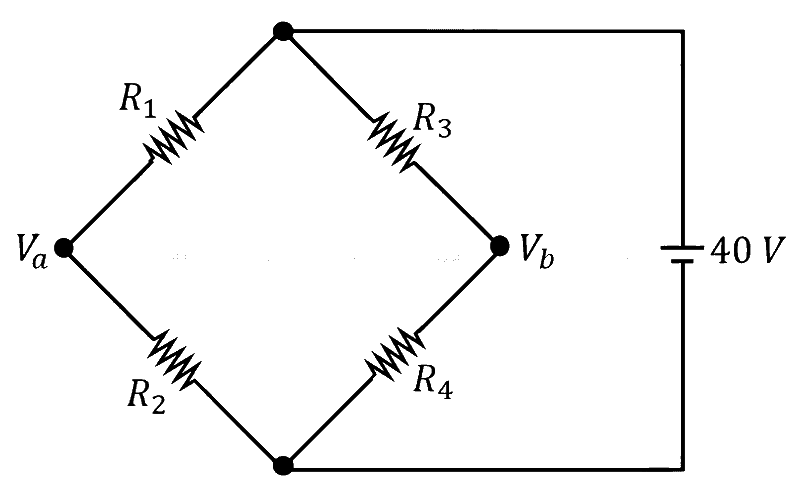
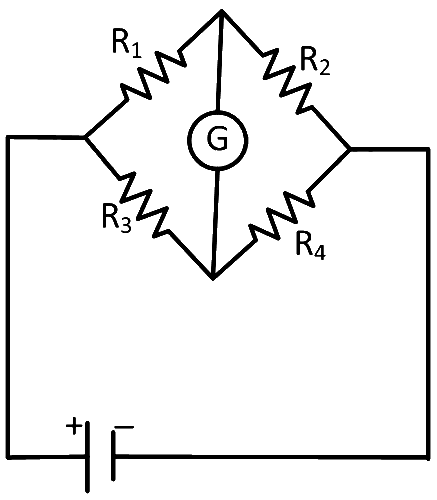
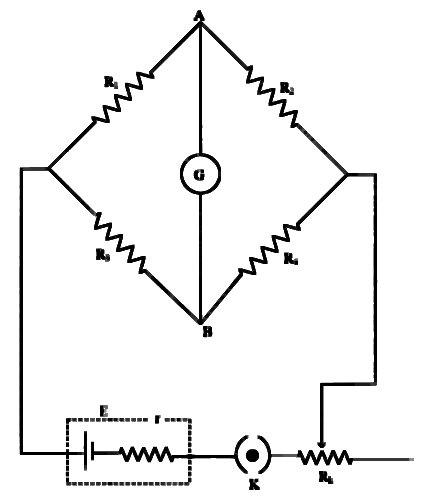
A Wheatstone bridge is initially at room temperature and all arms of the bridge have same value of resistances (R1=R2=R3=R4). When R3 resistance is heated to some temperature, its resistance value has gone up by 10%. The potential difference (Va−Vb) (after R3 is heated) is _________ V.
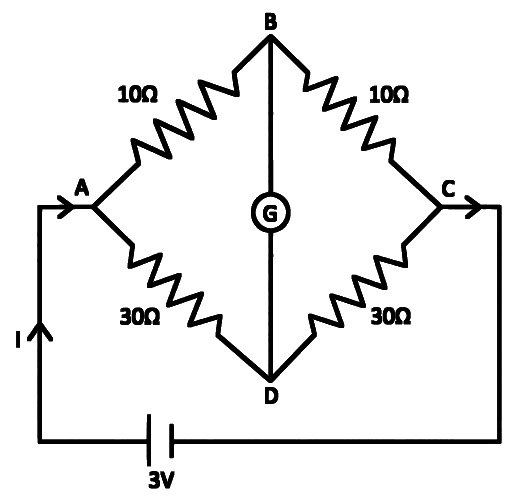
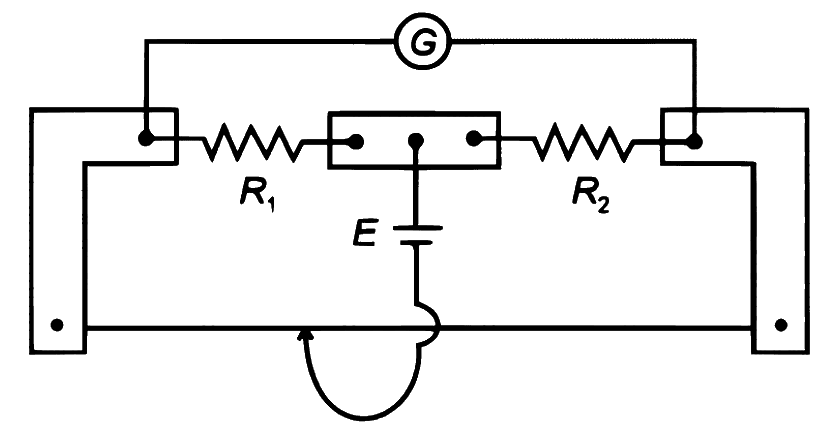
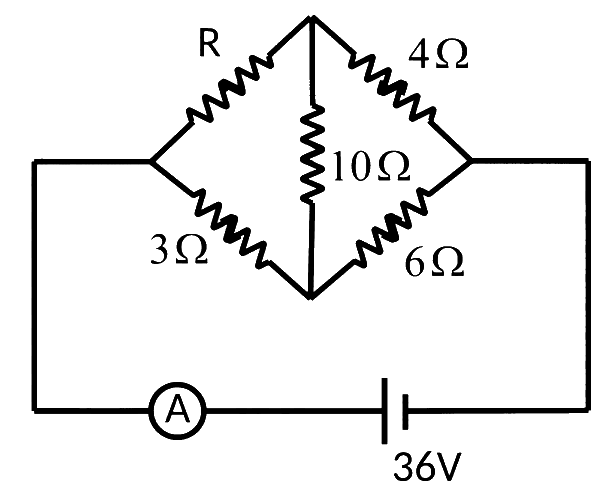
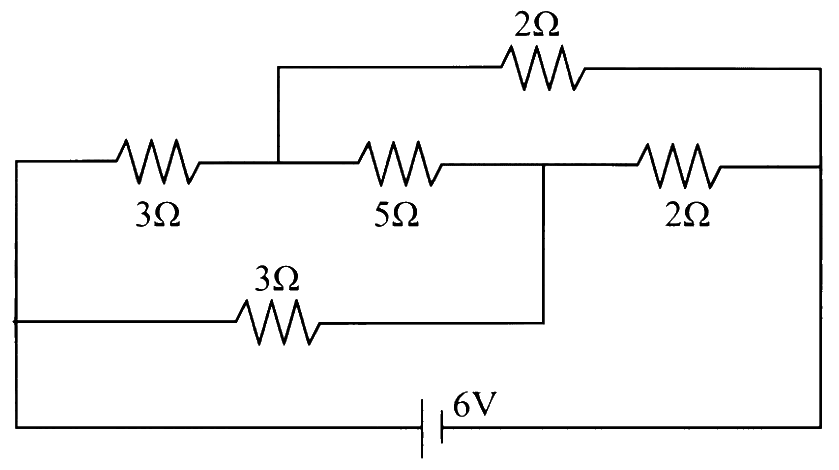
A balanced meter bridge is shown in the circuit diagram. The meter bridge wire has resistance 2cmΩ. The current drawn from the battery is (Internal resistance of the battery is negligible)
Two wires A and B of equal lengths are connected in left and right gap of a metre bridge, null point is obtained at 40 cm from left end. Diameters of the wires A and B are in the ratio 3:1. The ratio of specific resistance of A to that of B is
With resistance x in the left gap and resistance 9Ω in right gap of a meter bridge, the balance point is obtained at 40 cm from left end. In what way and to which resistance 3Ω resistance be connected to obtain the balance point at 50 cm from the left end?
In balanced meter bridge, the resistance of bridge wire is 0.1Ω/cm. Unknown resistance X is connected in the left gap and 6Ω in right gap. Null point divides the wire in the ratio 2:3. The current drawn from the battery of 5V having negligible resistance is
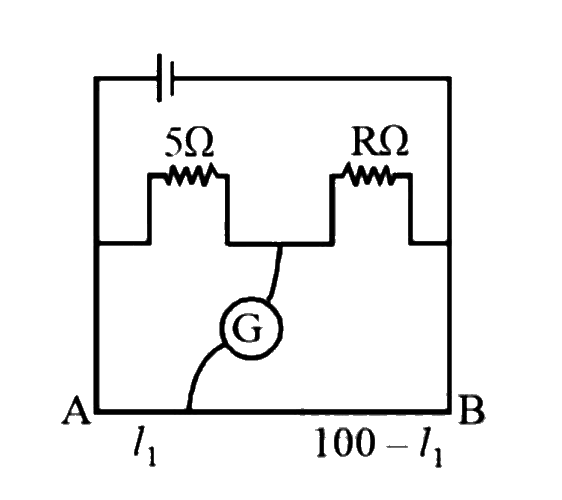
The resistances in two arms of the metre bridge are 5Ω and RΩ respectively, null point is obtained at length l1. When the resistance R is shunted with an equal resistance, the new balance point is at 1.6l1. The resistance R is
The resistances in the two gaps of a balanced meter bridge are 'X' Ω and '3X' Ω respectively. If the resistances are interchanged the balance point shifts by
In a meter bridge experiment, the balance point is obtained at length 'l1 ' cm from left hand when resistances in the left gap and right gap are 15Ω and RΩ respectively. When the resistance R is shunted with equal resistance the new balance point is at (1.6l1). The resistance R in ohm is
Two wires A and B of equal lengths are connected in left and right gap respectively of a metre bridge, null point is obtained at 40 cm from left end. Diameters of the wires A and B are in the ratio 3:1 respectively, the ratio of specific resistance of A to that of B is
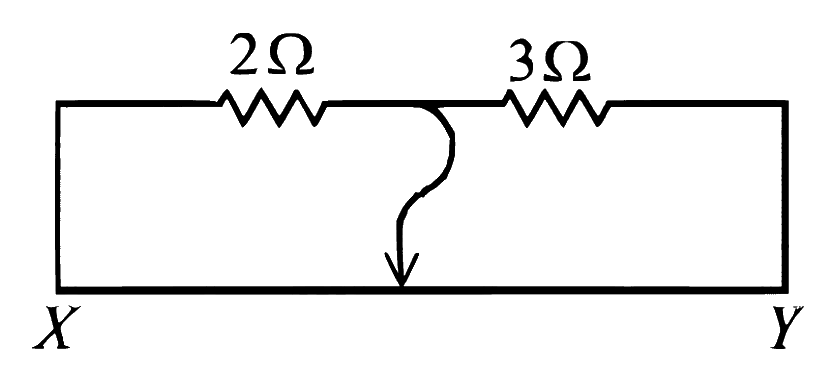
Two resistors 2Ω and 3Ω are connected in the gaps of bridge as shown in figure. The null point is obtained with the contact of jockey at some point on wire XY. When an unknown resistor is connected in parallel with 3Ω resistor, the null point is shifted by 22.5 cm toward Y. The resistance of unknown resistor is Ω.
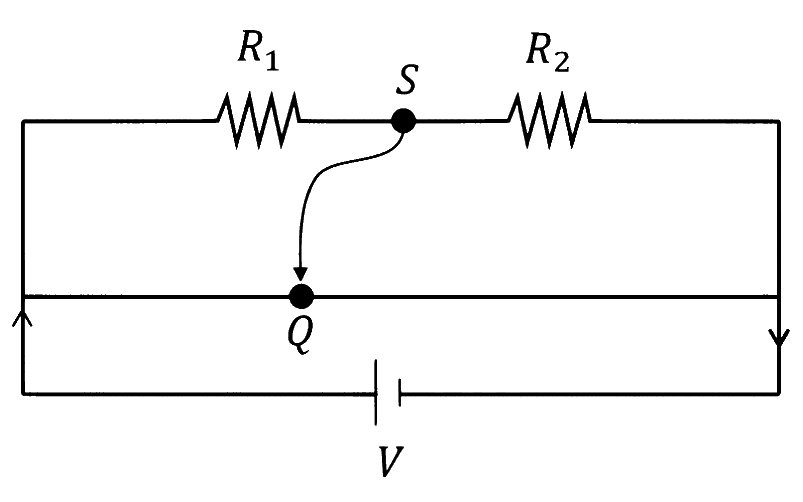
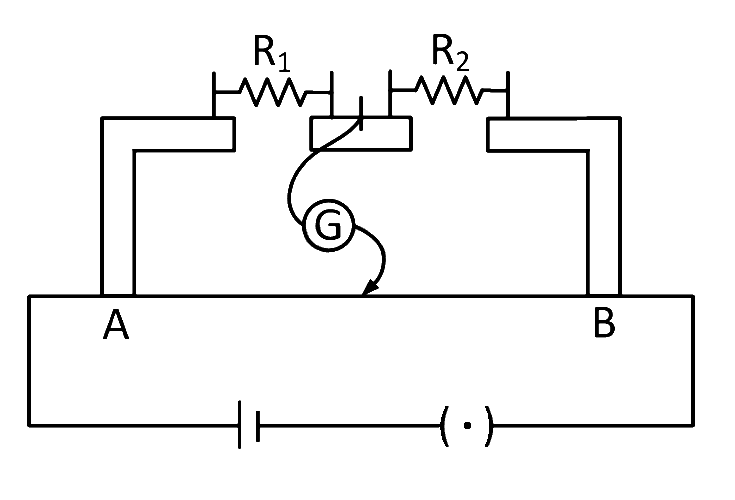
A meter bridge with two resistances R1 and R2 as shown in figure was balanced (null point) at 40 cm from the point P. The null point changed to 50 cm from the point P, when 16Ω resistance is connected in parallel to R2. The values of resistances R1 and R2 are ______.
In a meter bridge experiment to determine the value of unknown resistance, first the resistances 2Ω and 3Ω are connected in the left and right gaps of the bridge and the null point is obtained at a distance l cm from the left. Now when an unknown resistance xΩ is connected in parallel to 3Ω resistance, the null point is shifted by 10 cm to the right of wire. The value of unknown resistance x is
Ω.
Numerical answer type. Work it out, then open the answer.
In meter bridge experiment, two resistances X and Y in the two gaps give a null point dividing the wire in the ratio 2:3. When each resistance is increased by 30Ω, the null point divides the wire in the ratio 5:6. The resistance X and Y are respectively
In a metre bridge experiment the balance point is obtained if the gaps are closed by 2Ω and 3Ω. A shunt of XΩ is added to 3Ω resistor to shift the balancing point by 22.5 cm. The value of X is
In metre-bridge experiment the balance point is obtained if the gaps are closed by 2Ω and 3Ω. A shunt of xΩ is added to 3Ω resistor to shift the balance point by 22.5 cm. The value of x is
Wheatstone Bridge & Metre Bridge · Wheatstone bridge balance
Wheatstone bridge principle is used to measure the specific resistance (S1) of given wire, having length L, radius r. If X is the resistance of wire, then specific resistance is; S1=X(Lπr2). If the length of the wire gets doubled then the value of specific resistance will be:
The resistances in the left and right gap of a metre bridge are 40Ω and 60Ω respectively. When the bridge is balanced, the distance of the null point from the centre of the wire towards left is
When the two known resistances ' R ' and ' S ' are connected in the left and right gaps of a meter bridge respectively, the null point is found at a distance ' l1 ' from the zero end of a meter bridge wire. An unknown resistance ' X ' is now connected in parallel with ' S ' and null point is found at a distance ' l2 ' from zero end of meter bridge wire. The unknown resistance ' X ' is
Resistances in the left gap and right gap of a meter bridge are 10Ω and 30Ω respectively. If the resistances in the two gaps are interchanged, the balance point will shift to right by
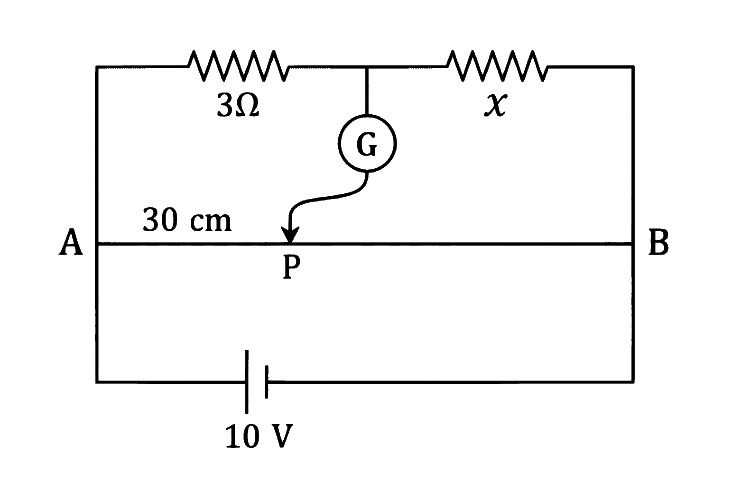
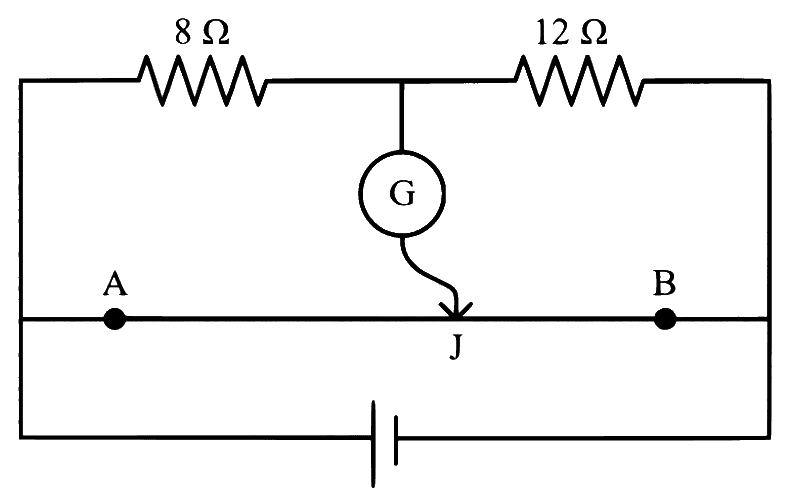
The given circuit shows a uniform straight wire AB of 40 cm length fixed at both ends. In order to get zero reading in the galvanometer G, the free end of J is to be placed from B at:
In a metre-bridge when a resistance in the left gap is 2Ω and unknown resistance in the right gap, the balance length is found to be 40 cm. On shunting the unknown resistance with 2Ω, the balance length changes by:
A wire of length 10 cm and radius 7×10⁻⁴ m is connected across the right gap of a meter bridge. When a resistance of 4.5Ω is connected on the left gap by using a resistance box, the balance length is found to be at 60 cm from the left end. If the resistivity of the wire is R×10−7Ω m, then value of R is:
In a meter bridge experiment, the balance point is obtained if the gaps are closed by 2Ω and 3Ω. A shunt of XΩ is added to 3Ω resistor to shift the null point by 22.5 cm. The value of ' x ' is
The resistance per centimeter of a meter bridge wire is r, with XΩ resistance in left gap. Balancing length from left end is at 40 cm with 25Ω resistance in right gap. Now the wire is replaced by another wire of 2r resistance per centimeter. The new balancing length for same settings will be at
A wire of length 3 m connected in the left gap of a meter-bridge balances 8Ω resistance in the right gap at a point, which divides the bridge wire in the ratio 3:2. The length of the wire corresponding to resistance of 1Ω is
Two resistance X and Y are connected in the two gaps of a meterbridge and the null points is obtained at 20 cm from zero end. When the resistance of 20Ω is connected in series with the smaller of the two resistance X and Y, the null point shifts to 40 cm from left end. The value of smaller resistance in ohm is
In meter bridge experiment, null point was obtained at a distance 'l' from left end. The values of resistances in the left and right gap are doubled and then interchanged. The new position of the null point is
In a meter bridge experiment null point is obtained at l cm from the left end. If the meter bridge wire is replaced by a wire of same material but twice the area of across-section, then the null point is obtained at a distance
When two resistance R1 and R2 connected in series and introduced into the left gap of a meter bridge and a resistance of 10 Ω is introduced into the right gap, a null point is found at 60 cm from left side. When R1 and R2 are connected in parallel and introduced into the left gap, a resistance of 3 Ω is introduced into the right gap to get null point at 40 cm from left end. The product of R1R2 is ____________Ω2
Numerical answer type. Work it out, then open the answer.
In a metre bridge experiment the balance point is obtained if the gaps are closed by 2Ω and 3Ω. A shunt of X Ω is added to 3Ω resistor to shift the balancing point by 22.5 cm. The value of X is ___________.
Numerical answer type. Work it out, then open the answer.
Wheatstone Bridge & Metre Bridge · Wheatstone bridge balance
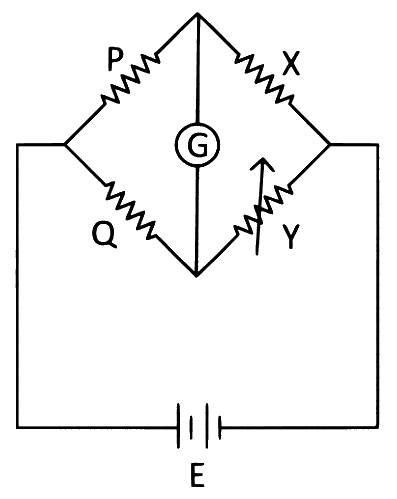
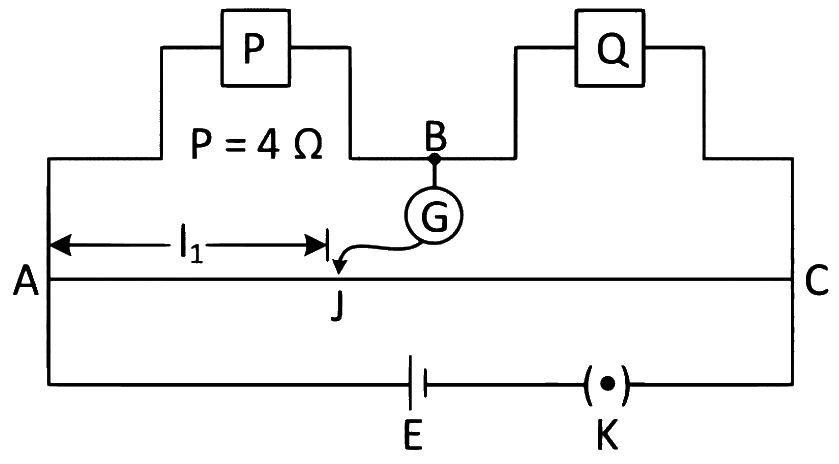
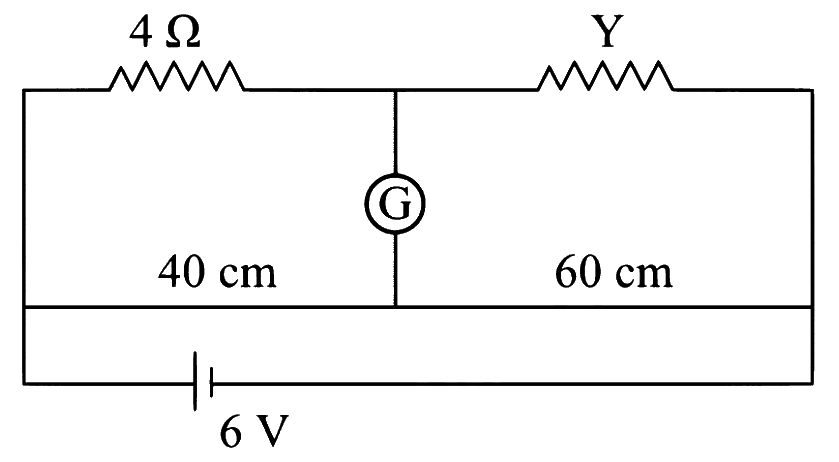
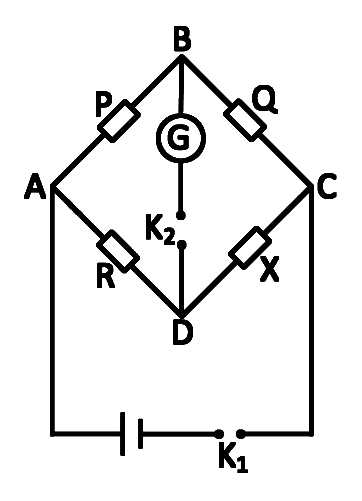
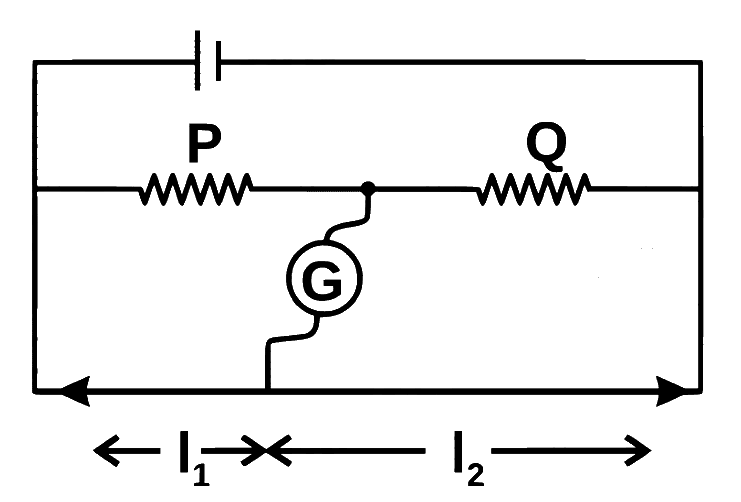
A wheatstone bridge is used to determine the value of unknown resistance X by adjusting the variable resistance Y as shown in the figure. For the most precise measurement of X, the resistance P and Q
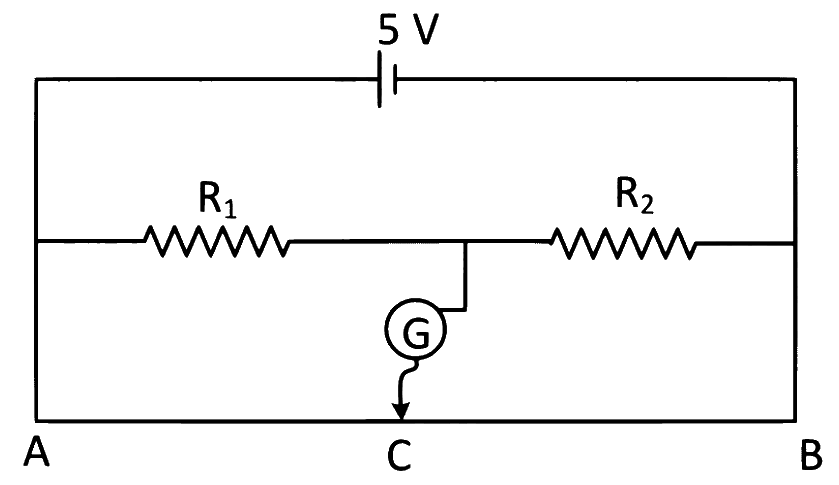
In the given figure of meter bridge experiment, the balancing length AC corresponding to null deflection of the galvanometer is 40 cm. The balancing length, if the radius of the wire AB is doubled, will be ______________ cm.
Numerical answer type. Work it out, then open the answer.
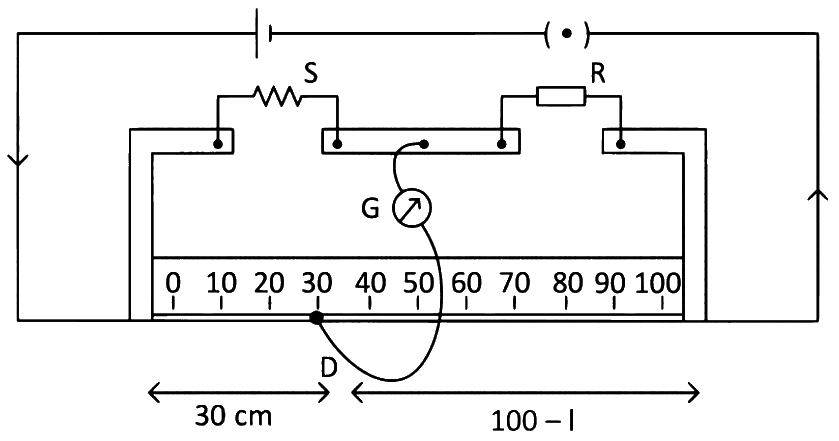
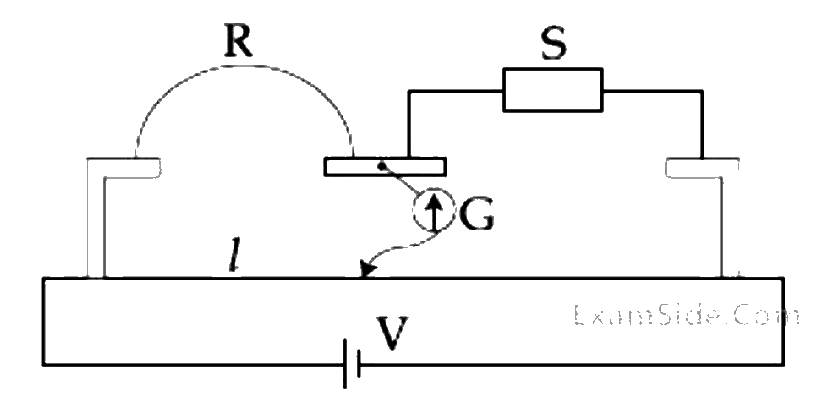
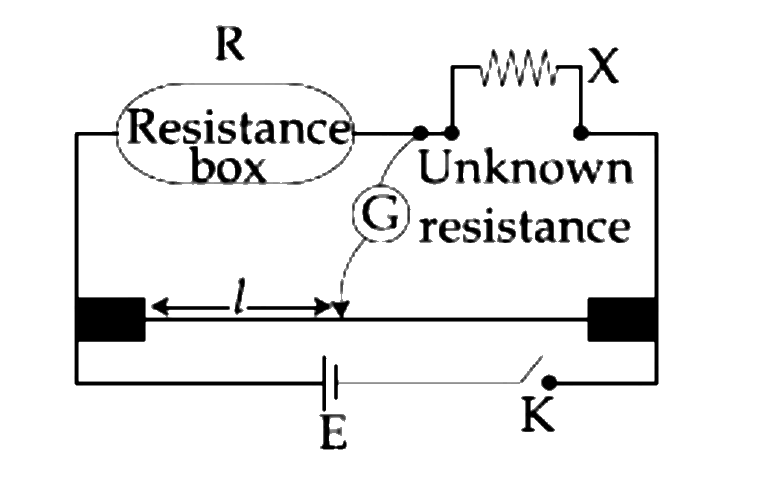
In a meter bridge experiment, for measuring unknown resistance 'S', the null point is obtained at a distance 30 cm from the left side as shown at point D. If R is 5.6 kΩ, then the value of unknown resistance 'S' will be __________ Ω.
Numerical answer type. Work it out, then open the answer.
Resistances are connected in a meter bridge circuit as shown in the figure. The balancing length l1 is 40 cm. Now an unknown resistance x is connected in series with P and new balancing length is found to be 80 cm measured from the same end. Then the value of x will be ____________ Ω.
Numerical answer type. Work it out, then open the answer.
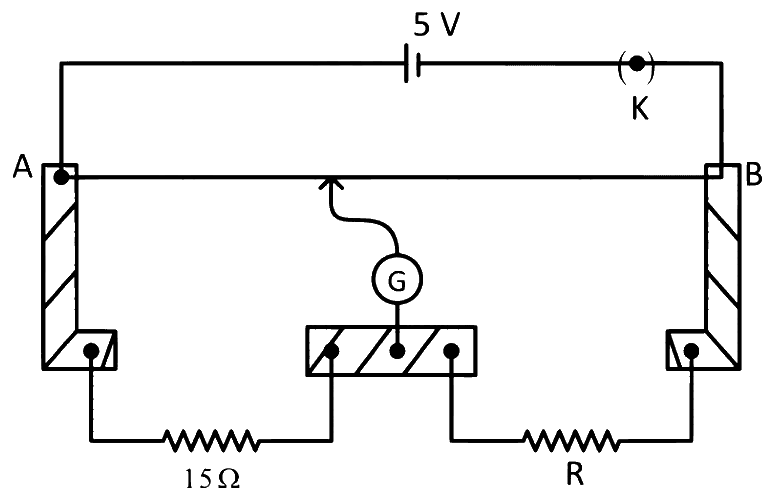
A meter bridge setup is shown in the figure. It is used to determine an unknown resistance R using a given resistor of 15 Ω. The galvanometer (G) shows null deflection when tapping key is at 43 cm mark from end A. If the end correction for end A is 2 cm, then the determined value of R will be ____________ Ω.
Numerical answer type. Work it out, then open the answer.
Wheatstone Bridge & Metre Bridge · Wheatstone bridge balance
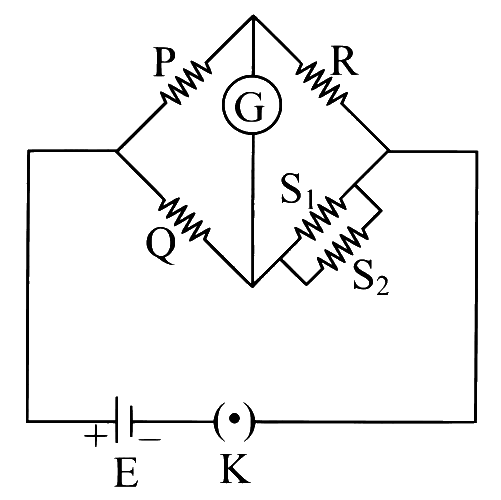
In a wheatstone's bridge, three resistances P,Q and R are connected in the three arms and the fourth arm is formed by two resistances S1 and S2 connected in parallel. The condition for the bridge to be balanced is
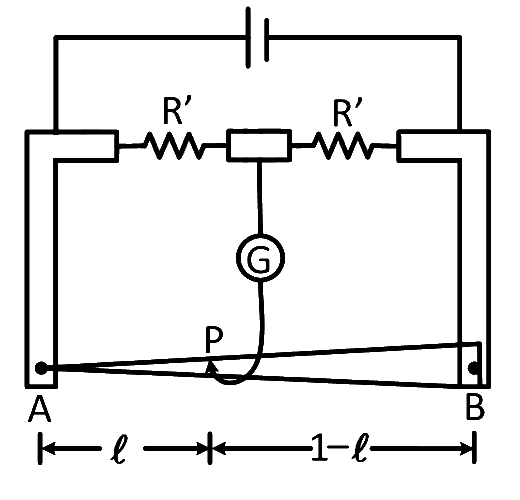
A balanced bridge is shown in the circuit diagram. The metre bridge wire has resistance 1Ωcm−1. The current drawn from the battery is (Internal resistance of battery is negligible)
In a meter bridge experiment, the balance point is obtained at length ℓ1 cm from left end when resistances in the left gap and right gap are 5Ω and RΩ respectively. When the resistance R is shunted with equal resistance, the new balance point is at 1.6ℓ1. The resitance R in ohm is
Two wires 'A' and 'B' of equal length are connected in left and right gap respectively of meter bridge, null point is obtained at 40 cm, from the left end. Diameters of the wires 'A' and 'B' are in the ratio 3:1 respectively, the ratio of specific resistance of 'A' to that of 'B' is
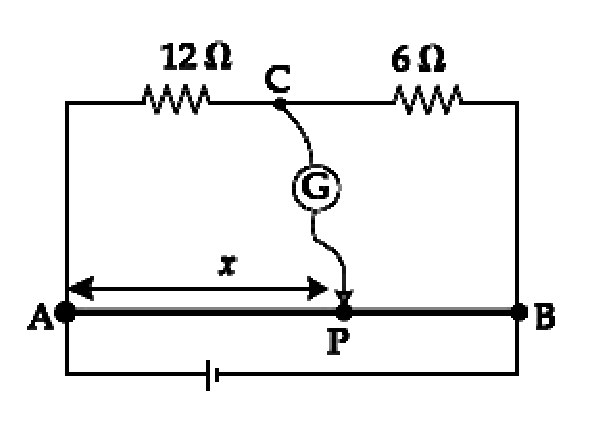
Consider a 72 cm long wire AB as shown in the figure. The galvanometer jockey is placed at P on AB at a distance x cm from A. The galvanometer shows zero deflection.
The value of x, to the nearest integer, is ___________.
Numerical answer type. Work it out, then open the answer.
Wheatstone Bridge & Metre Bridge · Wheatstone bridge balance
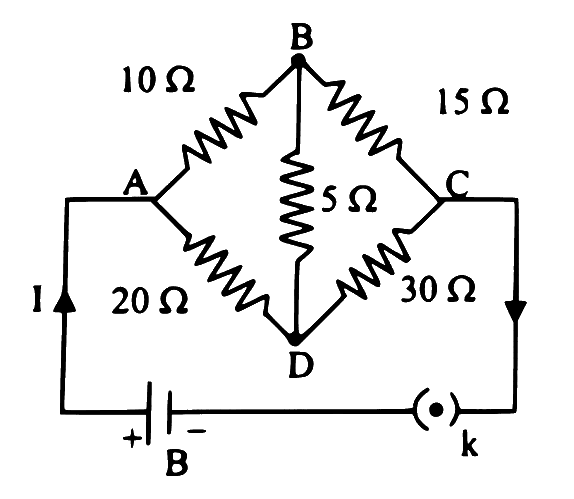
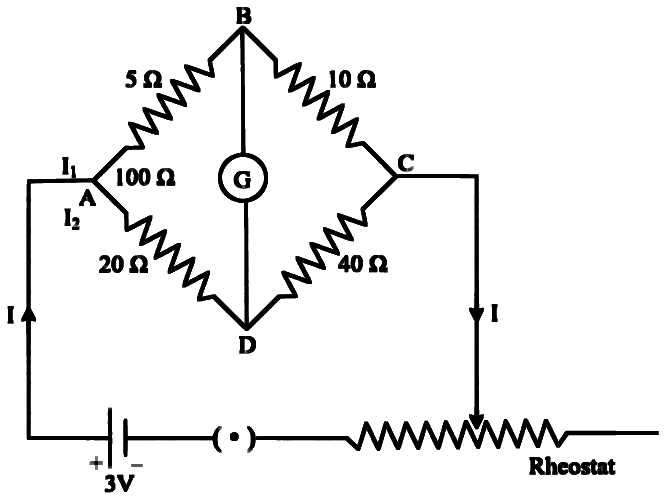
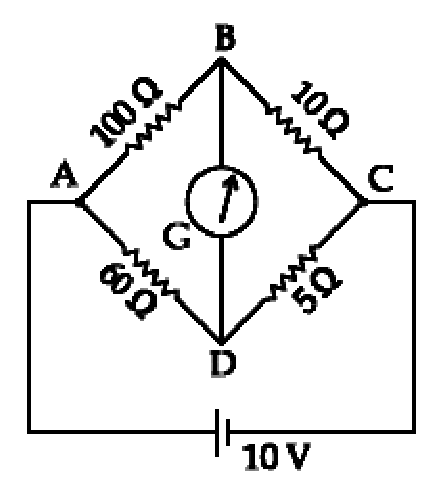
The four arms of a Wheatstone bridge have resistances as shown in the figure. A galvanometer of 15Ω resistance is connected across BD. Calculate the current through the galvanometer when a potential difference of 10V is maintained across AC.
Wheatstone Bridge & Metre Bridge · Wheatstone bridge balance
Four resistances of 15Ω, 12Ω, 4Ω and 10Ω are connected respectively in cyclic order to form Wheatstone's network. The resistance that is to be connected in parallel with the resistance of 10Ω to balance the network is _____Ω.
Numerical answer type. Work it out, then open the answer.
Two wires A and B of equal lengths are connected in left and right gap of a meter bridge, null point is obtained at 40 cm from left end. Diameters of the wire A and B are in that ratio 3:1. The ratio of specific resistance of A to the of B is
A resistance wire connected in the left gap of a metre bridge balances a 10 Ω resistance in the right gap at a point which divides the bridge wire in the ratio 3:2. If the length of the resistance wire is 1.5 m, then the length of 1 Ω of the resistance wire is:
In a meter bridge experiment S is a standard resistance. R is a resistance wire. It is found that balancing length is l = 25 cm. If R is replaced by a wire of half length and half diameter that of R of same material, then the balancing distance l′ (in cm) will now be________.
Numerical answer type. Work it out, then open the answer.
Wheatstone Bridge & Metre Bridge · Wheatstone bridge balance
In a Wheatstone bridge(see fig.), Resistances P and Q are approximately equal. When R = 400 Ω, the bridge is balanced. On interchanging P and Q, the value of R, for balance, is 405 Ω. The value of X is close to:
Q66JEE Main 2019 · 10 JAN · SHIFT 2MediumOld syllabus
Wheatstone Bridge & Metre Bridge · Wheatstone bridge balance
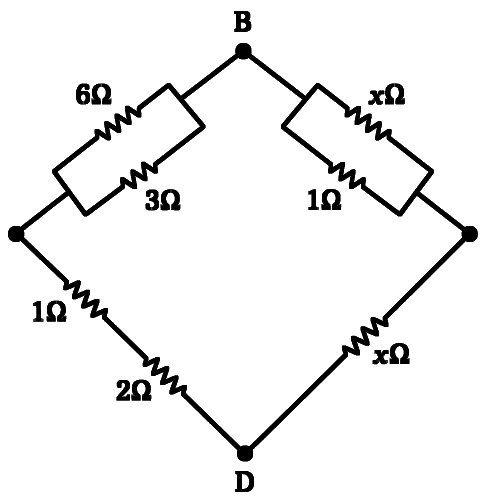
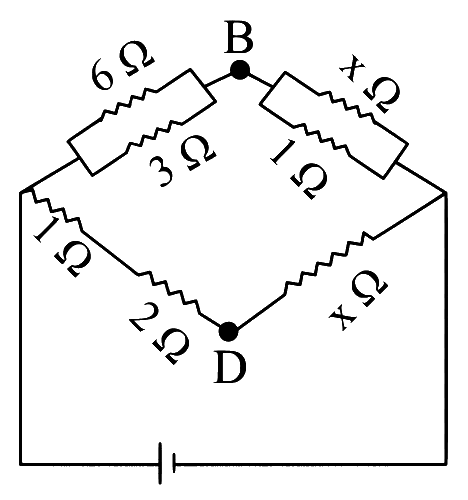
The Wheatstone bridge shown in figure, here, gets balanced when the carbon resistor used as R1 has the colour code (Orange, Red, Brown). The resistors R2 and R4 are 80Ω and 40Ω, respectively. Assuming that the colour code for the carbon resistors gives their accurate values, the colour code for the carbon resistor, used as R3, would be -
With a resistance of ' X ' in the left gap and resistance of 9Ω in the right gap of a meter bridge, the balance point is obtained at 40 cm from the left end. In what way and to which resistance 3Ω resistance be connected to obtain the balance at 50 cm from the left end?
The metre bridge shown is in balance position with QP=l2l1. If we now interchange the positions of galvanometer and cell, will the bridge work? If yes, what will be balance condition?
In the experimental set up of metre bridge shown in the figure, the null point is obtained at a distance of 40 cm from A. If a 10 Ω resistor is connected in series with R1, the null point shifts by 10 cm. The resistance that should be connected in parallel with (R1 + 10) Ω such that the null point shifts back to its initial position is:
Wheatstone Bridge & Metre Bridge · Wheatstone bridge balance
In the network shown cell E has internal resistance r and the galvanometer shows zero deflection. If the cell is replaced by a new cell of emf 2E and internal resistance 3r keeping everything else identical, then
In a meter bridge, the wire of length 1 m has a non-uniform cross-section such that, the variation dℓdR of its resistance R with length ℓ is dℓdR∝ℓ1. Two equal resistances are connected as shown in the figure. The galvanometer has zero deflection when the jockey is at point P. What is the length AP?
On interchanging the resistances, the balance point of a meter bridge shifts to the left by 10 cm. The resistance of their series combination is 1 kΩ. How much was the resistance on the left slot before interchanging the resistances?
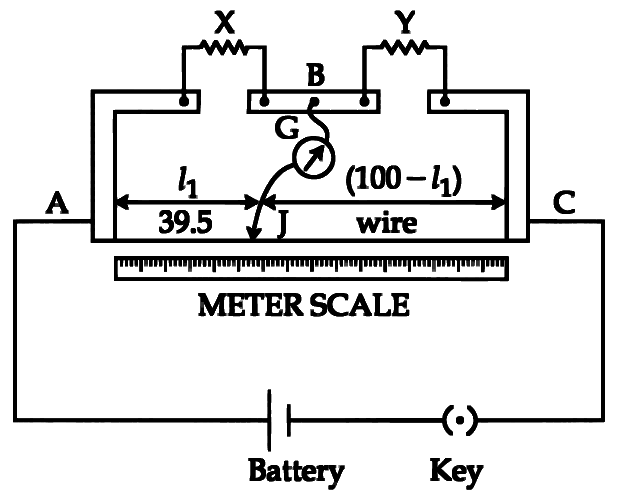
In a meter bridge, as shown in the figure, it is given that resistance Y=12.5Ω and that the balance is obtained at a distance 39.5 cm from end A (by Jockey J). After interchanging the resistances X and Y, a new balance point is found at a distance l2 from end A. What are the value of X and l2?
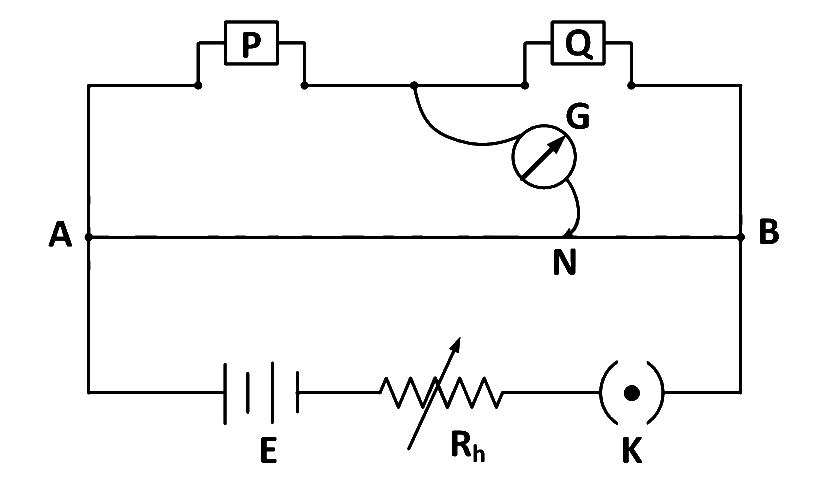
In a meter bridge experiment resistances are connected as shown in the figure. Initially resistance P = 4 Ω and the neutral point N is at 60 cm from A. Now an unknown resistance R is connected in series to P and the new position of the neutral point is at 80 cm from A. The value of unknown resistance R is:
The resistances in the two arms of the meter bridge are 5 Ω and RΩ respectively. When the resistance R is shunted with an equal resistance, the new balance point is at 1.6l1. The resistance R is
In a metre bridge experiment null point is obtained at 40 cm from one end of the wire when resistance X is balanced against another resistance Y. If X < Y, then the new position of the null point from the same end, if one decides to balance a resistance of 3X against Y, will be close to:
Wheatstone Bridge & Metre Bridge · Wheatstone bridge balance
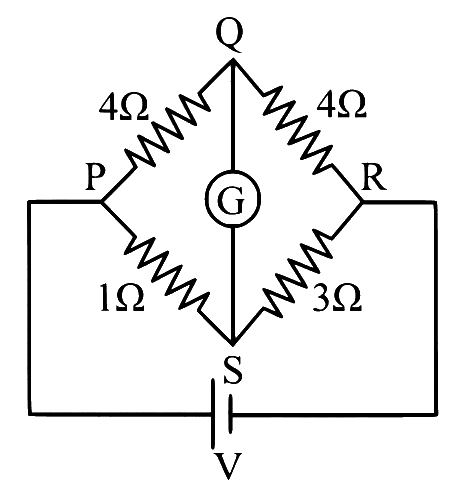
The resistances of the four arms P, Q, R and S in a Wheatstone's bridge are 10 ohm, 30 ohm, 30 ohm and 90 ohm, respectively. The e.m.f. and internal resistance of the cell are 7 volt and 5 ohm respectively. If the galvanometer resistance is 50 ohm, the current drawn from the cell will be
Wheatstone Bridge & Metre Bridge · Wheatstone bridge balance
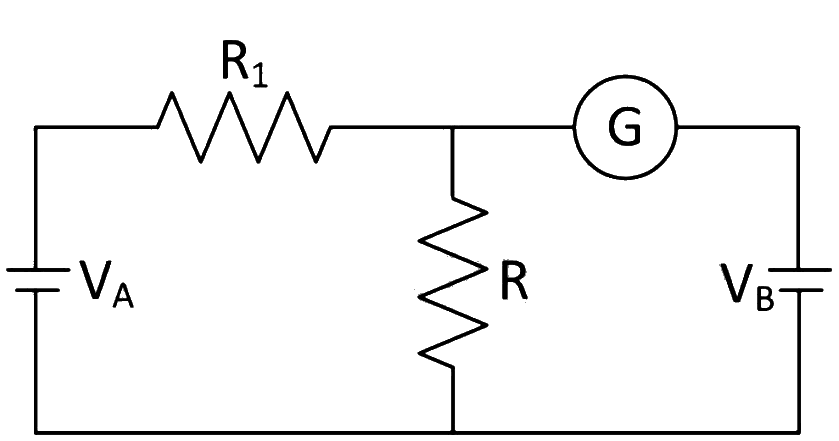
In the circuit shown the cells A and B have negligible resistances. For VA = 12 V, R1 = 500 Ω and R = 100 Ω the galvanometer (G) shows no deflection. The value of VB is
Wheatstone Bridge & Metre Bridge · Wheatstone bridge balance
Three resistances, P, Q, R each of 2Ω and an unknown resistance S from the four arms of a Wheatstone bridge circuit. When a resistance of 6 Ω is connected in parallel to S the bridge gets balanced. What is the value of S?
Wheatstone Bridge & Metre Bridge · Wheatstone bridge balance
In a Wheatstone's bridge, three resistance P,Q and R connected in the three arms and the fourth arm is formed by two resistances S1 and S2 connected in parallel. The condition for the bridge to be balanced will be
In a meter bridge experiment null point is obtained at 20 cm, from one end of the wire when resistance X is balanced against another resistance Y. If X<Y, then where will be the new position of the null point from the same end, if one decides to balance a resistance of 4X against Y
Wheatstone Bridge & Metre Bridge · Wheatstone bridge balance
In a Wheatstone's bridge all the four arms have equal resistance R. If the resistance of the galvanometer arm is also R, the equivalent resistance of the combination as seen by the battery is
Wheatstone Bridge & Metre Bridge · Wheatstone bridge balance
The resistance of each arm of the Wheatstone's bridge is 10 ohm. A resistance of 10 ohm is connected in series with a galvanometer then the equivalent resistance across the battery will be