Three equal (+q) charges are placed in air at the vertices of equilateral triangle. If the side of equilateral triangle is l, the net potential energy of the system is [K=4πϵ01]
If 100 J of work has to be done in moving an electric charge of 4 C from a place, where potential is −10 V to another place where potential is V volt. The value of V is
Two point charges of 1 nC and 2 nC are placed at the two corners of equilateral triangle of side 3 cm. The work done in bringing a charge of 3 nC from infinity to the third corner of the triangle is μJ.
A point charge of 10−8 C is placed at origin. The work done in moving a point charge 2μC from point A(4,4,2) m to B(2,2,1) m is ______ J. (4πϵ01=9×10⁹ in SI units)
Two charges of equal magnitude 'q' are placed in air at a distance '2a' apart and third charge −2q is placed at mid-point. The potential energy of the system is (ϵ0 = permittivity of free space)
The equal charges (say 'q') are placed at a distance of 4r and a third charge (−2q) is placed at a mid-point. The potential energy of the system is (ϵ0= permittivity of free space)
Two equal positive charges each of value 'q' are placed at points A and B, where AB=3x. A third charge −3q is placed at point C at a distance x from A on AB. The potential energy of the system is nearly (ϵ0 = permittivity of free space)
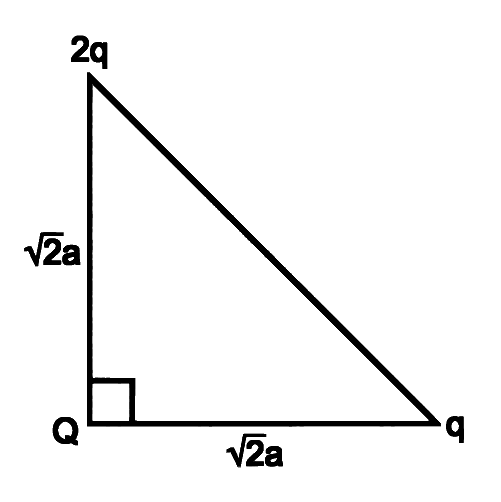
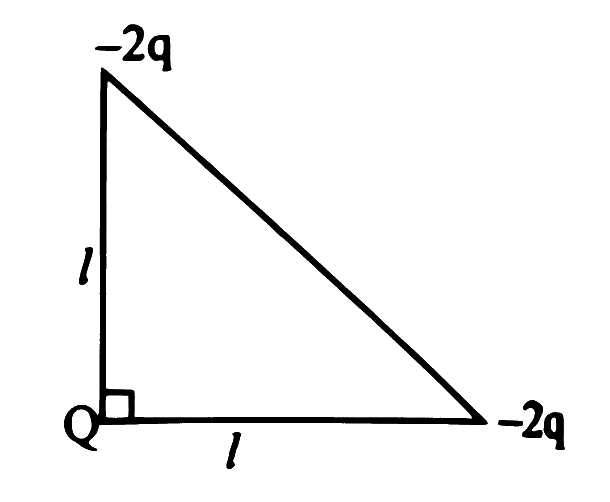
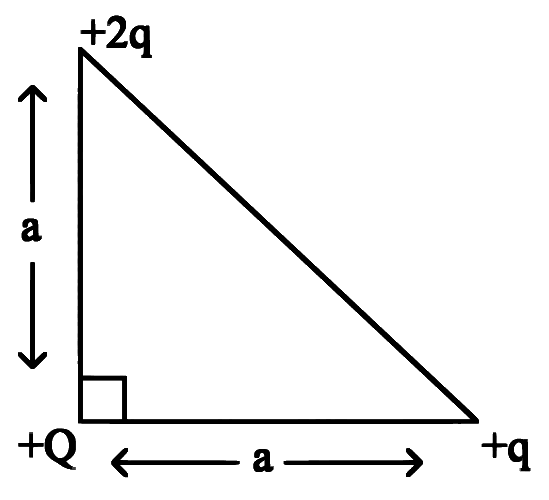
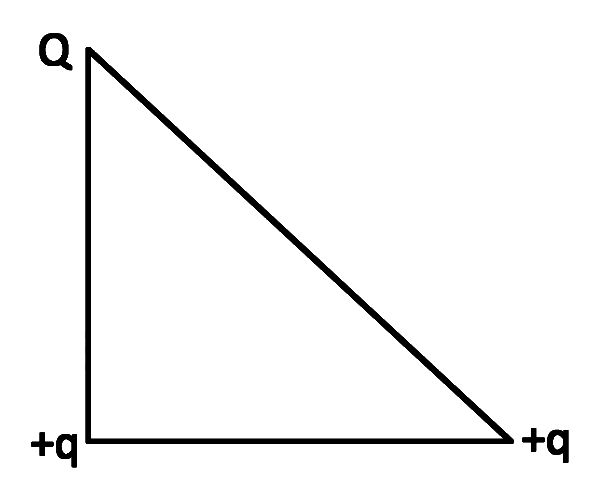
Three point charges Q, +2q and +q are placed at the vertices of a right-angled isosceles triangle of length 2a as shown in figure. The net electrostatic potential energy of the configuration is zero, if Q is equal to
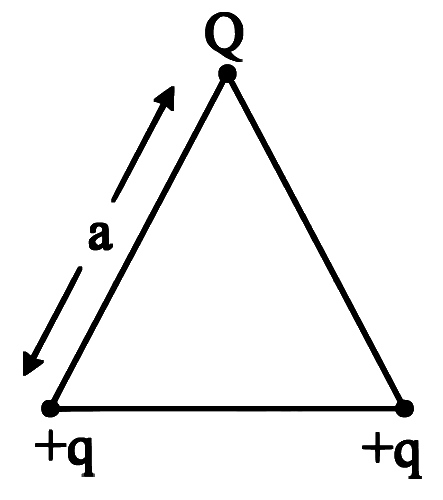
Three point charges +q, +2q and +Q are placed at the vertices of an equilateral triangle. If the potential energy of the system of three charges is zero, the value of Q in terms of q is
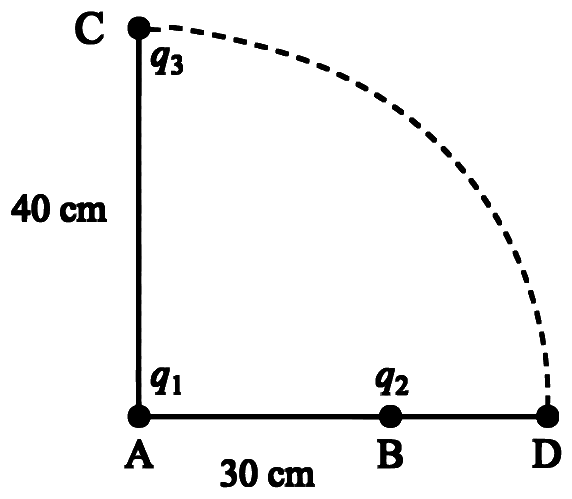
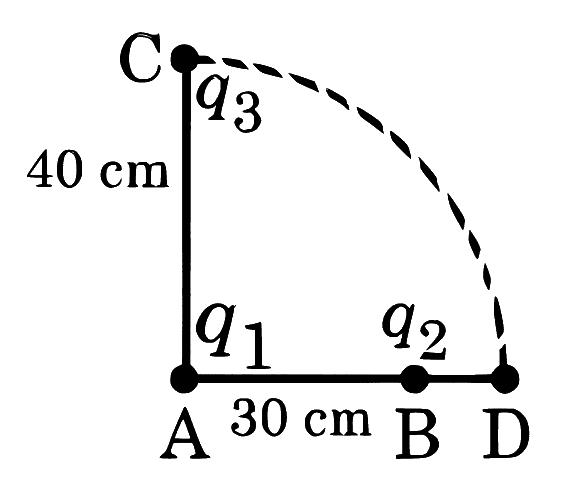
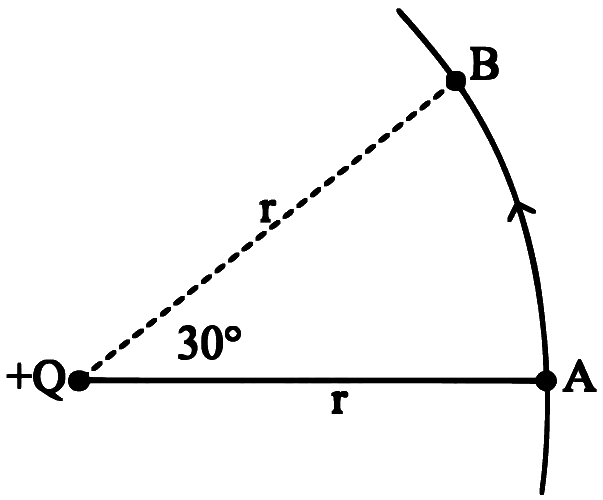
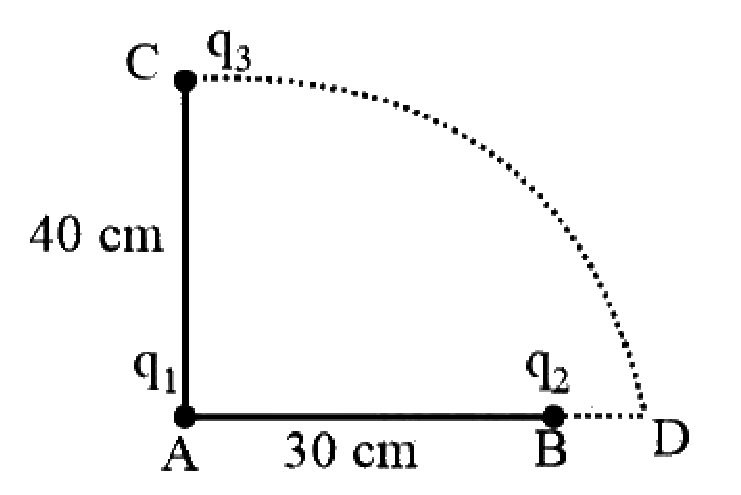
Two charges q1 and q2 are separated by a distance of 30cm. A third charge q3 initially at point C is shown in figure, is moved along the circular path of radius 40 cm from C to D. If the difference in potential energy due to movement of q3 from C to D is q3k/4πε0, the value of K is (ε0 = permittivity of free space)
Two point charges q1=6μC and q2=4μC are kept at points A and B in air where distance AB=10 cm. What is the increase in potential energy of the system when q2 is moved towards q1, by 2 cm? (4πϵ01=9×10⁹ SI units)
Two charges 7μC and −2μC are placed at (−9,0,0) cm and (9,0,0) cm respectively in an external field E=r2Ar^, where A=9×10⁵ N/C⋅m2. Considering the potential at infinity is 0, the electrostatic energy of the configuration is ______ J.
Three point charges +q,−2q and −2q are placed at the vertices of an equilateral triangle of side a. The work done by some external force to increase their separation to '2a' will be (K=4πε01)
A particle of mass 'm' and charge 'q', initially at rest, is accelerated by a uniform electric field 'E' through a distance 'D' and is then allowed to approach a fixed static charge 'Q' of the same sign. The distance of the closest approach of the charge q is
A three coulomb charge moves from the point (0,−2,−5) to the point (5,1,2) in an electric field expressed as E=2xi^+3y2j^+4k^ N/C. The work done in moving the charge is ______ J.
Numerical answer type. Work it out, then open the answer.
In air, a charged soap bubble of radius R breaks in to 27 small soap bubbles of equal radii r. Then the ratio of mechanical force acting per unit area of big soap bubble to that of a small soap bubble is
Consider a fixed uniformly charged insulating sphere with radius R and total charge +Q. A point charge −q ( q≪Q) with mass m is released from rest at a distance of 3R from the centre of the charged sphere. When the point charge reaches the surface of the sphere, its speed is: ( ε0 is the permittivity of vacuum, neglect gravitational forces).
Consider two identical metallic spheres of radius R each having charge Q and mass m. Their centers have an initial separation of 4R. Both the spheres are given an initial speed of u towards each other. The minimum value of u, so that they can just touch each other is:
(Take k=4πϵ01 and assume kQ2>Gm2 where G is the Gravitational constant)
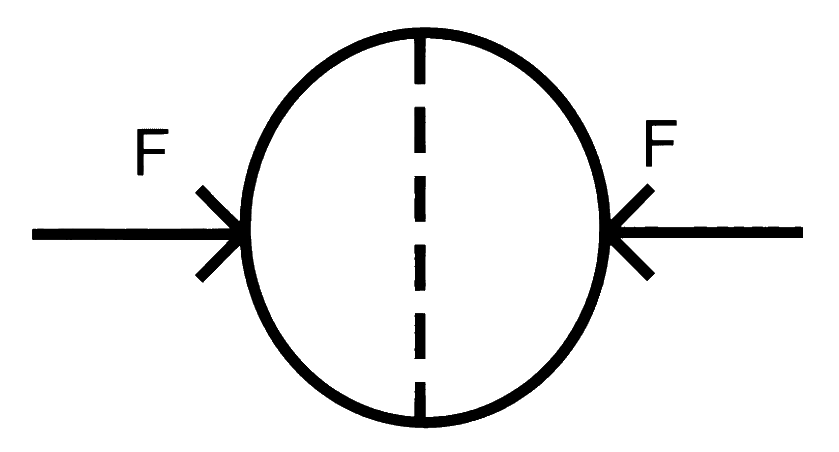
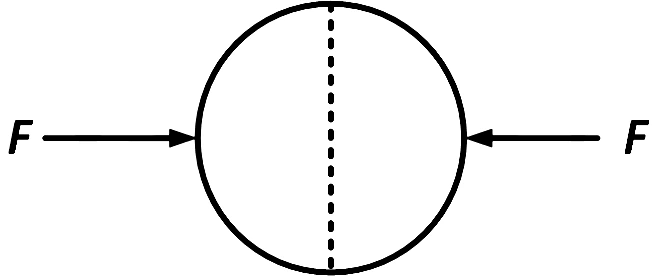
An uniformly charged thin spherical shell of radius 'R' has uniform surface charge density 'σ'. It is made of two hemispherical identical shells held together by pressing them with force 'F' as shown. F is proportional to
Two charges 7μC and −4μC are placed at (−7 cm,0,0) and (7 cm,0,0) respectively. Given, ϵ0=8.85×10⁻¹² C2 N−1 m−2, the electrostatic potential energy of the charge configuration is:
Let ' W ' joule be the work done to move an electric charge ' q ' coulomb from a place A, where potential is -5 volt to another place B where potential is ' V ' volt. The value of ' V ' is
Three charges Q,(−2q) and (−2q) are placed at the vertices of an isosceles right angled triangle as shown in figure. The net electrostatic potential energy is zero if Q is equal to
Three charges each of magnitude 3μC, are placed on the vertices of an equilateral triangle of side 6 cm. The net potential energy of the system will be nearly [4πϵ01=9×10⁹ SI unit ]
Three point charges +Q,+2Q and q are placed at the vertices of an equilateral triangle. The value of charge q in terms of Q, so that electrical potential energy of the system is zero, is given by
Two charges q1 and q2 are separated by a distance of 30 cm. A third charge q3 initially at ' C ' as shown in the figure, is moved along the circular path of radius 40 cm from C to D. If the difference in potential energy due to movement of q3 from C to D is given by 4πϵ0q3K, the value of K is:
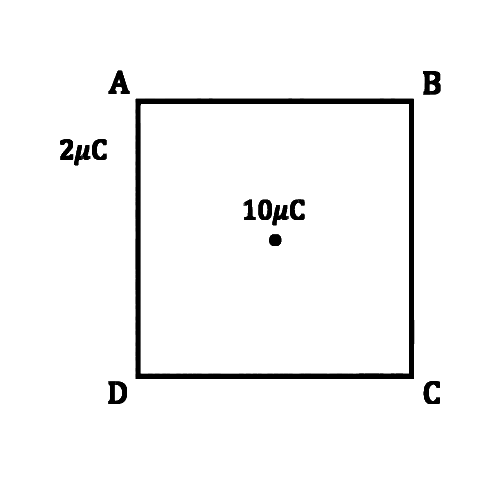
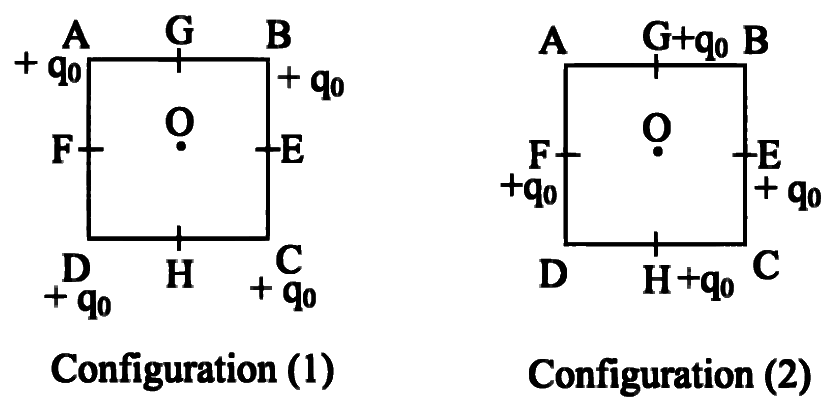
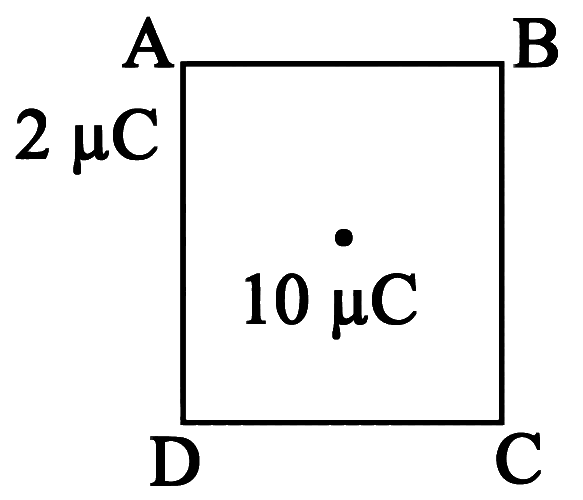
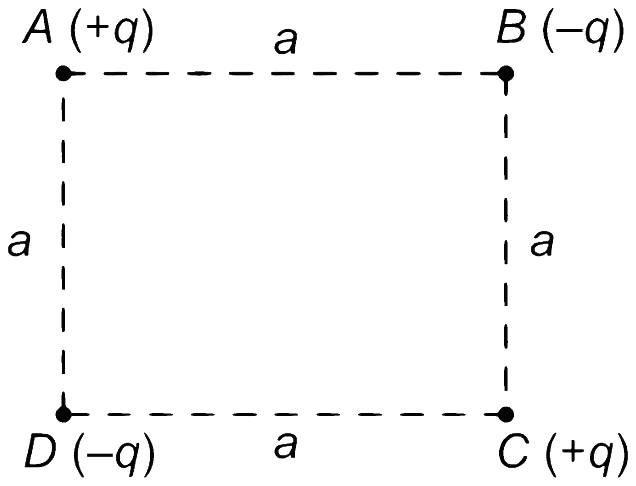
In the first configuration (1) as shown in the figure, four identical charges (q0) are kept at the corners A, B, C and D of square of side length ' a '. In the second configuration (2), the same charges are shifted to mid points G,E,H and F, of the square. If K=4πϵ01, the difference between the potential energies of configuration (2) and (1) is given by:
90 J of work is done to move an electric charge of magnitude 3 C from a place A, where potential is -10 V to another place B, where potential is ' V1 ' volt. The value of V1 is
Two point charges q1=6μC and q2=4μC are kept at points A and B in air where AB=10 cm. What is the increase in potential energy of the system when q2 is moved towards q1 by 2 cm? (4πε01=9×10⁹ SI units )
Three charges are placed at the vertices of an equilateral triangle as shown in the figure. For what value of charge ' Q ', the electrostatic potential energy of the system is zero?
Two charged particles each having charge ' q ' and mass ' m ' are held at rest while their separation is ' r '. The speed of the particles when their separation is ' 2r ' will be ( ε0= permittivity of the medium)
A point charge 2×10⁻² C is moved from P to S in a uniform electric field of 30 N C−1 directed along positive x-axis. If coordinates of P and S are (1, 2, 0) m and (0, 0, 0) m respectively, the work done by electric field will be
Two point charges 'q1 ' and 'q2' are separated by a distance 'd'. What is the increase in potential energy of the system when 'q2' is moved towards 'q1' by a distance 'x'? (x<d)(4πε01=K, constant)
Three point charges +Q,+2q and +q are placed at the vertices of a right angled isosceles triangle. The net electrostatic potential energy of the configuration is zero, if Q is equal to
Two charges of equal magnitude 'q' are placed in air at a distance '2r' apart and third charge '−2q' is placed at mid point. The potential energy of the system is (ε0= permittivity of free space)
Three point charges +q,+2q and +Q are placed at the three vertices of an equilateral triangle. If the potential energy of the system of three charges is zero, the value of Q in terms of q is
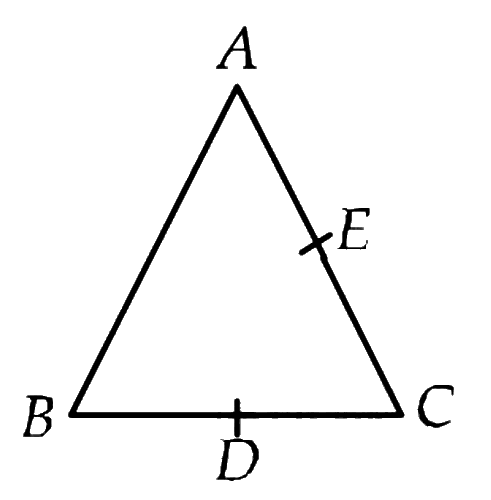
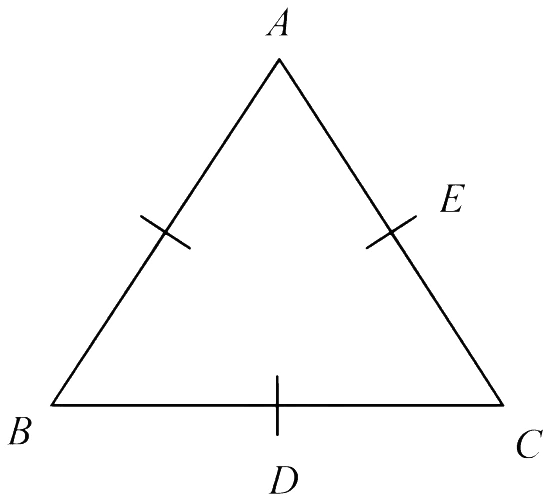
Three charges each of value +q are placed at the corners of an isosceles triangle ABC of sides AB and AC each equal to 2a. The mid points of AB and AC are D and E respectively. The work done in taking a charge Q from D to E is ( ε0= permittivity of free space)
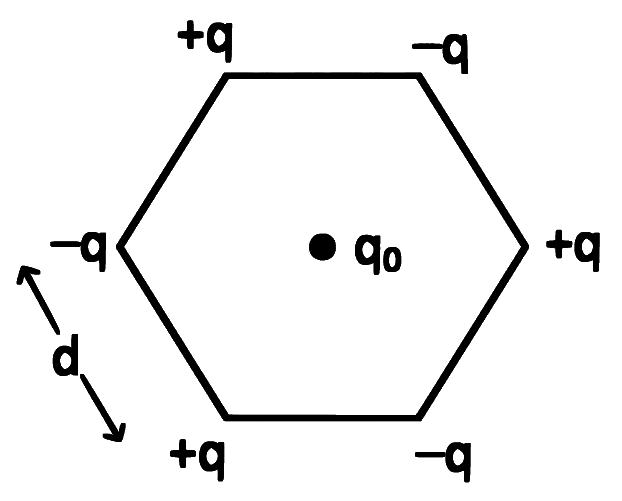
Six charges +q, −q, +q, −q, +q, and − q are fixed at the corners of a hexagon of side d as shown in the figure. The work done in bringing a charge q0 to the centre of the hexagon from infinity is (ε0 - permittivity of free space)
Eight similar drops of mercury are maintained at 12 V each. All these spherical drops combine into a single big drop. The potential energy of bigger drop will be ____________ E. Where E is the potential energy of a single smaller drop.
Numerical answer type. Work it out, then open the answer.
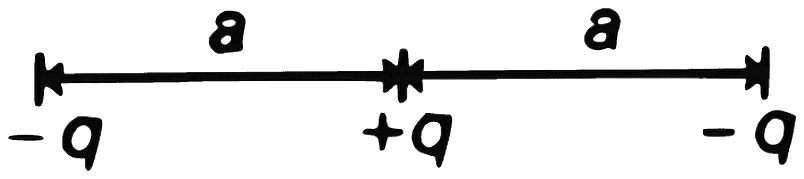
Three charges −q,Q and −q are placed at equal distances on a straight line. If the total potential energy of the system of three charges is zero then the ratio qQ is
27 similar drops of mercury are maintained at 10V each. All these spherical drops combine into a single big drop. The potential energy of the bigger drop is __________ times that of a smaller drop.
Numerical answer type. Work it out, then open the answer.
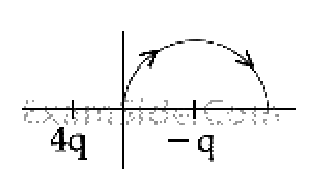
A two point charges 4q and -q are fixed on the x-axis at x = −2d and x = 2d respectively. If a third point charge 'q' is taken from the origin to x = d along the semicircle as shown in the figure, the energy of the charge will:
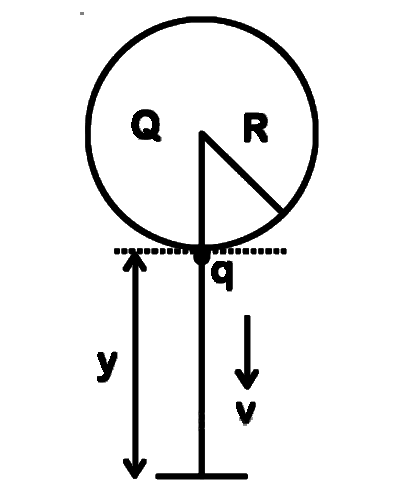
A solid sphere of radius R carries a charge Q + q distributed uniformly over its volume. A very small point like piece of it of mass m gets detached from the bottom of the sphere and falls down vertically under gravity. This piece carries charge q. If it acquires a speed v when it has fallen through a vertical height y (see figure), then:
Three charges Q, + q and + q are placed at the vertices of a right-angle isosceles triangle as shown below. The net electrostatic energy of the configuration is zero, if the value of Q is:
In free space, a particle A of charge 1μC is held fixed at a point P. Another particle B of the same charge and mass 4μg is kept at a distance of 1 mm from P. If B is released, then its velocity at a distance of 9 mm from P is: [Take 4πϵ01=9×10⁹ Nm2C−2]
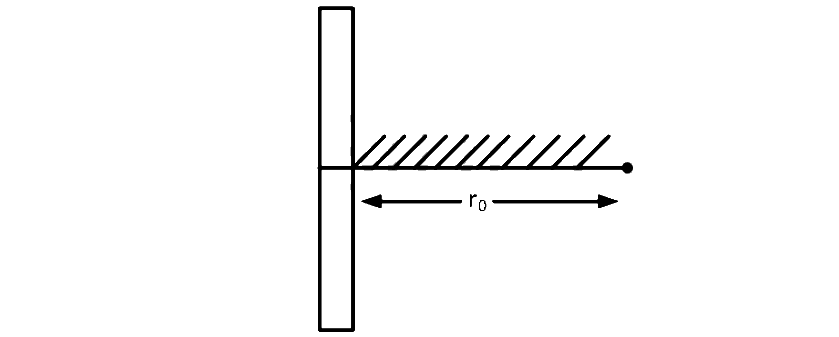
A positive point charge is released from rest at a distance r0 from a positive line charge with uniform density. The speed (v) of the point charge, as a function of instantaneous distance r from line charge, is proportional to :-
Four equal point charges Q each are placed in the xy plane at (0, 2), (4, 2), (4, –2) and (0, –2). The work required to put a fifth charge Q at the origin of the coordinate system will be -
A uniformly charged ring of radius 3a and total charge q is placed in xy-plane centred at origin. A point charge q is moving towards the ring along the z-axis and has speed u at z = 4a. The minimum value of u such that it crosses the origin is:
There is a uniform spherically symmetric surface charge density at a distance R0 from the origin. The charge distribution is initially at rest and starts expanding because of mutual repulsion. The figure that represents best the speed V (R(t)) of the distribution as a function of its instantaneous radius R (t) is:
Three charges, each +q, are placed at the corners of an isosceles triangle ABC of sides BC and AC, 2a. D and E are the mid points of BC and CA. The work done in taking a charge Q from D to E is
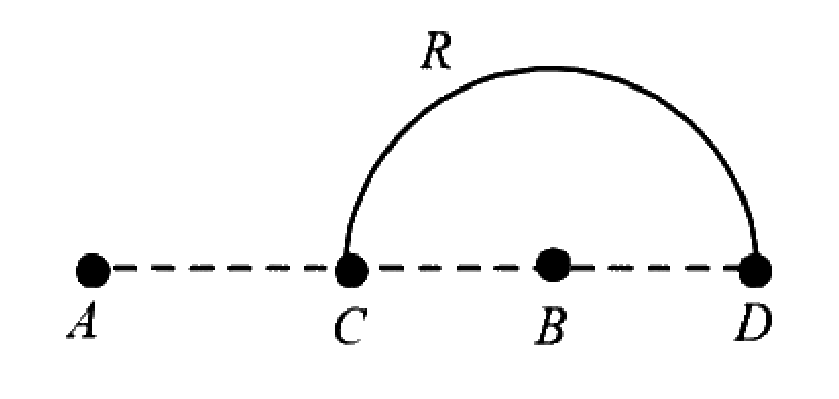
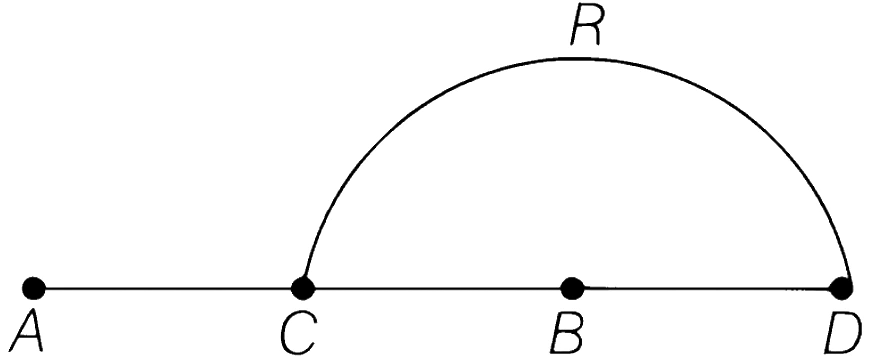
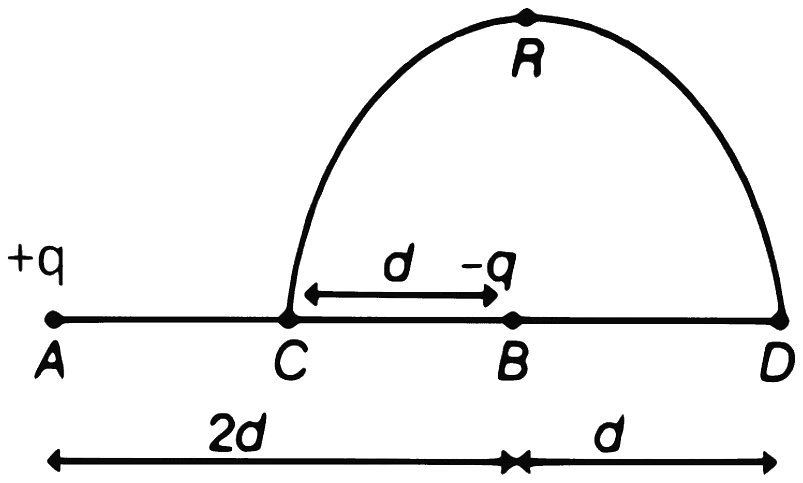
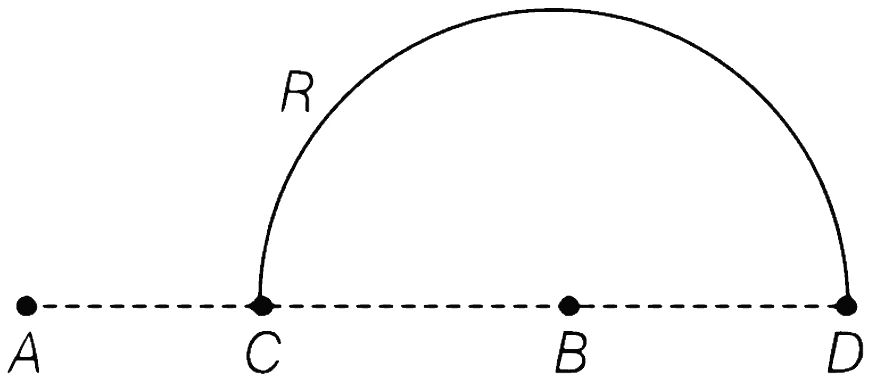
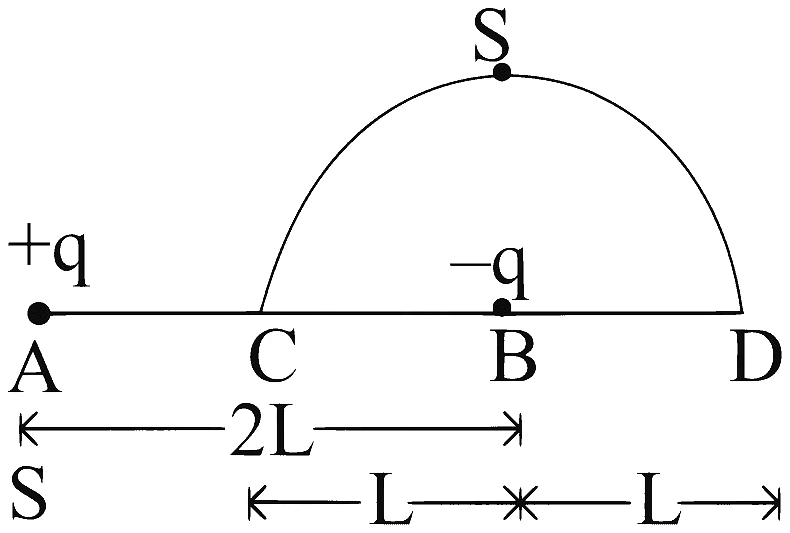
Charges +q and − q are placed at points A and B respectively which are a distance 2L apart, C is the midpoint between A and B. The work done in moving a charge + Q along the semicircle CRD is
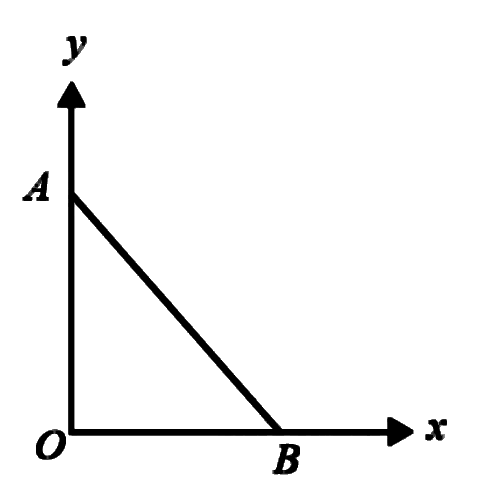
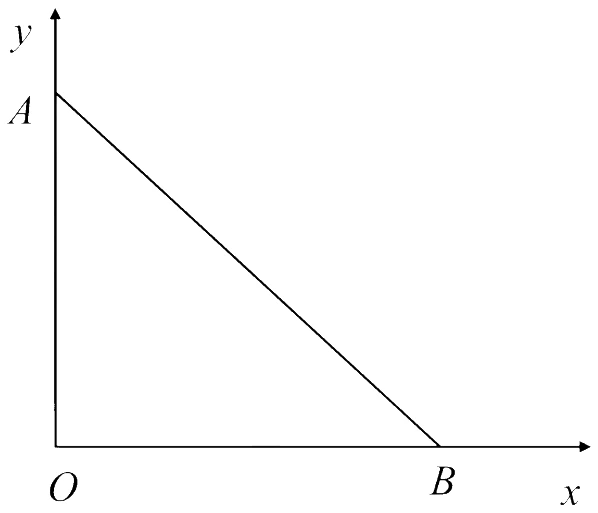
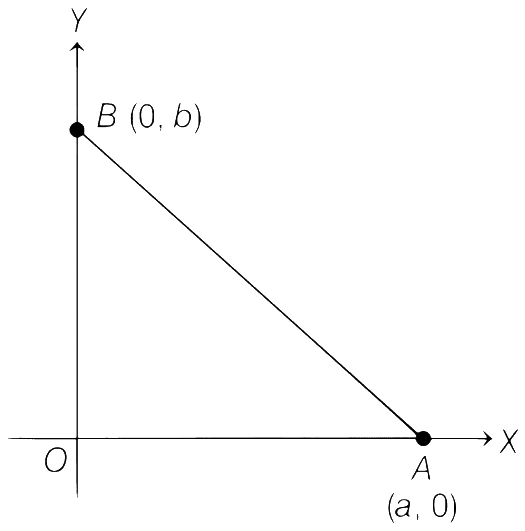
As per the diagram a point charge +q is placed at the origin O. Work done in taking another point charge − Q from the point A [coordinates (0, a)] to another point B
Two charges q1 and q2 are placed 30 cm apart, as shown in the figure. A third charge q3 is moved along the arc of a circle of radius 40 cm from C to D.
The change in the potential energy of the system is 4πε0q3k where k is
A bullet of mass 2 g is having a charge of 2 μC. Through what potential difference must it be accelerated, starting from rest, to acquire a speed of 10 m/s?
A charged particle q is shot towards another charged particle Q which is fixed, with a speed v. It approaches Q upto a closest distance r and then returns. If q were given a speed of 2v the closest distance of approach would be
Identical charges (−q) are placed at each corners of cube of side b then electrostatic potential energy of charge (+q) which is placed at centre of cube will be
There is an electric field E in x-direction. If the work done on moving a charge of 0.2 C through a distance of 2 m along a line making an angle 60∘ with x-axis is 4 J, then what is the value of E?
A uniformly charged thin spherical shell of radius R carries uniform surface charge density of σ per unit area. It is made of two hemispherical shells, held together by pressing them with force F (see figure). F is proportional to
Charges +q and −q are placed at points A and B respectively which are a distance 2L apart, C is the mid-point between A and B. The work done in moving a charge +Q along the semicircle CRD is
Assertion : Work done in moving a charge between any two points in a uniform electric field is independent of the path followed by the charge, between these points. Reason : Electrostatic forces are non-conservative.
There are four point charges +q, −q, +q and −q placed at the corners A, B, C and D respectively of a square of side a. The potential energy of the system is 4πε01 times.
A charged particle q is shot with speed v towards another fixed charged particle Q. It approaches Q up to a closest distance r and then returns. If q were given a speed 2v, the closest distance of approach would be
As per this diagram a point charge +q is placed at the origin O. Work done in taking another point charge −Q from the point A [coordinates (0,a)] to another point B [coordinates (a,0)] along the straight path AB is
A point charge q is rotated along a circle in the electric field generated by another point charge Q. The work done by the electric field on the rotating charge in one complete revolution is
Three charges, each +q, are placed at the corners of an isosceles triangle ABC of sides BC and AC, 2a. D and E are the mid-points of BC and CA. The work done in taking a charge Q from D to E is
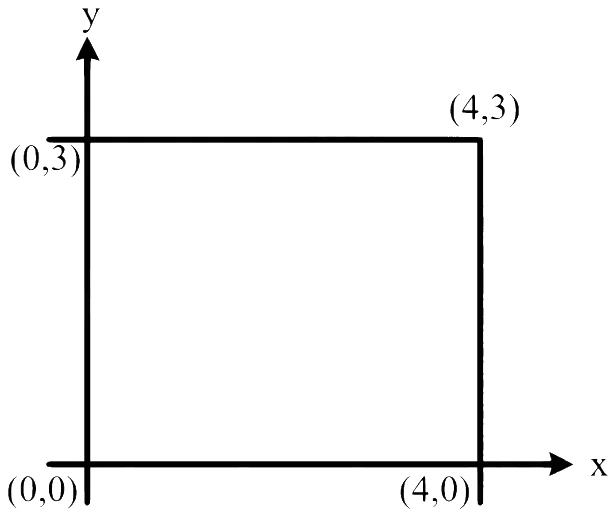
Two charges 1C and 2C are placed at coordinates (0,3) and (4,3) respectively in an XY plane. What is the work done to put a 30C charge at the origin of the coordinate system?
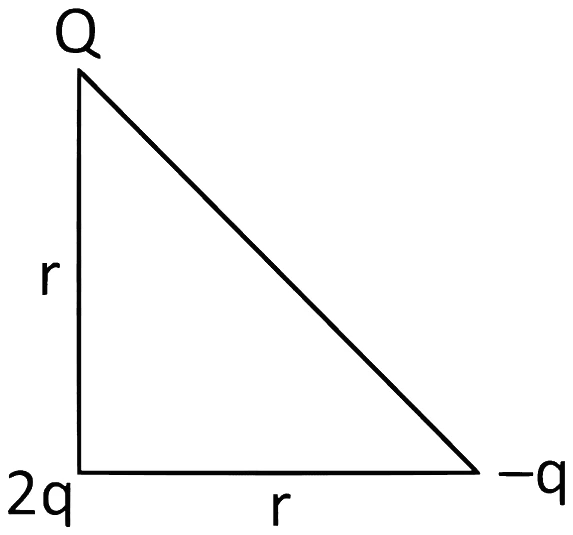
Three charges, Q, −q and 2q are placed at the vertices of a right-angled isosceles triangle. What is the value of q for the net electrostatic energy of the configuration to be zero?
Three point charges −1C, +1C, +1C are placed at points A,B,C respectively of a triangle ABC. What is the total potential energy of the system? [given AB=AC=6cm and BC=3cm]
A 200J of work is done in moving a charge 5C from a point A where the potential is −20V to another point B where potential is V volt. The value of V at B is
A system of two charges separated by a certain distance apart stores electrical potential energy. If the distance between them is increased, the potential energy of the system
If two positive charges each of 20μC are placed at the two vertices of an equilateral triangle of side 50cm and a third positive charge of 103μC is placed at the centroid of the triangle, then the electrostatic potential energy of the system of three charges is
Three particles of each charge q are placed at the vertices of an equilateral triangle of side L. The work to be done to decrease the side of the triangle to 2L is
Three point charges shown in the figure lie along a straight line. The energy required to exchange the position of central charge with one of the negative charges is
Two particles of charges 4nC and Q are kept in air with a separation of 10cm between them. If the electrostatic potential energy of the system is 1.8μJ, then Q=
Two charges 5nC and −2nC are placed at points (5cm,0,0) and (23cm,0,0) in a region of space where there is no other external field. The electrostatic potential energy of this charge system is
Three equal electric charges of each charge q are placed at the vertices of an equilateral triangle of side of length L. Then, potential energy of the system is
Two charges +6μC and −3μC are placed at points (−2.7cm,0) and (2.7cm,0) respectively in an external electric field of 1.8r−2×10⁵N C−1, where r is the distance of a charge from the origin. Then the net electrostatic energy of the system of the two charges is
A charge q is placed at the centre O of a circle of radius R and two other charges q and q are placed at the ends of the diameter AB of the circle. The work done to move the charge at point B along the circumference of the circle to a point C as shown in the figure is
Electric charges +q and −q are placed at points A and B respectively which are at a distance of 2L apart. If C is the midpoint between A and B, then the work done in moving a charge +Q along the semi-circle CRD is
Two charges +q and −q are placed at points A and B respectively which are at a distance 2L apart. C is the mid point of A and B. The work done in moving a charge +Q along the semicircle CSD (W1) and along the line CBD (W2) are
Four identical point masses, each of mass m and carrying charge +q are placed at the corners of a square of sides a on a frictionless plane surface. If the particles are released simultaneously, the kinetic energy of the system when they are infinitely far apart is
Three positive and two negative charges each of magnitude q are placed at five of the six vertices of a regular hexagon of side R. The work done to bring a negative charge −q from infinity to the center of the hexagon is
Assertion (A): Work done in moving a charge around a closed path, in an electric field is always zero. Reason (R): Electrostatic force is a conservative force.
A +3.0nC charge Q is initially at rest at a distance of r1=10cm from a +5.0nC charge q fixed at the origin. The charge Q is moved away from q to a new position at r2=15cm. In this process work done by the field is
Two charges 14μC and −4μC are placed at (−12cm,0,0) and (12cm,0,0) in an external electric field E=r2B, where B=1.2×10⁶N/(cm2) and r is in metres. The electrostatic potential energy of the configuration is