
Heat Conduction
The coefficient of thermal conductivity of a metal rod depends on its
Show answer and solution
Answer: (c)
Loading the solution…
Home›Practice Hub›Chapters›Heat Transfer and Radiation›Heat Conduction
Heat Transfer and Radiation PYQs · MHT CET · JEE Main · NEET
 Heat Transfer · Lecture 1 · Thermal Conductivity & Thermal Resistance1:30:46All 3 Heat Transfer and Radiation videos →
Heat Conduction
The coefficient of thermal conductivity of a metal rod depends on its
Answer: (c)
Heat Conduction
Two rods A and B are of equal lengths. Their ends are kept between the same temperatures and their area cross-sections are and , thermal conductivities are and . The rate of heat transmission in the two rods will be equal if
Answer: (b)
Heat Conduction
The ratio of thermal conductivity of two rods of different materials is . The two rods have same area of cross-section and same thermal resistance. The lengths of rods are in the ratio
Answer: (b)
Heat Conduction
The ratio of the thermal conductivity of two rods of different materials is 6:5. The two rods of same area of cross section and same thermal resistance will have the length in the ratio
Answer: (b)
Heat Conduction
Rate of flow of heat through a cylindrical rod is ' '. The temperature at the ends of the rod are and . If all the dimensions of the rod become double and the temperature difference remains the same and if the rate of flow of heat becomes ' ' then
Answer: (c)
Heat Conduction
Three rods made of the same material and the same cross-sectional areas have been joined as shown in the figure. Each rod is of the same length. The temperature of the junction is
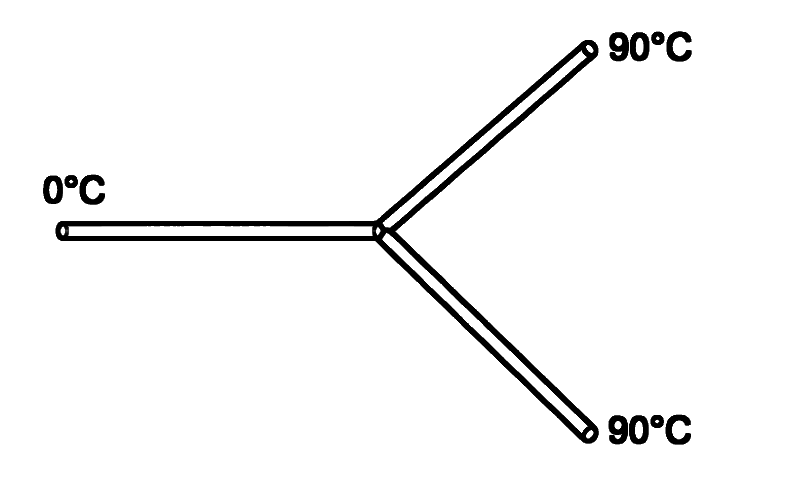
Answer: (a)
Heat Conduction
Two rods of same length, radius and material transfer a given amount of heat in 't' second when they are joined as shown in fig (1). But when they are joined as shown in fig (2) then they will transfer same heat in same condition in time
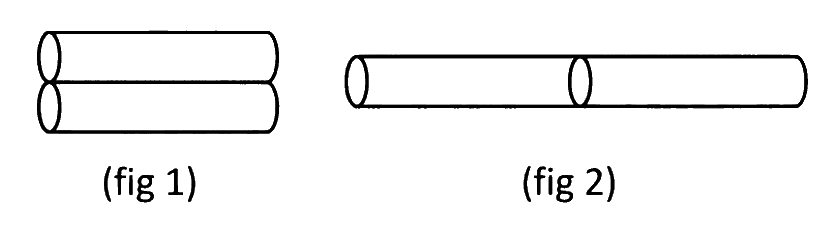
Answer: (c)
Heat Conduction
In a composite slab there are two materials having coefficients of thermal conductivity K and 2K, thickness x and 4x repectively. The temperature of the two outer surfaces of a composite slab are and is on side K and is on side 2K. The rate of heat transfer through the slab in a steady state is , where f is equal to
Answer: (d)
Heat Conduction
Consider two rods 1 and 2 of same length. They have different specific heats , thermal conductivities and area of cross-section respectively. Both the rods have temperatures at their ends. If their rate of loss of heat due to conduction is equal, then
Answer: (b)
Heat Conduction
Rods and of equal dimensions but of different materials are joined as shown in figure. Temperatures of end points and are maintained at and respectively. Given the thermal conductivity of is three times of that of , the temperature at junction points and are (close to):
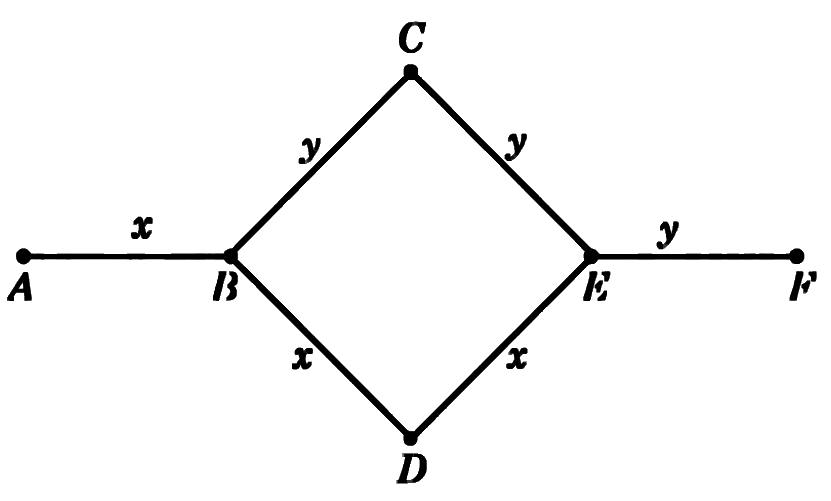
Answer: (c)
Heat Conduction
Three identical heat conducting rods are connected in series as shown in the figure. The rods on the side have thermal conductivity while that in the middle has thermal conductivity . The left end of the combination is maintained at temperature and the right end at . The rods are thermally insulated from outside. In steady state, temperature at the left junction is and that at the right junctions is . The ratio is
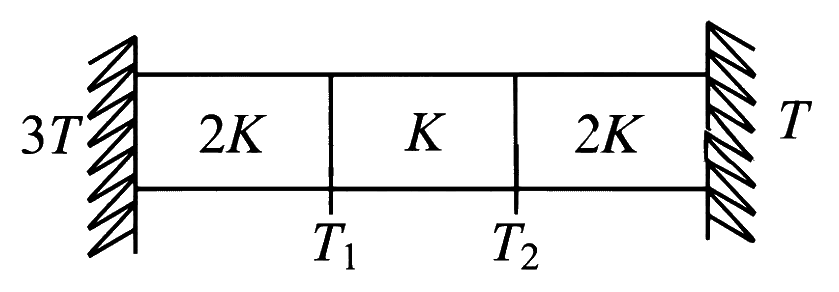
Answer: (c)
Heat Conduction
The two ends of a rod of length ' ' and uniform cross-sectional area ' A ' are kept at temperatures ' ' and ' ' respectively ( ). If the rate of heat transfer is ' ', through the rod in steady state, then the coefficient of thermal conductivity ' K ' is
Answer: (b)
Heat Conduction
The difference of temperature in a material can convert heat energy into electrical energy. To harvest the heat energy, the material should have
Answer: (a)
Heat Conduction
A composite slab consists of two materials having coefficients of thermal conductivity K and , thickness and respectively. The temperatures of two outer surfaces of a composite slab are and respectively . The rate of heat transfer through the slab in a steady state is , where is equal to
Answer: (d)
Heat Conduction
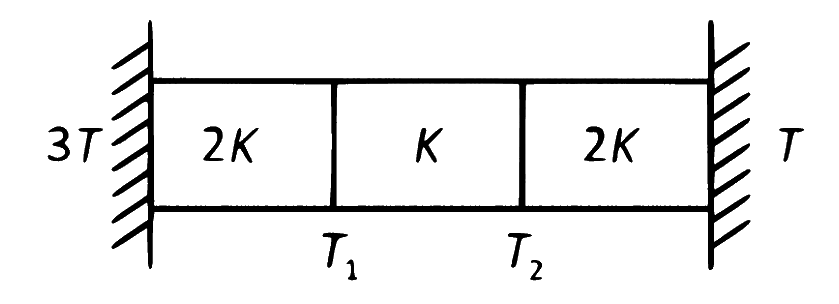
Three identical heat conducting rods are connected in series as shown in the figure. The rods on the sides have thermal conductivity while that in the middle has thermal conductivity . The left end of the combination is maintained at temperature and the right end at . The rods are thermally insulated from outside. In steady state, temperature at the left junction is and that at the right junction is . The ratio is
Answer: (a)
Heat Conduction
Two cylindrical rods A and B made of different materials, are joined in a straight line. The ratios of lengths, radii and thermal conductivities of these rods are: and . The free ends of rods A and B are maintained at 400 K, 200 K, respectively. The temperature of rods interface is ______________ , when equilibrium is established.
Numerical answer type. Work it out, then open the answer.
Answer: 360
Heat Conduction
Three conductors of same length having thermal conductivity and are connected as shown in figure.
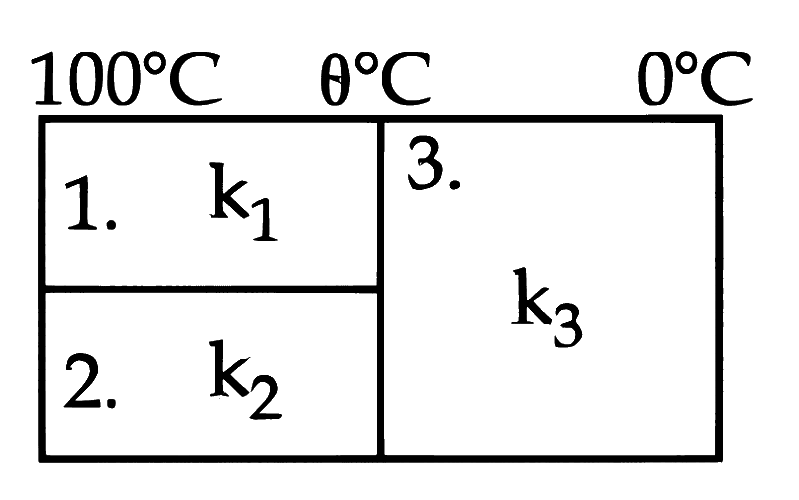
Area of cross sections of st and nd conductor are same and for rd conductor it is double of the st conductor. The temperatures are given in the figure. In steady state condition, the value of is _________ . (Given: )
Numerical answer type. Work it out, then open the answer.
Answer: 40
Heat Conduction
Given below are two statements: One is labelled as Assertion and the other is labelled as Reason .
Assertion A: Houses made of concrete roofs overlaid with foam keep the room hotter during summer.
Reason R: The layer of foam insulation prohibits heat transfer, as it contains air pockets. In the light of the above statements, choose the correct answer from the options given below.
Answer: (b)
Heat Conduction
A cylindrical rod is having temperatures and at its ends. The rate of heat flow is . All the linear dimensions of the rod are doubled by keeping the temperature constant. The new rate of flow of heat is
Answer: (b)
Heat Conduction
Rate of flow of heat through a cylindrical rod is ' '. The temperature at the ends of the rod are ' ' and ' '. If all the dimensions of the rod become double and the temperature difference remains the same, the rate of flow of heat becomes ' '. Then
Answer: (b)
Heat Conduction
Two rods of same length \& material transfer a given amount of heat in 12 s when they are joined end to end. But when they are joined length wise parallel to each other they will transfer same amount of heat in same condition in time
Answer: (b)
Heat Conduction
Which one of the following is based on convection?
Answer: (b)
Heat Conduction
The temperature gradient in a rod of length is . If the temperature of cooler end of the rod is , then the temperature of hotter end is
Answer: (b)
Heat Conduction
The rate of flow of heat through a metal rod with temperature difference is . The thermal resistance of metal rod in is
Answer: (a)
Heat Conduction
A composite slab consists of two materials having coefficient of thermal conductivity and , thickness and respectively. The temperature of the two outer surfaces of a composite slab are and . The rate of heat transfer through the slab in a steady state is where '' is equal to
Answer: (d)
Heat Conduction
Two plates and have thermal conductivities and respectively. They have same surface area and same thickness. They are placed in contact along their surfaces. If the temperatures of the outer surfaces of and are kept at and respectively, then the temperature of the surface of contact in steady state is _____________ .
Numerical answer type. Work it out, then open the answer.
Answer: 40
Heat Conduction
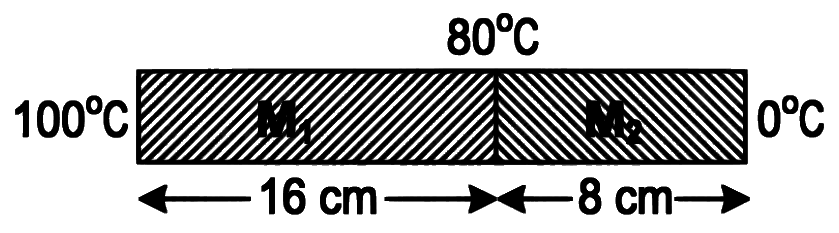
Two metallic blocks M1 and M2 of same area of cross-section are connected to each other (as shown in figure). If the thermal conductivity of M2 is K then the thermal conductivity of M1 will be: [Assume steady state heat conduction]
Answer: (b)
Heat Conduction
Two rods one made of copper and other made of steel of same length and same cross sectional area are joined together. The thermal conductivity of copper and steel are 385 J s K m and 50 J s K m respectively. The free ends of copper and steel are held at 100C and 0 C respectively. The temperature at the junction is, nearly:
Answer: (a)
Heat Conduction
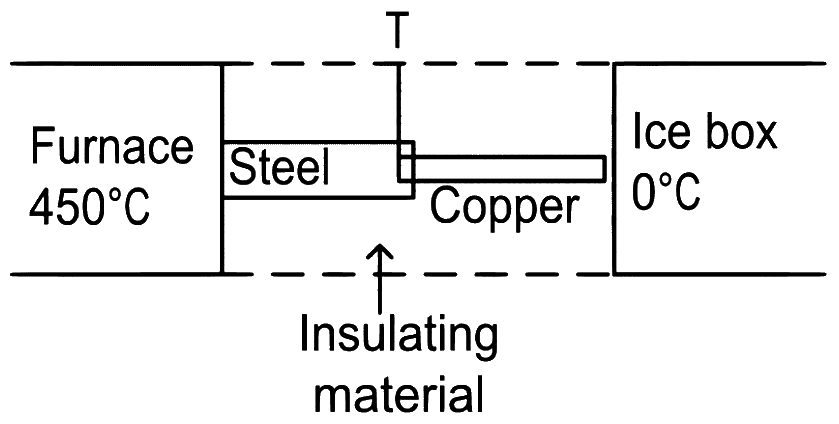
If and are the thermal conductivities, and are the lengths and and are the cross sectional areas of steel and copper rods respectively such that . Then, for the arrangement as shown in the figure, the value of temperature of the steel - copper junction in the steady state will be:
Answer: (c)
Heat Conduction
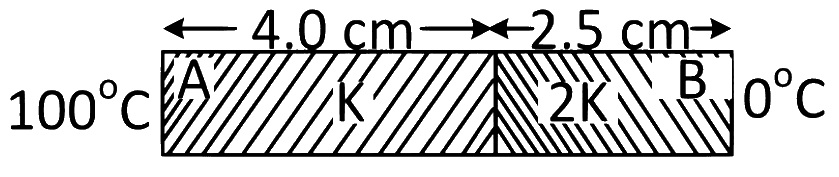
As per the given figure, two plates A and B of thermal conductivity K and 2 K are joined together to form a compound plate. The thickness of plates are 4.0 cm and 2.5 cm respectively and the area of cross-section is 120 cm2 for each plate. The equivalent thermal conductivity of the compound plate is K, then the value of will be ______________.
Numerical answer type. Work it out, then open the answer.
Answer: 21
Heat Conduction
An ice cube of dimensions is placed in an insulation box of wall thickness . The box keeping the ice cube at of temperature is brought to a room of temperature . The rate of melting of ice is approximately:
(Latent heat of fusion of ice is and thermal conducting of insulation wall is )
Answer: (b)
Heat Conduction
The temperature difference between two sides of an iron plate, thick is . Heat is transmitted through the plate at steady state. The thermal conductivity of iron is
Answer: (a)
Heat Conduction
The rate of flow of heat through a copper rod with temperature difference is . The thermal resistance of copper rod will be
Answer: (b)
Heat Conduction
A cylindrical rod has temperatures ' ' and '' at its ends. The rate of flow of heat is ' ' cal . If length and radius of the rod are doubled keeping temperature constant, then the rate of flow of heat '' will be
Answer: (d)
Heat Conduction
A cylindrical rod is having temperatures and at its ends. The rate of heat flow is '' . All the linear dimensions of the rod are doubled by keeping the temperatures constant. What is the new rate of flow of heat?
Answer: (c)
Heat Conduction
The temperature difference bewtween two sides of metal plate, thick is . Heat is transmitted through plate at the rate of per minute per at steady state. The thermal conductivity of metal is
Answer: (c)
Heat Conduction
Two rods of same length and material are joined end to end. They transfer heat in 8 second. When they are joined in parallel they transfer same amount of heat in same conditions in time
Answer: (b)
Heat Conduction
Two identical metal wires of thermal conductivities K1 and K2 respectively are connected in series. The effective thermal conductivity of the combination is:
Answer: (a)
Heat Conduction
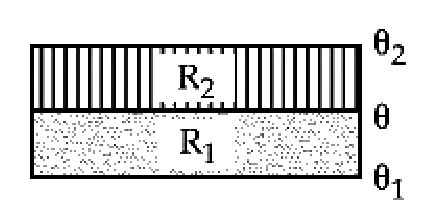
The temperature at the junction of two insulating sheets, having thermal resistances R1 and R2 as well as top and bottom temperatures 1 and 2 (as shown in figure) is given by:
Answer: (a)
Heat Conduction
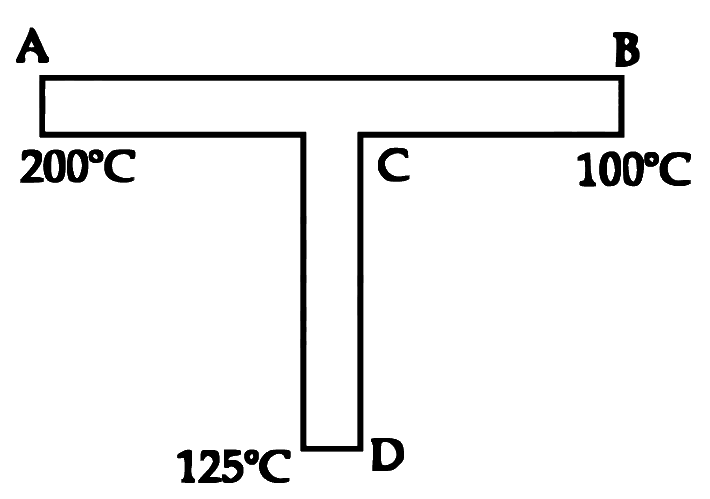
A rod CD of thermal resistance 10.0 KW is joined at the middle of an identical rod AB as shown in figure. The end A, B and D are maintained at 200C, 100C and 125C respectively. The heat current in CD is P watt. The value of P is ..................
Numerical answer type. Work it out, then open the answer.
Answer: 2
Heat Conduction
A conducting rod of length has area of cross-section . One end is immersed in boiling water and the other end in Ice . If coefficient of thermal conductivity of is and latent heat for ice is then the amount of ice which will melt in one minute is
Answer: (b)
Heat Conduction
Two thin metallic spherical shells of radii r1 and r2 (r1 < r2) are placed with their centres coinciding. A material of thermal conductivity K is filled in the space between the shells. The inner shell is maintained at temperature 1 and the outer shell at temperature 1 < 2). The rate at which heat flows radially through the material is :-
Answer: (a)
Heat Conduction
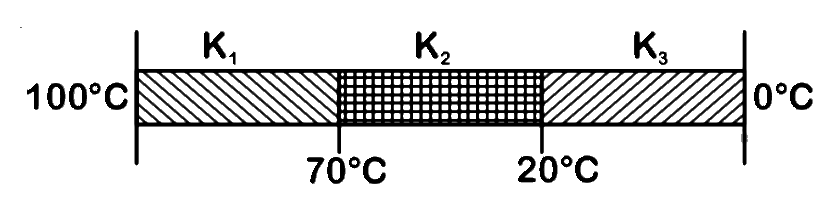
Three rods of identical cross-section and lengths are made of three different materials of thermal conductivity K1, K2 and K3, respectively. They are joined together at their ends to make a long rod (see figure). One end of the long rod is maintained at 100oC and the other at 0oC (see figure). If the joints of the rod are at 70oC and 20oC in steady state and there is no loss of energy from the surface of the rod, the correct relationship between K1, K2 and K3 is:
Answer: (a)
Heat Conduction
A heat source at T = 103 K is connected to another heat reservoir at T = 102 K by a copper slab which is 1 m thick. Given that the thermal conductivity of copper is 0.1 WK–1m–1, the energy flux through it in the steady state is -
Answer: (d)
Heat Conduction
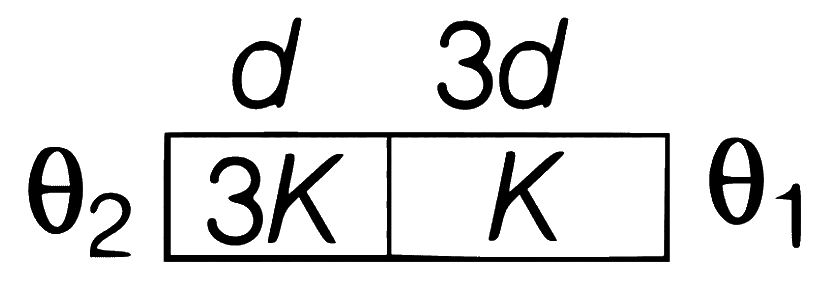
Two materials having coefficients of thermal conductivity '3K' and 'K' and thickness 'd' and '3d', respectively, are joined to form a slab as shown in the figure. The temperatures of the outer surfaces are '2' and '1' respectively, (2 > 1). The temperature at the interface is :-
Answer: (a)
Heat Conduction
A deep rectangular pond of surface area , containing water (density = ), specific heat capacity = ), is located in a region where the outside air temperature is at a steady value of . The thickness of the frozen ice layer in this pond, at a certain instant is .
Taking the thermal conductivity of ice as , and its specific latent heat of fusion as , the rate of increase of the thickness of ice layer, at this instant, would be given by
Answer: (d)
Heat Conduction
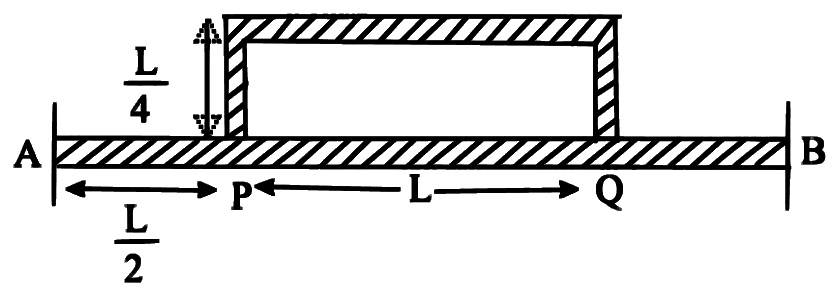
Temperature difference of 120oC is maintained between ends of a uniform rod AB of length 2L. Another bent rod PQ, of same cross-section as AB and length is connected across AB (see figure). In steady state, temperature difference between P and Q will be close to:
Answer: (a)
Heat Conduction
A cylinder of radius R is surrounded by a cylindrical shell of inner radius R and outer radius 2R. The thermal conductivity of the material of the inner cylinder is K1 and the of the outer cylinder is K2. Assuming no loss of heat, the effective thermal conductivity of the system for heat flowing along the length of the cylinder is:
Answer: (b)
Heat Conduction
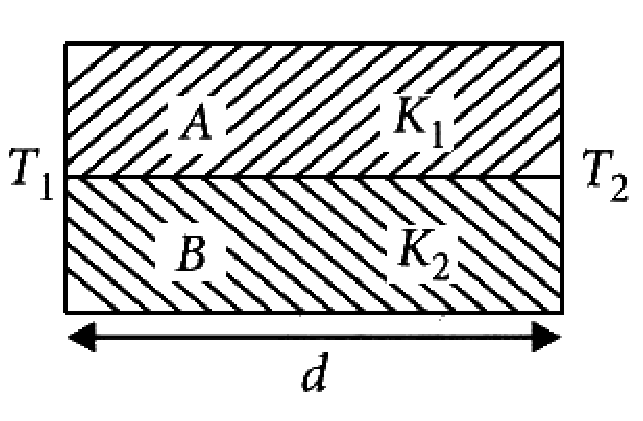
Two rods A and B of different materials are welded together as shown in figure. Their thermal conductivities are K1 and K2. The thermal conductivity of the composite will be
Answer: (d)
Heat Conduction
Three rods of Copper, Brass and Steel are welded together to form a shaped structure. Area of cross - section of each rod End of copper rod is maintained at where as ends of brass and steel are kept at . Lengths of the copper, brass and steel rods are and respectively. The rods are thermally insulated from surroundings excepts at ends. Thermal conductivities of copper, brass and steel are and units respectively. Rate of heat flow through copper rod is:
Answer: (c)
Heat Conduction
A long metallic bar is carrying heat from one of its ends to the other end under steady-state. The variation of temperature along the length of the bar from its hot end is best described by which of the following figures?
Answer: (a)
Heat Conduction
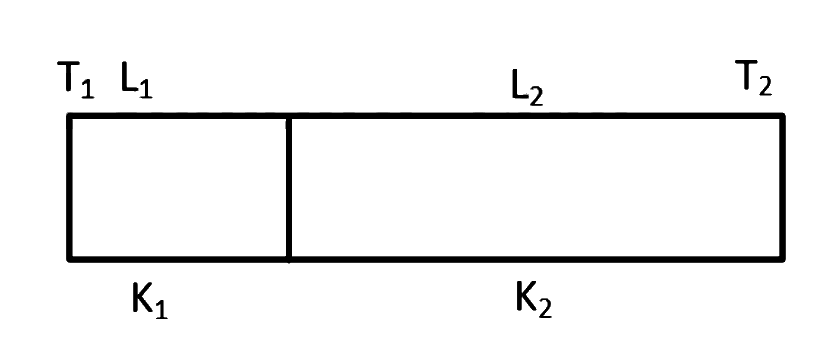
One end of a thermally insulated rod is kept at a temperature and the other at . The rod is composed of two sections of length and and thermal conductivities and respectively. The temperature at the interface of the two section is
Answer: (d)
Heat Conduction
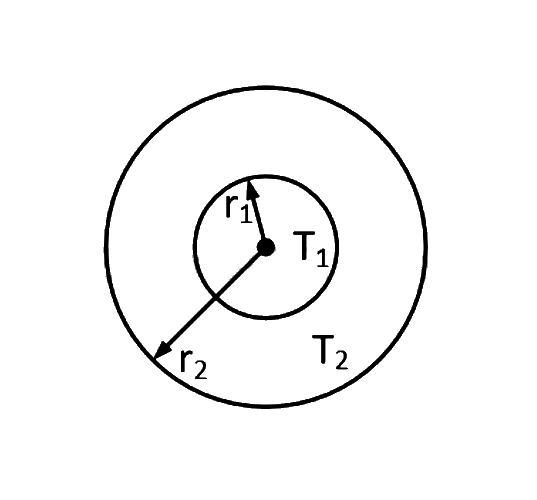
The figure shows a system of two concentric spheres of radii and are kept at temperatures and , respectively. The radial rate of flow of heat in a substance between the two concentric spheres is proportional to
Answer: (d)
Heat Conduction
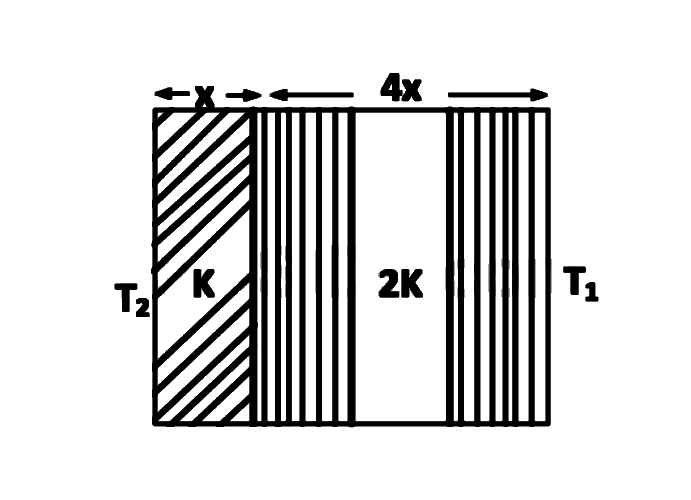
The temperature of the two outer surfaces of a composite slab, consisting of two materials having coefficients of thermal conductivity and and thickness and respectively, are and The rate of heat transfer through the slab, in a steady state is with equal to
Answer: (d)
Heat Conduction
Heat is flowing through two cylindrical rods of the same material. The diameters of the rods are in the ratio and the lengths in the ratio . If the temperature difference between the ends is same, then ratio of the rate of flow of heat through them will be
Answer: (d)
Heat Conduction
Which one of the following statements regarding a thermos flask is NOT correct?
Answer: (c)
Step-by-step solution coming soon.
Heat Conduction
Which one of the following statements is NOT correct?
Answer: (b)
Step-by-step solution coming soon.
Heat Conduction
The silvering in thermos flasks is done to avoid heat transfer by:
Answer: (c)
Step-by-step solution coming soon.
Heat Conduction
Which one of the following is the SI unit of the thermal conductivity of a material?
Answer: (a)
Step-by-step solution coming soon.
Heat Conduction
Which one of the following statements is not correct?
Answer: (d)
Step-by-step solution coming soon.
Heat Conduction
Thermal conductivity of aluminium, copper and stainless steel increases in the order
Answer: (b)
Step-by-step solution coming soon.
Heat Conduction
Which one among the following statements about thermal conductivity is correct?
Answer: (b)
Step-by-step solution coming soon.
Heat Conduction
Directions: Examine the two statements carefully and select the correct answer using the code given below.
Statement I: A thermos flask is made of double-walled glass bottles.
Statement II: Metals are good conductors while gas and air are poor conductors of heat.
Answer: (b)
Step-by-step solution coming soon.
Heat Conduction
The thermal conductivity of copper is times that of brass. Two rods of copper and brass having same length and cross-section are joined end to end. The free end of copper is at and the free end of brass is at . The temperature of the junction is
Answer: (a)
Step-by-step solution coming soon.
Heat Conduction
The best and the poorest conductors of heat are respectively
Answer: (a)
Step-by-step solution coming soon.
Heat Conduction
Which one of the following is the mode of heat transfer in which warm material is transported so as to displace a cooler material?
Answer: (b)
Step-by-step solution coming soon.
Heat Conduction
Assertion (A): In summer a block of iron is hotter than a block of wood.
Reason (R): The relative density of iron is more than the relative density of wood.
Select the answer using the codes given below:
Answer: (d)
Step-by-step solution coming soon.
Heat Conduction
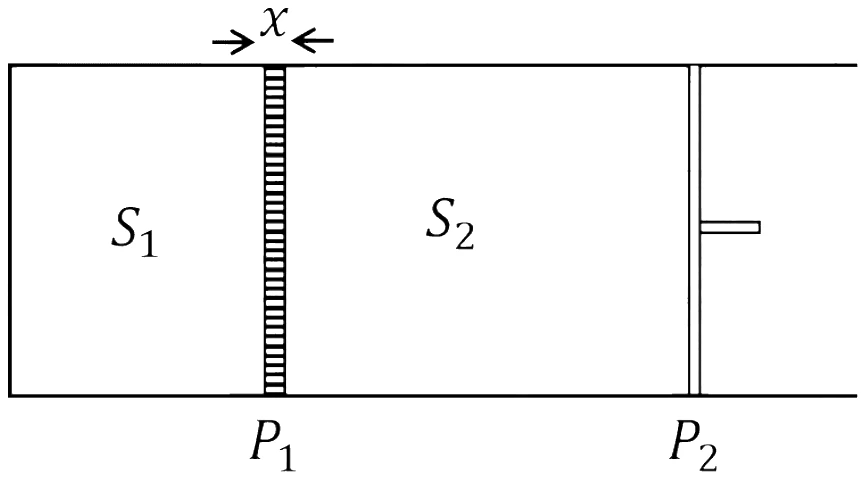
As shown in the figure, an insulated container is fitted with a thermally conducting but immovable partition () and a freely movable but thermally insulated piston (). The partition with thermal conductivity , cross sectional area and width divides the container into two sections, and , each containing one mole of a monoatomic gas. The piston moves freely such that the gas in is always at the atmospheric pressure. Initially, the difference between the temperatures of and is . The time it takes for the temperature difference to become is , where is the universal gas constant. The value of is:
[Given: ]
Numerical answer type. Work it out, then open the answer.
Answer: 0.63 to 0.68
Step-by-step solution coming soon.
Heat Conduction
The ends and of two thin wires, and , are soldered (joined) together. Initially each of the wires has a length of at . Now the end is maintained at , while the end is heated and maintained at . The system is thermally insulated from its surroundings. If the thermal conductivity of wire is twice that of the wire and the coefficient of linear thermal expansion of is , the change in length of the wire is
Answer: (a)
Step-by-step solution coming soon.
Heat Conduction
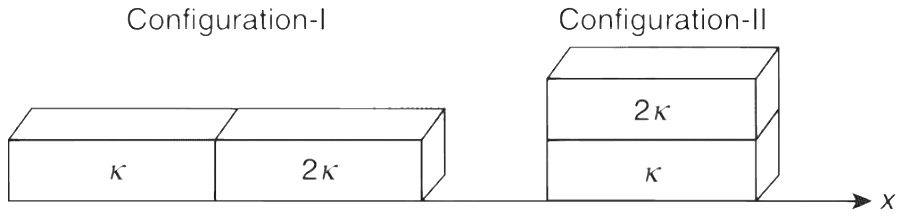
Two rectangular blocks, having identical dimensions, can be arranged in either configuration-I or configuration-II as shown in the figure. One of the blocks has thermal conductivity and the other . The temperature difference between the ends along the -axis is the same in both the configurations. It takes to transport a certain amount of heat from the hot end to the cold end in configuration-I. The time to transport the same amount of heat in configuration-II is
Answer: (a)
Step-by-step solution coming soon.
Heat Conduction
A metal rod of length has its one end in ice at and the other end in water at . If a point on the rod is maintained at , then it is found that equal amounts of water and ice evaporate and melt per unit time. The latent heat of evaporation of water is and latent heat of melting of ice is . If the point is at a distance of from the ice end , find the value of . (Neglect any heat loss to the surrounding.)
Numerical answer type. Work it out, then open the answer.
Answer: 9
Step-by-step solution coming soon.
Heat Conduction
Assertion: It is hotter over the top of a fire than at the same distance on the sides.
Reason: In the upward direction, the heat propagates through convection.
Answer: (a)
Step-by-step solution coming soon.
Heat Conduction
A composite slab is prepared by pasting two plates of thicknesses and and thermal conductivities and . The slabs have equal cross-sectional area. Find the equivalent conductivity of the slab.
Answer: (a)
Step-by-step solution coming soon.
Heat Conduction
Assertion: A brass tumbler feels much colder than a wooden tray on a chilly day.
Reason: The thermal conductivity of brass is less than that of wood.
Answer: (c)
Step-by-step solution coming soon.
Heat Conduction
A slab consists of two portions of different materials of same thickness and having the conductivities and . The equivalent thermal conductivity of the slab is
Answer: (c)
Step-by-step solution coming soon.
Heat Conduction
Assertion: Heat from the sun reaches the earth by convection.
Reason: Air can be heated only by convection.
Answer: (d)
Step-by-step solution coming soon.
Heat Conduction
A rod is long. The temperature of its one end is maintained at and other end at , the temperature at a distance of from point is
Answer: (a)
Step-by-step solution coming soon.
Heat Conduction
Two slabs and of different materials but of the same thickness are joined end to end to form a composite slab. The thermal conductivities of and are and respectively. A steady temperature difference of is maintained across the composite slab. If , the temperature difference across slabs is
Answer: (c)
Step-by-step solution coming soon.
Heat Conduction
The freezer in a refrigerator is located at the top section so that
Answer: (a)
Step-by-step solution coming soon.
Heat Conduction
Assertion : It is hotter over the top of a fire than at the same distance of the side.
Reason : Air surrounding the fire conducts, more heat upward.
Answer: (c)
Step-by-step solution coming soon.
Heat Conduction
A metal plate thick has a temperature difference of between its faces. It transmits through an area of . Thermal conductivity of the material is
Answer: (a)
Step-by-step solution coming soon.
Heat Conduction
Assertion : While measuring the thermal conductivity of liquid experimentally, the upper layer is kept hot and the lower layer is kept cold.
Reason : This avoids heating of liquid by convection.
Answer: (a)
Step-by-step solution coming soon.
Heat Conduction
One rod of length and thermal conductivity unit is attached to another rod of length and thermal conductivity unit. Temperature of free ends are and respectively. Then temperature of junction point will be
Answer: (b)
Step-by-step solution coming soon.
Heat Conduction
A system consist of a cylinder surrounded by a cylindrical shell. A cylinder is a radius and is made of material of thermal conductivity , whereas a cylindrical shell has inner radius and outer radius and is made of material of thermal conductivity twice as that of cylinder. Assuming the system in steady state and negligible heat loss across the cylindrical surface, find the effective thermal conductivity of the system, if the two ends of the combined system are maintained at two different temperatures.
Answer: (c)
Step-by-step solution coming soon.
Heat Conduction
A slab consists of portions of different materials of same thickness and having the conductivities and . The equivalent thermal conductivity of the slab is
Answer: (c)
Step-by-step solution coming soon.
Heat Conduction
Consider a compound slab consisting of two different materials having equal lengths, thicknesses and thermal conductivities and respectively. The equivalent thermal conductivity of the slab is
Answer: (c)
Step-by-step solution coming soon.
Heat Conduction
Which of the following circular rods, (given radius and length ) each made of the same material and whose ends are maintained at the same temperature will conduct most heat?
Answer: (b)
Step-by-step solution coming soon.
Heat Conduction
Which of the following circular rods (given radius and length ), each made of the same material and whose ends are maintained at the same temperature, will conduct most heat?
Answer: (b)
Step-by-step solution coming soon.
Heat Conduction
Two rods of the same material have the same length and area. The heat flows through them for minutes when they are joined side by side. If now both the rods are joined in parallel, then the same amount of heat will flow in
Answer: (b)
Step-by-step solution coming soon.
Heat Conduction
Two rods and have equal lengths. Their thermal conductivities are and and cross-sectional areas are and . When the temperatures at the ends of each rod are and respectively, the rate of flow of heat through and will be equal, if
Answer: (a)
Step-by-step solution coming soon.
Heat Conduction
A cylinder of radius made of a material of thermal conductivity is surrounded by a cylindrical shell of inner radius and outer radius made of a material of thermal conductivity . The two ends of the combined system are maintained at two different temperatures. There is no loss of heat across the cylindrical surface and the system is in steady state. The effective thermal conductivity of the system is
Answer: (b)
Step-by-step solution coming soon.
Heat Conduction
Which of the following graphs shows the correct relation between conductivity and temperature for a metallic conductor?
Answer: (b)
Step-by-step solution coming soon.
Heat Conduction
Two identical long solid cylinders are used to conduct heat from temperature to temperature . Originally, the cylinders are connected in series and the rate of heat transfer is . If the cylinders are connected in parallel, then the rate of heat transfer will be
Answer: (c)
Step-by-step solution coming soon.
Heat Conduction
If two metallic plates of equal thickness and thermal conductivities and are put together face to face and a common plate is constructed, then the equivalent thermal conductivity of this plate will be
Answer: (b)
Step-by-step solution coming soon.
Heat Conduction
Consider a pair of insulating blocks with thermal resistances and as shown in the figure. The temperature at the boundary between the two blocks is
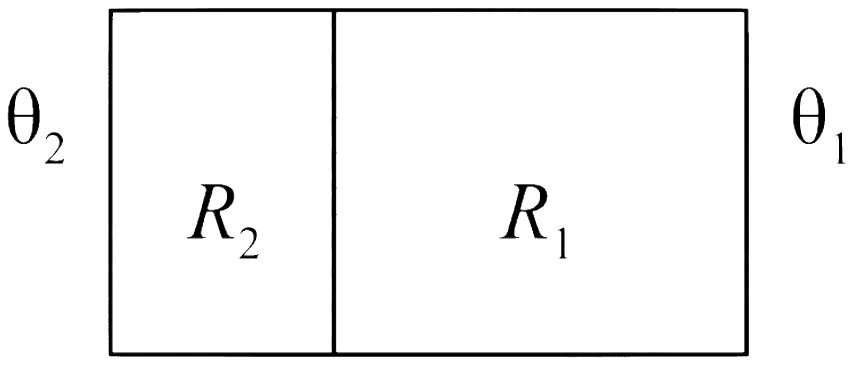
Answer: (d)
Step-by-step solution coming soon.
Heat Conduction
Six identical conducting rods are joined as shown in figure. Points and are maintained at and respectively. The temperature of junction will be
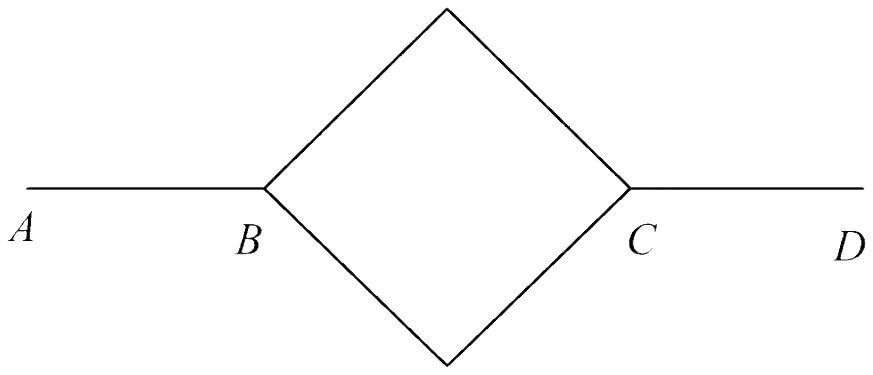
Answer: (c)
Step-by-step solution coming soon.
Heat Conduction
Three rods of same dimensions have thermal conductivity , and . They are arranged as shown in the figure below. Then, the temperature of the junction in steady state is
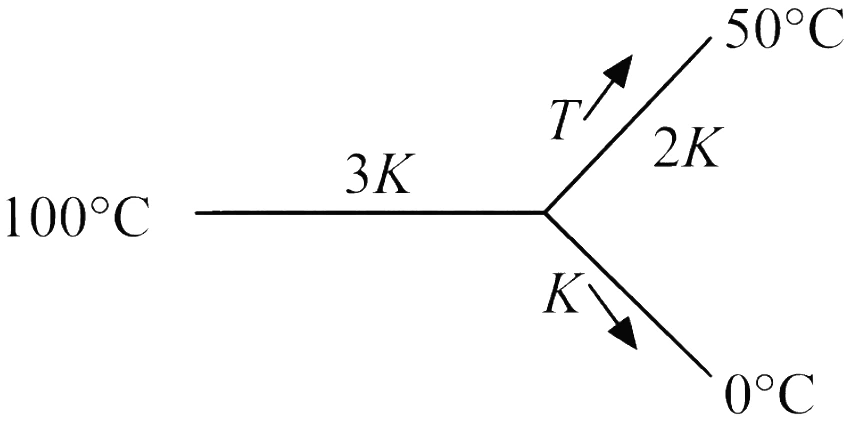
Answer: (a)
Step-by-step solution coming soon.
Heat Conduction
The rate of heat conduction in the given two metal rods having the same length is found to be the same when the temperature difference between the ends is kept . If the area of cross section of the first rod is then what will be area of cross section of the second rod? [Given that the ratio of the thermal conductivity of the first rod to that of the second rod is ]
Answer: (a)
Step-by-step solution coming soon.
Heat Conduction
Rods and have their lengths in the ratio . Their thermal conductivities are and respectively. The temperatures at the ends of each rod are and . If the rate of flow of heat through the rods is equal, the ratio of area of cross section of to that of is
Answer: (d)
Step-by-step solution coming soon.
Heat Conduction
A block of metal is connected in series with another block of metal such that the two metal blocks have the same area of cross sections. The thermal conductivity of metal is and the free end of metal is at . The temperature of the interface is and the free end of metal is at . Assuming the two metals have the same thickness, the conductivity of metal is:
Answer: (c)
Step-by-step solution coming soon.
Heat Conduction
Two slabs are of the thicknesses and . Their thermal conductivities are and , respectively. They are in series. The free ends of the combination of these two slabs are kept at temperatures and . Assume . The temperature of their common junction is
Answer: (c)
Step-by-step solution coming soon.
Heat Conduction
A cylinder of radius and of thermal conductivity is surrounded by a cylindrical shell of inner radius and outer radius made of a material of thermal conductivity . The effective thermal conductivity of the system is
Answer: (d)
Step-by-step solution coming soon.
Heat Conduction
Consider a compound slab consisting of two different materials having equal lengths, thickness and thermal conductivities and respectively. The equivalent thermal conductivity of the slab is
Answer: (c)
Step-by-step solution coming soon.
Heat Conduction
A compound slab is made of two parallel plates of copper and brass of the same thickness and having thermal conductivities in the ratio . The free face of copper is at . The temperature of the interface is . What is the temperature of the free face of brass?
Answer: (d)
Step-by-step solution coming soon.
Heat Conduction
Three metal rods of the same material and identical in all respects are joined as shown in the figure. The temperatures at the ends of these rods are maintained as indicated. Assuming no heat energy loss occurs through the curved surfaces of the rods, the temperature at the junction is
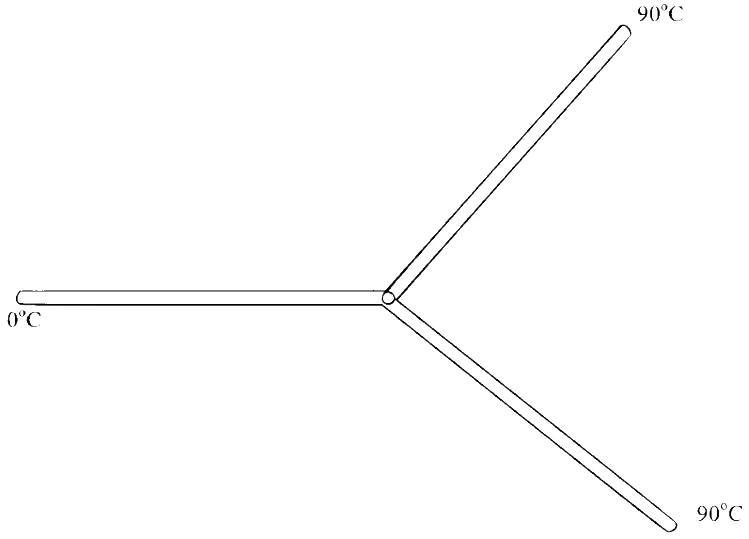
Answer: (a)
Step-by-step solution coming soon.
Heat Conduction
Two metal rods and have lengths in the ratio , thermal conductivities in the ratio and cross sectional areas in the ratio . The ends of the two rods are maintained between same temperature difference, then the ratio of heat currents is
Answer: (a)
Step-by-step solution coming soon.
Heat Conduction
Two rods and of lengths in the ratio have thermal conductivities in the ratio and cross-sectional areas in the ratio . The temperature difference between the ends of the two rods is the same. Then the ratio of heat currents is
Answer: (a)
Step-by-step solution coming soon.
Heat Conduction
Two semicircular rods AB and CD each of radius of curvature and a straight rod BC of length are connected in series. The three rods have equal area of cross-section and the thermal conductivities of the materials of the rods AB, BC and CD are in the ratio . In steady state, if the temperature difference between the ends of the middle rod BC is , then the temperature difference between the ends of the rods AB and CD are respectively
Answer: (a)
Step-by-step solution coming soon.
Heat Conduction
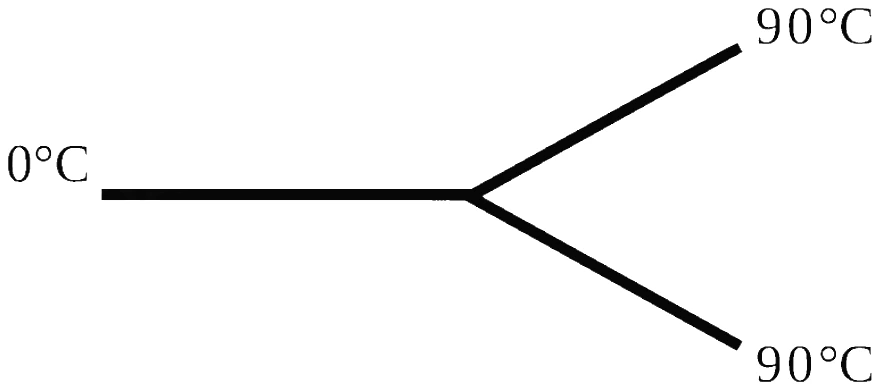
Three rods made of the same material and having the same cross-section have been joined as shown in the figure. Each rod is of the same length. The left and right ends of the arrangement are kept at and respectively. The temperature of the junction of the three rods will be
Answer: (b)
Step-by-step solution coming soon.
Heat Conduction
A rectangular slab consists of two cubes of copper and brass of equal sides having thermal conductivities in the ratio . If the free face of brass is at and that of copper is at , then the temperature of their interface is
Answer: (a)
Step-by-step solution coming soon.
Heat Conduction
A slab consists of two identical plates of copper and brass. The free face of the brass is at and that of copper at . If the thermal conductivities of brass and copper are in the ratio , then the temperature of interface is
Answer: (d)
Step-by-step solution coming soon.
Heat Conduction
The temperature difference across two cylindrical rods and of same material and same mass are and respectively. In steady state, if the rates of flow of heat through the rods and are in the ratio , the ratio of the length of the rods and is
Answer: (c)
Step-by-step solution coming soon.
Heat Conduction
The length of a metal bar is and the area of cross-section is . If one end of the rod is kept in ice at and the other end is kept in steam at , the mass of ice melted in one minute is , the thermal conductivity of the metal in is (Latent heat of fusion )
Answer: (a)
Step-by-step solution coming soon.
Heat Conduction
In a steady state, the temperature at the end and end of a long rod are and . The temperature of a point from is
Answer: (a)
Step-by-step solution coming soon.
Heat Conduction
Two rectangular metal boxes A and B having same dimensions are made of different materials of thermal conductivities and respectively. The two boxes are completely filled with ice and are placed in identical surroundings. If the time taken by the ice in box A to completely melt is minutes, then the time taken in minutes for half of the mass of ice in box B to melt is
Answer: (b)
Step-by-step solution coming soon.
Heat Conduction
A rectangular ice box of total surface area of initially contains of ice at . If the thickness of the walls of the box is and the temperature outside the box is , then the mass of the ice remaining in the box after minutes is
(Thermal conductivity of the material of the box and latent heat of fusion of ice )
Answer: (b)
Step-by-step solution coming soon.
Heat Conduction
The length of a metal rod is and its area of cross-section is . If one end of the rod is kept at a temperature of and the other end is kept in ice at , then the mass of the ice melted in minutes is (Thermal conductivity of the metal and latent heat of fusion of ice )
Answer: (c)
Step-by-step solution coming soon.
Heat Conduction
The thickness of a uniform rectangular metal plate is and the area of each surface is . In steady state, the temperature difference between the two surfaces of the plate is . If the heat flowing through the plate in one second from one surface to the other surface is , then the thermal conductivity of the metal is
Answer: (b)
Step-by-step solution coming soon.
Heat Conduction
The temperature difference between the ends of two cylindrical rods and of the same material is . In steady state the ratio of the rates of flow of heat through the rods and is . If the radii of the rods and are in the ratio , then the ratio of lengths of the rods and is
Answer: (d)
Step-by-step solution coming soon.
Heat Conduction
A metal cooking pot has a base area of and thickness . It boils water at a rate of when placed on a hot plate. The temperature of the part of the hot plate in contact with the pot is approximately [thermal conductivity of the metal is , heat of vaporisation of water is ]
Answer: (b)
Step-by-step solution coming soon.
Heat Conduction
Two identical long bars and of different materials are coated with wax and have one end immersed in a hot oil bath. When the steady state is reached, the lengths up to which the wax melts are and . If and are the thermal conductivities of the materials, then
Answer: (c)
Step-by-step solution coming soon.
Heat Conduction
A composite slab is prepared with two different materials and . The relation between their coefficient of thermal conductivity and thickness is given as and , respectively. If the temperature of faces of and are and respectively, what will be the temperature of common surface?
Answer: (c)
Step-by-step solution coming soon.
Heat Conduction
The temperature of the water of a pond is while that of the surrounding atmosphere is . If the density of ice is , coefficient of thermal conductivity is and latent heat of melting is , then the thickness of ice layer formed increases as a function of time is
Answer: (d)
Step-by-step solution coming soon.
Heat Conduction
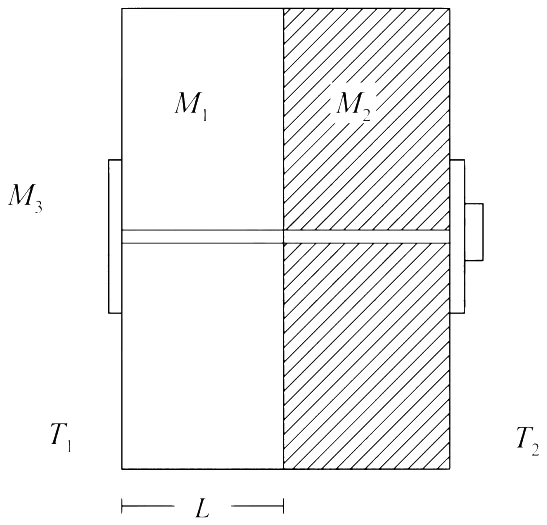
Two different materials , of equal dimensions (length and uniform cross-sectional area ) having thermal conductivities and respectively are connected together through a bolt . The bolt (length , area ) is of another material with thermal conductivity such that . The left sides of the material and are kept at the temperature whereas the right sides of the material and are kept at the temperature as shown in the figure below such that . Assume that the bolt () is thermally insulated from materials and . The equivalent thermal resistance of this system is
Answer: (d)
Step-by-step solution coming soon.
Heat Conduction
An iron slab and a copper slab having rectangular cross-sections and identical dimensions are welded together end to end. The outer ends of iron and copper slabs are held at and respectively. The thermal conductivities of iron and copper are and , respectively. Then, ignoring convective and radiative losses, the temperature of the junction is close to
Answer: (b)
Step-by-step solution coming soon.
Heat Conduction
A thick walled, hollow metallic cylinder has height and inner and outer radii and , respectively. It contains water which is heated with a constant power source so that its temperature is maintained at . In the steady state, the temperature of the inner and outer isothermal surfaces of the cylinder are and , respectively. The temperature difference is proportional to
Answer: (b)
Step-by-step solution coming soon.
Heat Conduction
A cubical box of side is constructed from thick concrete panels of thermal conductivity . A heater is sealed inside the box and switched on. The temperature of air outside the box is . After a long period of time, the air temperature inside the box will be close to
Answer: (d)
Step-by-step solution coming soon.
Heat Conduction
A cylindrical steel rod of length and thermal conductivity is welded end to end to a copper rod of thermal conductivity and of the same area of cross section but long. One end of the copper rod is maintained at . The free end of the steel rod is maintained at a temperature of . Assuming that the rods are perfectly insulated, the temperature of the junction is
Answer: (a)
Step-by-step solution coming soon.
Heat Conduction
The wall of a concert hall consists of a uniform brick wall of thickness on the outside. On the inside, it is completely covered with a uniform wooden layer of thickness . The thermal conductivities of brick and wood are, respectively, and . The thermal conductivity of the composite wall of the hall is
Answer: (b)
Step-by-step solution coming soon.
No questions match these filters.