
Ohm's Law, Resistivity & Temperature
In case of thermistor, which one of the following statements is 'WRONG'?
Show answer and solution
Answer: (b)
Loading the solution…
Home›Practice Hub›Chapters›Current Electricity›Ohm's Law, Resistivity & Temperature
Current Electricity PYQs · MHT CET · JEE Main · NEET
Ohm's Law, Resistivity & Temperature
In case of thermistor, which one of the following statements is 'WRONG'?
Answer: (b)
Ohm's Law, Resistivity & Temperature
Which of the following graph represents the temperature (T) dependence of resistivity () of a semiconductor?
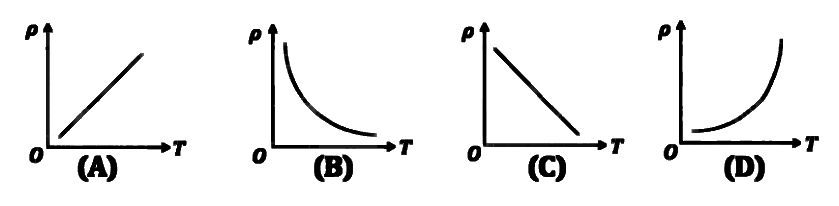
Answer: (b)
Ohm's Law, Resistivity & Temperature
Consider two circuits, (A) and (B), each having two resistors. One of them has a positive temperature coefficient of resistance, , while the other one has a negative temperature coefficient, , as shown in the figure. The currents through these circuits are denoted by and . At initial temperature, the resistance of the two resistors is . As the temperature is increased, the correct option that describes the variation of current in these circuits is:
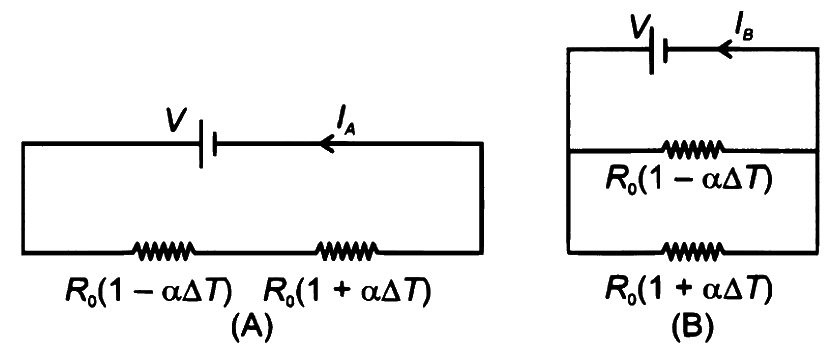
Answer: (b)
Ohm's Law, Resistivity & Temperature
A resistor of with a tolerance of and another of with a tolerance of are connected in series. The tolerance of combination is about
Answer: (b)
Ohm's Law, Resistivity & Temperature
Which of the following resistivity ( ) temperature ( T) curves is most suitable to be used in wire bound standard resistors?
Answer: (d)
Ohm's Law, Resistivity & Temperature
At room temperature , the resistance of a heating element is . The temperature coefficient of the material is . The temperature of the element, when its resistance is , is __________ .
Numerical answer type. Work it out, then open the answer.
Answer: 1027
Ohm's Law, Resistivity & Temperature
To determine the resistance (R) of a wire, a circuit is designed below. The characteristic curve for this circuit is plotted for the voltmeter and the ammeter readings as shown in figure. The value of is _________ .
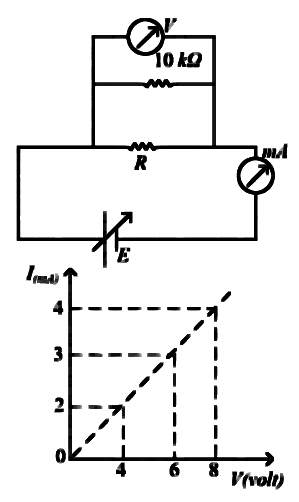
Numerical answer type. Work it out, then open the answer.
Answer: 2500
Ohm's Law, Resistivity & Temperature
Two wires and are made up of the same material and have the same mass. Wire has radius of and wire has radius of . The resistance of wire is . The resistance of wire is ________ .
Numerical answer type. Work it out, then open the answer.
Answer: 32
Ohm's Law, Resistivity & Temperature
A wire of resistance and radius is stretched till its radius became . If new resistance of the stretched wire is , then value of is ________.
Numerical answer type. Work it out, then open the answer.
Answer: 16
Ohm's Law, Resistivity & Temperature
Two conductors have the same resistances at but their temperature coefficients of resistance are and . The respective temperature coefficients for their series and parallel combinations are:
Answer: (b)
Ohm's Law, Resistivity & Temperature
An electric toaster has resistance of at room temperature . The toaster is connected to a supply. If the current flowing through it reaches , the temperature attained by toaster is around: ( if )
Answer: (d)
Ohm's Law, Resistivity & Temperature
Resistance of a wire at and is found to be and respectively. The temperature in Kelvin scale is _________.
Numerical answer type. Work it out, then open the answer.
Answer: 748
Ohm's Law, Resistivity & Temperature
A certain wire has resistance . The resistance of another wire of same material and equal length but of diameter thrice the diameter of A will be:
Answer: (b)
Ohm's Law, Resistivity & Temperature
A rectangular parallelopiped is measured as . If its specific resistance is , then the resistance between its two opposite rectangular faces will be ___________ .
Numerical answer type. Work it out, then open the answer.
Answer: 3
Ohm's Law, Resistivity & Temperature
The resistance of a wire is 5 . Its new resistance in ohm if stretched to 5 times of its original length will be:
Answer: (d)
Ohm's Law, Resistivity & Temperature
The resistance of platinum wire at is and at . The temperature coefficient of resistance of the wire is:
Answer: (b)
Ohm's Law, Resistivity & Temperature
Resistance of a carbon resistor determined from colour codes is . The colour of third band must be:
Answer: (b)
Ohm's Law, Resistivity & Temperature
A uniform metallic wire carries a current 2 A, when 3.4 V battery is connected across it. The mass of uniform metallic wire is 8.92 10 kg, density is 8.92 10 kg/m and resistivity is 1.7 10. The length of wire is:
Answer: (d)
Ohm's Law, Resistivity & Temperature
The current flowing through a conductor connected across a source is and 1.2 at and respectively. The current flowing through the conductor at will be ___________ .
Numerical answer type. Work it out, then open the answer.
Answer: 15
Ohm's Law, Resistivity & Temperature
A hollow cylindrical conductor has length of 3.14 m, while its inner and outer diameters are 4 mm and 8 mm respectively. The resistance of the conductor is . If the resistivity of the material is , the value of is ___________.
Numerical answer type. Work it out, then open the answer.
Answer: 2
Ohm's Law, Resistivity & Temperature
A wire of resistance is melted and drawn in a wire of one-fourth of its length. The new resistance of the wire will be
Answer: (d)
Ohm's Law, Resistivity & Temperature
The length of a metallic wire is increased by and its area of cross section is reduced by . The percentage change in resistance of the metallic wire is __________.
Numerical answer type. Work it out, then open the answer.
Answer: 25
Ohm's Law, Resistivity & Temperature
If a copper wire is stretched to increase its length by 20%. The percentage increase in resistance of the wire is __________%.
Numerical answer type. Work it out, then open the answer.
Answer: 44
Ohm's Law, Resistivity & Temperature
The reciprocal of resistance is:
Answer: (a)
Ohm's Law, Resistivity & Temperature
A wire of resistance R1 is drawn out so that its length is increased by twice of its original length. The ratio of new resistance to original resistance is:
Answer: (a)
Ohm's Law, Resistivity & Temperature
An aluminium wire is stretched to make its length, 0.4% larger. The percentage change in resistance is:
Answer: (c)
Ohm's Law, Resistivity & Temperature
The length of a given cylindrical wire is increased to double of its original length. The percentage increase in the resistance of the wire will be ____________ %.
Numerical answer type. Work it out, then open the answer.
Answer: 300
Ohm's Law, Resistivity & Temperature
Given below are two statements: one is labelled as Assertion A and the other is labelled as Reason R.
Assertion A: Alloys such as constantan and manganin are used in making standard resistance coils. Reason R: Constantan and manganin have very small value of temperature coefficient of resistance. In the light of the above statements, choose the correct answer from the options given below.
Answer: (a)
Ohm's Law, Resistivity & Temperature
Resistance of the wire is measured as 2 and 3 at 10C and 30C respectively. Temperature co- efficient of resistance of the material of the wire is:
Answer: (a)
Ohm's Law, Resistivity & Temperature
The variation of applied potential and current flowing through a given wire is shown in figure. The length of wire is 31.4 cm. The diameter of wire is measured as 2.4 cm. The resistivity of the given wire is measured as x 103 cm. The value of x is ____________. [Take = 3.14]
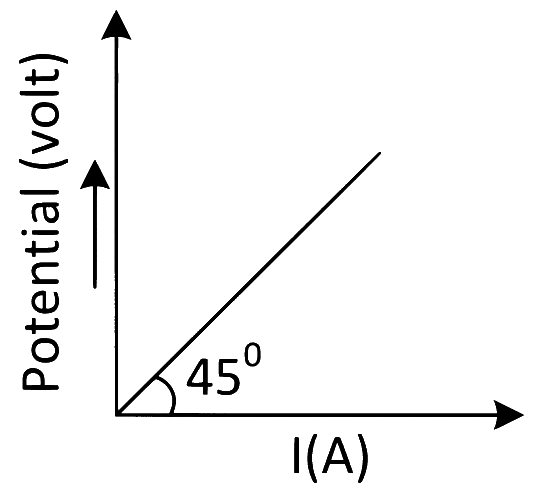
Numerical answer type. Work it out, then open the answer.
Answer: 144
Ohm's Law, Resistivity & Temperature
A long wire is broken into two unequal parts and . The part of the wire is streched into another wire W. Length of is twice the length of and the resistance of is twice that of . Find the ratio of length of and .
Answer: (b)
Ohm's Law, Resistivity & Temperature
The resistance of a conductor at 15C is 16 and at 100 C is 20. What will be the temperature coefficient of resistance of the conductor?
Answer: (c)
Ohm's Law, Resistivity & Temperature
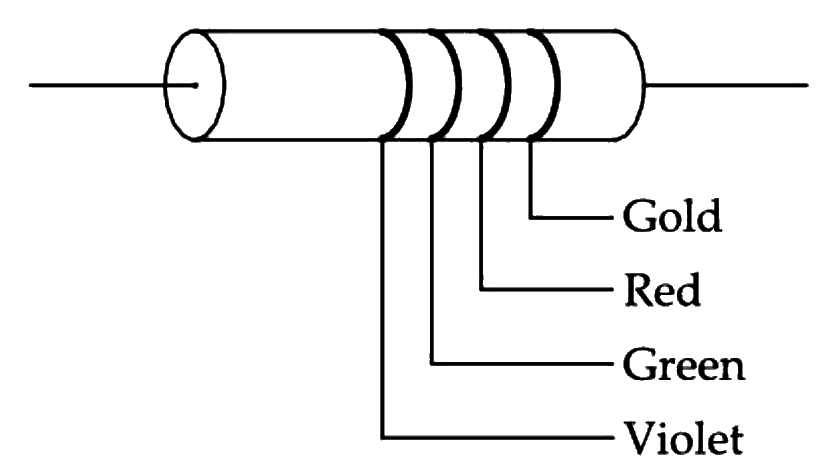
The Colour coding on a carbon resistor is shown in the given figure. The resistance value of the given resistor is:
Answer: (d)
Ohm's Law, Resistivity & Temperature
For the circuit shown, the value of current at time t = 3.2 s will be _________ A.
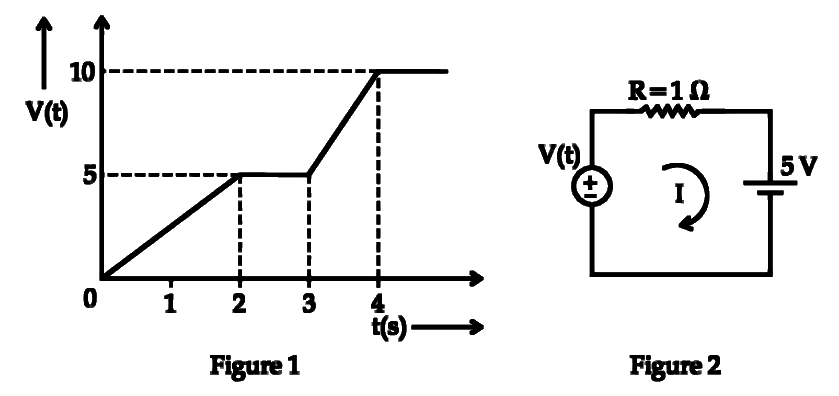
[Voltage distribution V(t) is shown by Fig. (1) and the circuit is shown in Fig. (2)]
Numerical answer type. Work it out, then open the answer.
Answer: 1
Ohm's Law, Resistivity & Temperature
A wire of 1 has a length of 1 m. It is stretched till its length increases by 25%. The percentage change in resistance to the nearest integer is:
Answer: (d)
Ohm's Law, Resistivity & Temperature
What equal length of an iron wire and a copper-nickel alloy wire, each of 2 mm diameter connected parallel to give an equivalent resistance of 3?
(Given resistivities of iron and copper-nickel alloy wire are 12 cm and 51 cm respectively)
Answer: (b)
Ohm's Law, Resistivity & Temperature
Two solid conductors are made up of same material, have same length and same resistance. One of them has a circular cross section of area and the other one has a square cross section of area . The ratio is
Answer: (c)
Ohm's Law, Resistivity & Temperature
Consider four conducting materials copper, tungsten, mercury and aluminium with resistivity C, T, M and A respectively. Then:
Answer: (b)
Ohm's Law, Resistivity & Temperature
Which of the following graph represents the variation of resistivity () with temperature (T) for copper?
Answer: (b)
Ohm's Law, Resistivity & Temperature
The solids which have the negative temperature coefficient of resistance are:
Answer: (c)
Ohm's Law, Resistivity & Temperature
The color code of a resistance is given below:
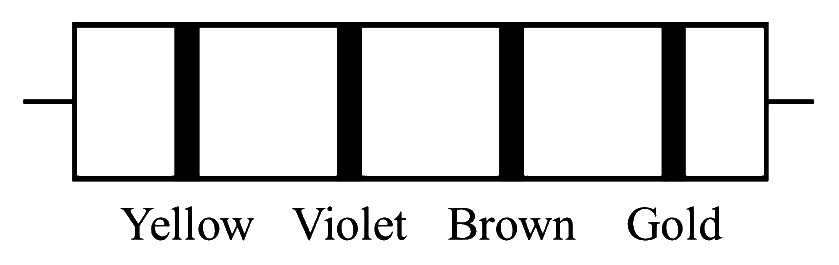
The values of resistance and tolerance, respectively, are
Answer: (c)
Ohm's Law, Resistivity & Temperature
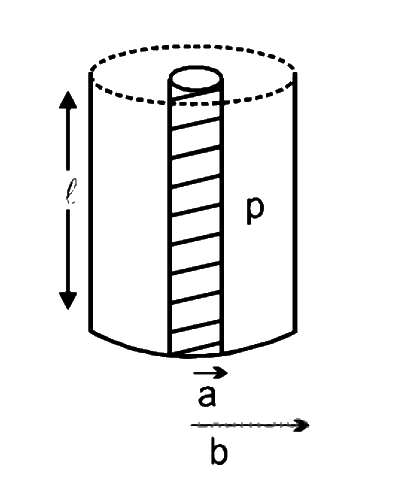
Model a torch battery of length to be made up of a thin cylindrical bar of radius ‘a’ and a concentric thin cylindrical shell of radius ‘b’ filled in between with an electrolyte of resistivity (see figure). If the battery is connected to a resistance of value R, the maximum Joule heating in R will take place for:
Answer: (c)
Ohm's Law, Resistivity & Temperature
For a metallic wire, the ratio of voltage to corresponding current is
Answer: (b)
Ohm's Law, Resistivity & Temperature
A 200 resistor has a certain color code. If one replaces the red color by green in the code, the new resistance will be:
Answer: (a)
Ohm's Law, Resistivity & Temperature
A carbon resistance has a following colour code. What is the value of the resistance?
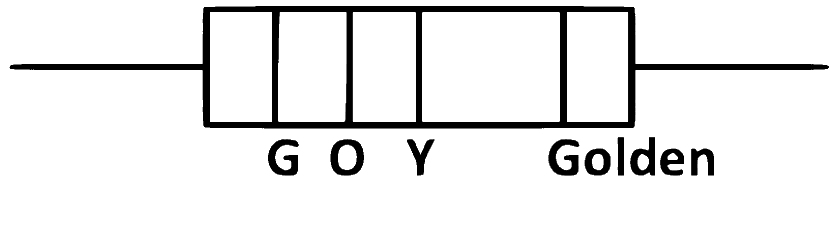
Answer: (a)
Ohm's Law, Resistivity & Temperature
A resistance is shown in the figure. Its value and tolerance are given respectively by:
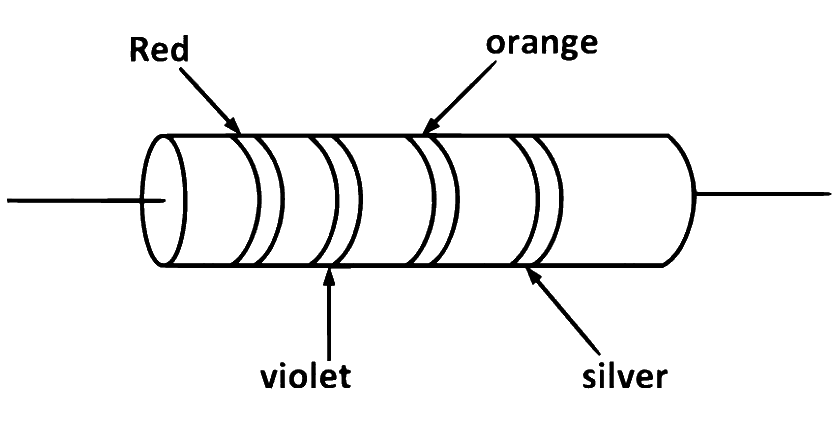
Answer: (b)
Ohm's Law, Resistivity & Temperature
A copper wire is stretched to make it 0.5% longer. The percentage change in its electrical resistance if its volume remains unchanged is:
Answer: (c)
Ohm's Law, Resistivity & Temperature
In an experiment, the resistance of a material is plotted as a function of temperature (in some range). As shown in the figure, it is a straight line. One may conclude that:
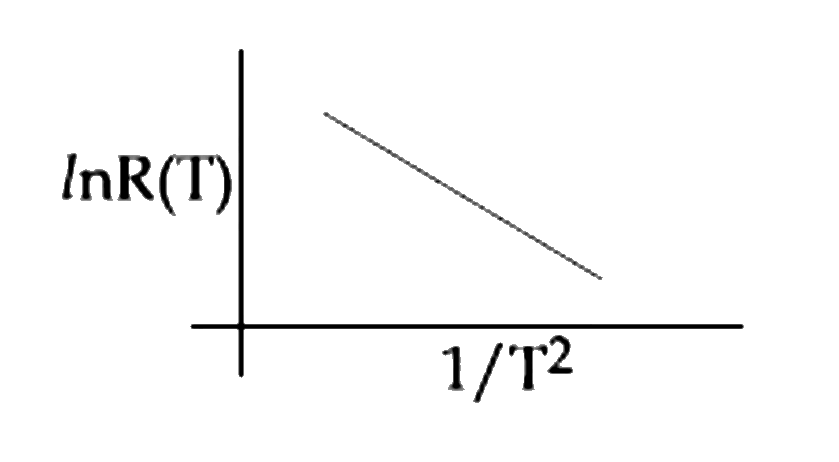
Answer: (d)
Ohm's Law, Resistivity & Temperature
A 2 W carbon resistor is color coded with green, black, red and brown respectively. The maximum current which can be passed through this resistor is -
Answer: (b)
Ohm's Law, Resistivity & Temperature
Space between two concentric conducting spheres of radii a and b (b > a) is filled with a medium of resistivity . The resistance between the two spheres will be:
Answer: (d)
Ohm's Law, Resistivity & Temperature
A carbon resistor of (47 4.7) k is to be marked with rings of different colours for its identification. The colour code sequence will be
Answer: (b)
Ohm's Law, Resistivity & Temperature
A heating element has a resistance of 100 at room temperature. When it is connected to a supply of 220 V, a steady current of 2 A passes in it and temperature is 500oC more than room temperature. What is the temperature coefficient of resistance of the heating element?
Answer: (d)
Ohm's Law, Resistivity & Temperature
The resistance of a wire is 'R' ohm. If it is melted and stretched to 'n' times its original length. its new resistance will be
Answer: (b)
Ohm's Law, Resistivity & Temperature
A uniform wire of length l and radius r has a resistance of 100 . It is recast into a wire of radius The resistance of new wire will be:
Answer: (a)
Ohm's Law, Resistivity & Temperature
The resistance of an electrical toaster has a temperature dependence given by R(T) = R0 [1 + (T − T0)] in its range of operation. At T0 = 300 K, R = 100 and at T = 500 K, R = 120 . The toaster is connected to a voltage source at 200 V and its temperature is raised at a constant rate from 300 to 500 K in 30 s. The total work done in raising the temperature is:
Answer: (c)
Ohm's Law, Resistivity & Temperature
Suppose the drift velocity d in a material varied with the applied electric field E as d . Then V - I graph for a wire made of such a material is best given by:
Answer: (c)
Ohm's Law, Resistivity & Temperature
A wire of resistance 4 is stretched to twice its original length. The resistance of stretched wire would be
Answer: (b)
Ohm's Law, Resistivity & Temperature
Two rods are joined end to end, as shown. Both have a cross-sectional area of 0.01 cm2. Each is 1 6
meter long. One rod is of copper with a resistivity of 1.7 10 ohm-centimeter, the other is of iron 5
with a resistivity of 10 ohm-centimeter.
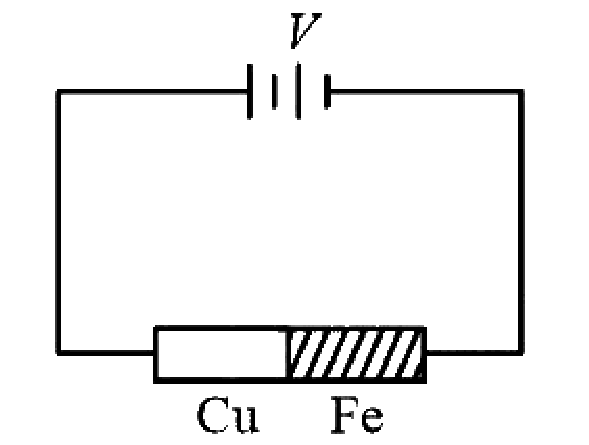
How much voltage is required to produce a current of 1 ampere in the rods?
Answer: (d)
Ohm's Law, Resistivity & Temperature
If a wire is stretched to make it longer, its resistance will:
Answer: (a)
Ohm's Law, Resistivity & Temperature
Two conductors have the same resistance at but their temperature coefficients of resistance are and The respective temperature coefficients of their series and parallel combinations are nearly
Answer: (d)
Ohm's Law, Resistivity & Temperature
Statement - 1: The temperature dependence of resistance is usually given as The resistance of wire changes from to when its temperature is increased from to . This implies that
Statement - 2: is valid only when the change in the temperature is small and
Answer: (c)
Ohm's Law, Resistivity & Temperature
A wire of a certain material is stretched slowly by ten percent. Its new resistance and specific resistance become respectively
Answer: (d)
Ohm's Law, Resistivity & Temperature
Consider a block of conducting material of resistivity shown in the figure. Current enters at and leaves from . We apply superposition principle to find voltage developed between and . The calculation is done in the following steps:
(i) Take current entering from and assume it to spread over a hemispherical surface in the block.
(ii) Calculate field at distance from A by using Ohm's law where is the current per unit area at .
(iii) From the dependence of , obtain the potential at .
(iv) Repeat (i), (ii) and (iii) for current leaving and superpose results for and
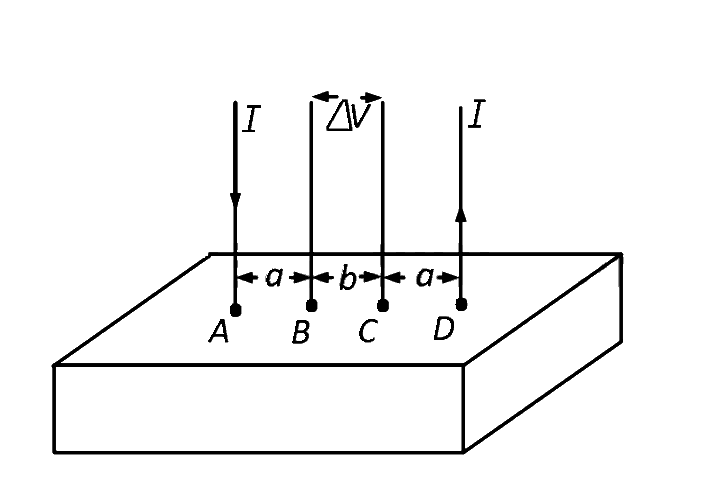
measured between and is
Answer: (a)
Ohm's Law, Resistivity & Temperature
Consider a block of conducting material of resistivity shown in the figure. Current enters at and leaves from . We apply superposition principle to find voltage developed between and . The calculation is done in the following steps:
(i) Take current entering from and assume it to spread over a hemispherical surface in the block.
(ii) Calculate field at distance from A by using Ohm's law where is the current per unit area at .
(iii) From the dependence of , obtain the potential at .
(iv) Repeat (i), (ii) and (iii) for current leaving and superpose results for and
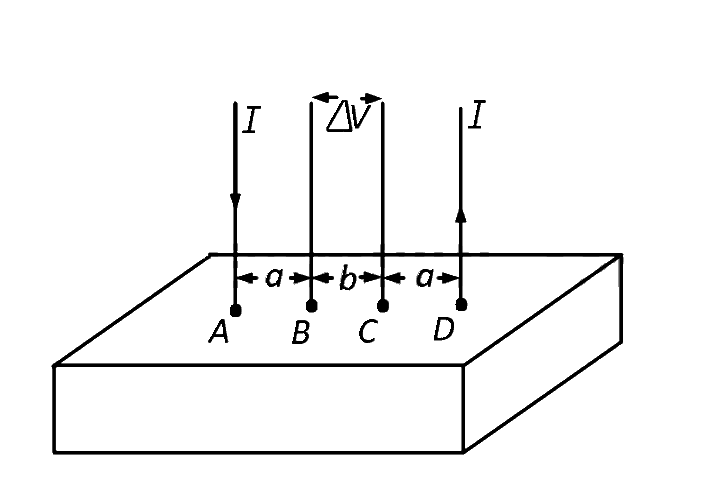
For current entering at the electric field at a distance from is
Answer: (c)
Ohm's Law, Resistivity & Temperature
The resistance of a wire is ohm at and ohm at The resistance of the wire at will be
Answer: (d)
Ohm's Law, Resistivity & Temperature
A material 'B' has twice the specific resistance of 'A'. A circular wire made of 'B' has twice the diameter of a wire made of 'A'. Then for the two wires to have the same resistance, the ratio of their respective lengths must be
Answer: (a)
Ohm's Law, Resistivity & Temperature
The resistance of bulb filament is at a temperature of If its temperature coefficient of resistance be per , its resistance will become at a temperature of
Answer: (b)
Ohm's Law, Resistivity & Temperature
A material has twice the specific resistance of A circular wire made of has twice the diameter of a wire made of . Then for the two wires to have the same resistance, the ratio of their respective lengths must be
Answer: (d)
Ohm's Law, Resistivity & Temperature
The electric resistance of a certain wire of iron is R. If its length and radius are both doubled, then
Answer: (b)
Ohm's Law, Resistivity & Temperature
Thermistors are usually made of
Answer: (a)
Ohm's Law, Resistivity & Temperature
The length of a given cylindrical wire is increased by . Due to the consequent decrease in diameter the change in the resistance of the wire will be
Answer: (d)
Ohm's Law, Resistivity & Temperature
Specific resistance of a conductor increases with
Answer: (a)
Ohm's Law, Resistivity & Temperature
Copper and silicon is cooled from 300 K to 60 K, the specific resistance
Answer: (a)
Ohm's Law, Resistivity & Temperature
The resistance of a discharge tube is
Answer: (c)
Ohm's Law, Resistivity & Temperature
From the graph between current and voltage is shown below. Identify the portion corresponding to negative resistance
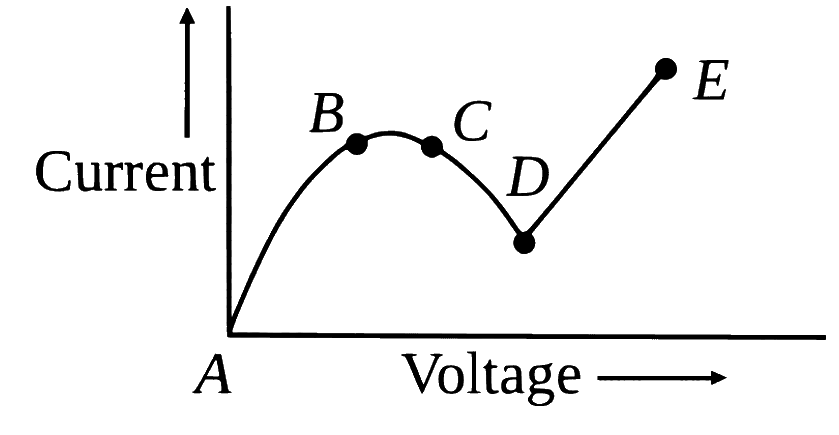
Answer: (a)
Ohm's Law, Resistivity & Temperature
Three copper wires of lengths and cross-sectional areas are and . Resistance is minimum in
Answer: (a)
Ohm's Law, Resistivity & Temperature
In good conductors of electricity, the type of bonding that exists is
Answer: (a)
Ohm's Law, Resistivity & Temperature
A wire long and in cross-section carries a current of when connected to a battery. The resistivity of the wire is
Answer: (b)
Ohm's Law, Resistivity & Temperature
Identify the set in which all the three materials are good conductors of electricity
Answer: (c)
Ohm's Law, Resistivity & Temperature
The masses of the wires of copper is in the ratio of and their lengths are in the ratio of . The ratio of their electrical resistance is
Answer: (d)
Ohm's Law, Resistivity & Temperature
Two conducting wires made of the same material have lengths and . If the volume of the longer wire is half that of the shorter wire, then what is the electric resistance of the longer wire in comparison with the shorter wire?
Answer: (c)
Step-by-step solution coming soon.
Ohm's Law, Resistivity & Temperature
A heating filament and an ideal resistor of fixed value are connected in series with a DC voltage source. After some time, the filament has reached its operating point so that the current in the circuit is steady. Which one of the following is correct?
Answer: (b)
Step-by-step solution coming soon.
Ohm's Law, Resistivity & Temperature
Consider three wires X, Y and Z of the same length such that the ratio of their conductivities is . Further, the cross-sectional area of wire Z is twice that of Y and the resistance of X is equal to the resistance of Z. What is the ratio of the resistance of Y to that of X?
Answer: (b)
Step-by-step solution coming soon.
Ohm's Law, Resistivity & Temperature
If the length of a copper wire is increased by twice, then its resistivity will be
Answer: (c)
Step-by-step solution coming soon.
Ohm's Law, Resistivity & Temperature
The potential difference between the two end terminals of an electric heater is and the current through it is . What would be the current through the heater if the potential difference across the terminals of the heater is reduced to ?
Answer: (c)
Step-by-step solution coming soon.
Ohm's Law, Resistivity & Temperature
Which of the following statements are correct about the electrical resistance and resistivity of a wire?
1. Both quantities depend on the area of cross-section of the wire
2. Both depend on the temperature
3. Resistance of the wire is directly proportional to the resistivity of the wire
4. Resistivity of the wire is directly proportional to the length of the wire
Select the correct answer using the code given below:
Answer: (c)
Step-by-step solution coming soon.
Ohm's Law, Resistivity & Temperature
In an electric circuit, a wire of resistance is used. If this wire is stretched to a length double of its original value, the current in the circuit would become:
Answer: (c)
Step-by-step solution coming soon.
Ohm's Law, Resistivity & Temperature
Which one of the following correctly represents the SI unit of resistivity?
Answer: (d)
Step-by-step solution coming soon.
Ohm's Law, Resistivity & Temperature
Two resistors and arranged in parallel combination in an electrical closed circuit are made of the same material and of the same thickness. If the length of is twice the length of , then the total resistance satisfies
Answer: (a)
Step-by-step solution coming soon.
Ohm's Law, Resistivity & Temperature
A metallic wire having resistance of is cut into two equal parts in length. These parts are then connected in parallel. The resistance of this parallel combination is equal to
Answer: (c)
Step-by-step solution coming soon.
Ohm's Law, Resistivity & Temperature
Which one of the following statements regarding Ohm’s law is not correct?
Answer: (d)
Step-by-step solution coming soon.
Ohm's Law, Resistivity & Temperature
Let us consider a copper wire having radius and length . Let its resistance be . If the radius of another copper wire is and the length is then the resistance of this wire will be
Answer: (d)
Step-by-step solution coming soon.
Ohm's Law, Resistivity & Temperature
The graphs between current () and voltage () for three linear resistors 1, 2 and 3 are given below. If , and are the resistances of these resistors, then which one of the following is correct?
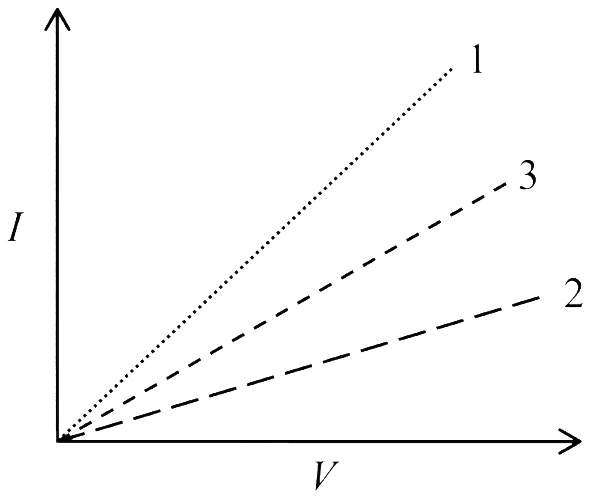
Answer: (b)
Step-by-step solution coming soon.
Ohm's Law, Resistivity & Temperature
Which one of the following devices is non-ohmic?
Answer: (c)
Step-by-step solution coming soon.
Ohm's Law, Resistivity & Temperature
Which one of the following physical quantities does NOT affect the resistance of a cylindrical resistor?
Answer: (a)
Step-by-step solution coming soon.
Ohm's Law, Resistivity & Temperature
A simple circuit contains a battery and a bulb having resistance. When you turn on the switch, the ammeter connected in the circuit would read
Answer: (a)
Step-by-step solution coming soon.
Ohm's Law, Resistivity & Temperature
The resistance of a wire of length and area of cross-section is . If the wire is stretched to double its length, its resistance would become:
Answer: (c)
Step-by-step solution coming soon.
Ohm's Law, Resistivity & Temperature
The product of conductivity and resistivity of a conductor
Answer: (c)
Step-by-step solution coming soon.
Ohm's Law, Resistivity & Temperature
The current ()-voltage () plot of a certain electronic device is given above. The device is
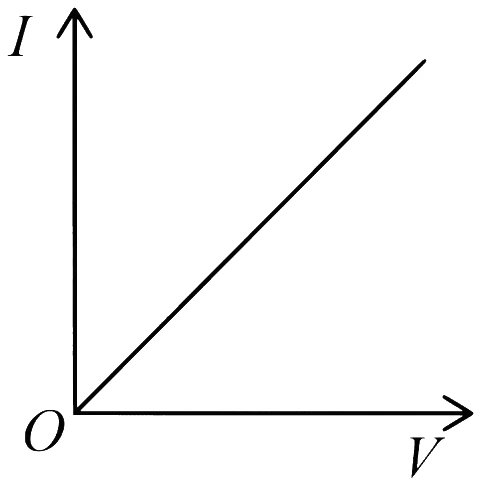
Answer: (b)
Step-by-step solution coming soon.
Ohm's Law, Resistivity & Temperature
Two conducting wires and are made of same material. If the length of is twice that of and the radius of circular cross-section of is twice that of , then their resistances and are in the ratio
Answer: (c)
Step-by-step solution coming soon.
Ohm's Law, Resistivity & Temperature
Ohm's law can also be taken as a statement for
Answer: (d)
Step-by-step solution coming soon.
Ohm's Law, Resistivity & Temperature
Ohm's law defines
Answer: (a)
Step-by-step solution coming soon.
Ohm's Law, Resistivity & Temperature
The resistance of a wire is . If it is stretched ten times, the resistance will be
Answer: (d)
Step-by-step solution coming soon.
Ohm's Law, Resistivity & Temperature
Two metallic wires and are of same material and have equal length. If the cross-sectional area of is double that of , then which one among the following is the electrical resistance of ?
Answer: (d)
Step-by-step solution coming soon.
Ohm's Law, Resistivity & Temperature
Two copper wires and of length and respectively, have the same area of cross-section. The ratio of the resistivity of wire to the resistivity of wire is
Answer: (c)
Step-by-step solution coming soon.
Ohm's Law, Resistivity & Temperature
If the electrical resistance of a typical substance suddenly drops to zero, then the substance is called :
Answer: (a)
Step-by-step solution coming soon.
Ohm's Law, Resistivity & Temperature
Two pieces of metallic wire having equal length and equal volume placed in air have different resistances. The two wires must :
Answer: (c)
Step-by-step solution coming soon.
Ohm's Law, Resistivity & Temperature
The specific resistance of a conducting wire depends upon
Answer: (c)
Step-by-step solution coming soon.
Ohm's Law, Resistivity & Temperature
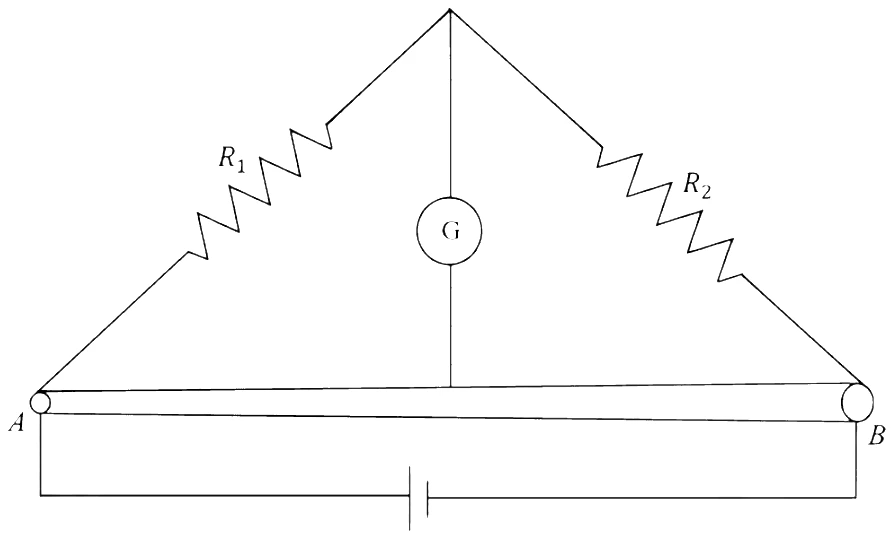
Two resistances and are connected to a wire of uniform resistivity, as shown in the figure. The radius of the wire varies linearly along its axis from at to at . A galvanometer () connected to the center of the wire, from each end along its axis, shows zero deflection when and are connected to a battery. The value of is ____________.
Numerical answer type. Work it out, then open the answer.
Answer: 5
Step-by-step solution coming soon.
Ohm's Law, Resistivity & Temperature
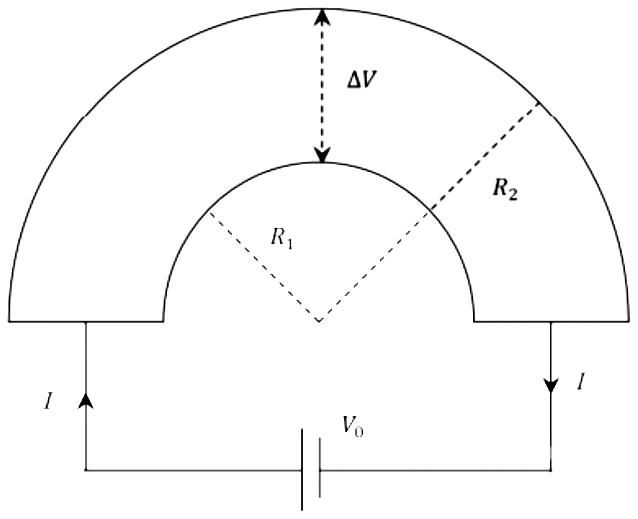
Shown in the figure is a semicircular metallic strip that has thickness and resistivity . Its inner radius is and outer radius is . If a voltage is applied between its two ends, a current flows in it. In addition, it is observed that a transverse voltage develops between its inner and outer surfaces due to purely kinetic effects of moving electrons (ignore any role of the magnetic field due to the current). Then (figure is schematic and not drawn to scale)
More than one option can be correct. Tap every correct option, then tap Check.
Answer: (a), (c), (d)
Step-by-step solution coming soon.
Ohm's Law, Resistivity & Temperature
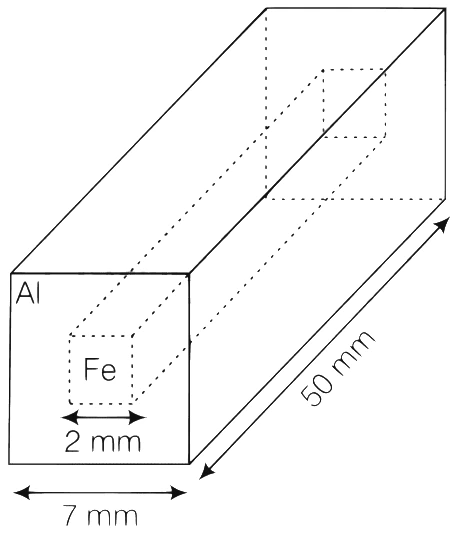
In an aluminium (Al) bar of square cross section, a square hole is drilled and is filled with iron (Fe) as shown in the figure. The electrical resistivities of Al and Fe are and , respectively. The electrical resistance between the two faces and of the composite bar is
More than one option can be correct. Tap every correct option, then tap Check.
Answer: (b)
Step-by-step solution coming soon.
Ohm's Law, Resistivity & Temperature
Consider a thin square sheet of side and thickness , made of a material of resistivity . The resistance between two opposite faces, shown by the shaded areas in the figure is
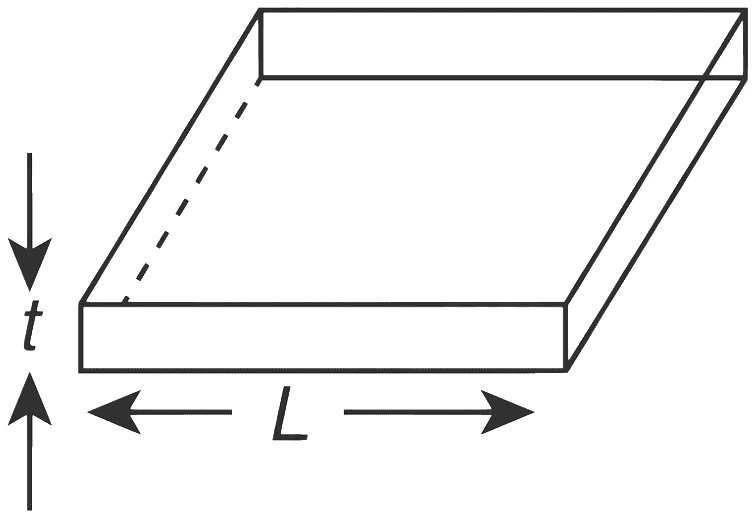
Answer: (c)
Step-by-step solution coming soon.
Ohm's Law, Resistivity & Temperature
For a wire and length of wire is . If potential difference of is applied across it, then current through wire will be ( = Resistance)
Answer: (a)
Step-by-step solution coming soon.
Ohm's Law, Resistivity & Temperature
A metal wire has a resistance of . If its length is increased to double by drawing it, then its new resistance will be
Answer: (b)
Step-by-step solution coming soon.
Ohm's Law, Resistivity & Temperature
The current-voltage graph for a device is shown in figure. The resistance is negative in region.
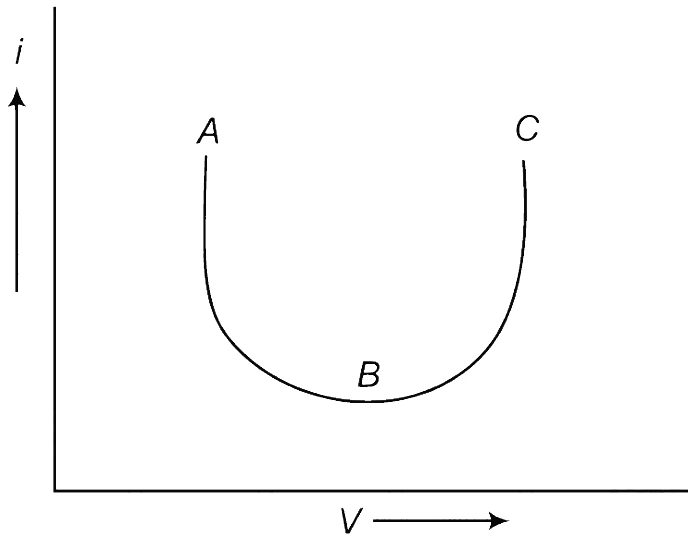
Answer: (a)
Step-by-step solution coming soon.
Ohm's Law, Resistivity & Temperature
If the length and area of cross-section of a conductor are doubled, then its resistance will be
Answer: (a)
Step-by-step solution coming soon.
Ohm's Law, Resistivity & Temperature
The current and voltage graphs for a given metallic wire at two different temperatures and are shown in the figure. It is concluded that
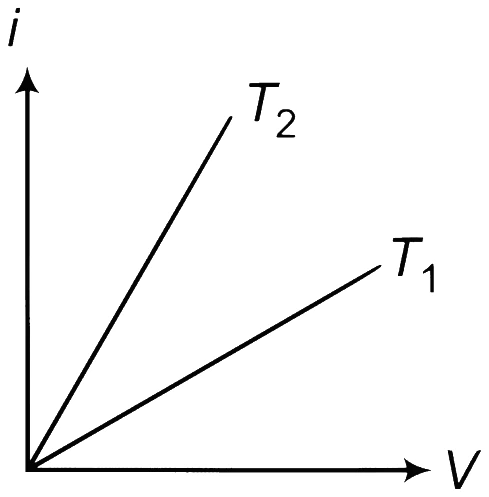
Answer: (a)
Step-by-step solution coming soon.
Ohm's Law, Resistivity & Temperature
Assertion : The value of temperature coefficient of resistance is positive is for metals.
Reason : The temperature coefficient of resistance for insulator is also positive.
Answer: (c)
Step-by-step solution coming soon.
Ohm's Law, Resistivity & Temperature
Assertion : The power delivered to a light bulb is more just after it is switched ON and the glow of the filament is increasing, as compared to when the bulb is glowing steadily, i.e, after sometime of switching ON.
Reason : As temperature decreases, resistance of conductor increases.
Answer: (c)
Step-by-step solution coming soon.
Ohm's Law, Resistivity & Temperature
The temperature () dependence of resistivity () of a semiconductor is represented by :
Answer: (c)
Step-by-step solution coming soon.
Ohm's Law, Resistivity & Temperature
The length of a given cylindrical wire is increased by . Due to the consequent decrease in diameter the change in the resistance of the wire will be
Answer: (b)
Step-by-step solution coming soon.
Ohm's Law, Resistivity & Temperature
A rod made up of metal is long and in diameter. Its resistance is . Another disc made of the same metal is in diameter and thick. What is the resistance between the round faces of the disc?
Answer: (c)
Step-by-step solution coming soon.
Ohm's Law, Resistivity & Temperature
Find the resistance of a hollow cylindrical conductor of length and inner and outer radii and respectively. The resistivity of the material is .
Answer: (a)
Step-by-step solution coming soon.
Ohm's Law, Resistivity & Temperature
For a metallic wire, the ratio ( = applied potential difference and = current flowing) is
Answer: (b)
Step-by-step solution coming soon.
Ohm's Law, Resistivity & Temperature
The temperature coefficient of the resistance of a wire is per . At its resistance is . The resistance of the wire will be at
Answer: (b)
Step-by-step solution coming soon.
Ohm's Law, Resistivity & Temperature
The electric resistance of a certain wire of iron is . If its length and radius are both doubled, then
Answer: (c)
Step-by-step solution coming soon.
Ohm's Law, Resistivity & Temperature
The resistance of a wire is ohm. If it is melted and stretched to times its original length, its new resistance will be
Answer: (b)
Step-by-step solution coming soon.
Ohm's Law, Resistivity & Temperature
Two resistances equal at with temperature coefficient of resistance and joined in series act as a single resistance in a circuit. The temperature coefficient of their single resistance will be
Answer: (d)
Step-by-step solution coming soon.
Ohm's Law, Resistivity & Temperature
The masses of three copper wires are in the ratio and their lengths are in the ratio . Then, the ratio of their electrical resistances is
Answer: (d)
Step-by-step solution coming soon.
Ohm's Law, Resistivity & Temperature
If we add impurity to a metal those atoms also deflect electrons. Therefore,
Answer: (b)
Step-by-step solution coming soon.
Ohm's Law, Resistivity & Temperature
A resistor of with tolerance and another resistance of with tolerance are connected in series. The tolerance of the combination is about
Answer: (b)
Step-by-step solution coming soon.
Ohm's Law, Resistivity & Temperature
Dimensions of a block are . If specific resistance of its material is , then the resistance between the opposite rectangular faces is
Answer: (a)
Step-by-step solution coming soon.
Ohm's Law, Resistivity & Temperature
The resistance of a metal increases with increasing temperature because
Answer: (b)
Step-by-step solution coming soon.
Ohm's Law, Resistivity & Temperature
Equal amounts of a metal are converted into cylindrical wires of different lengths () and cross-sectional area (). The wire with the maximum resistance is the one, which has
Answer: (c)
Step-by-step solution coming soon.
Ohm's Law, Resistivity & Temperature
The temperature coefficient of resistance of a wire is . At its resistance is . The resistance of the wire will be at
Answer: (b)
Step-by-step solution coming soon.
Ohm's Law, Resistivity & Temperature
A conductor and a semiconductor are connected in parallel as shown in the figure. At a certain voltage both ammeters register the same current. If the voltage of the DC source is increased then
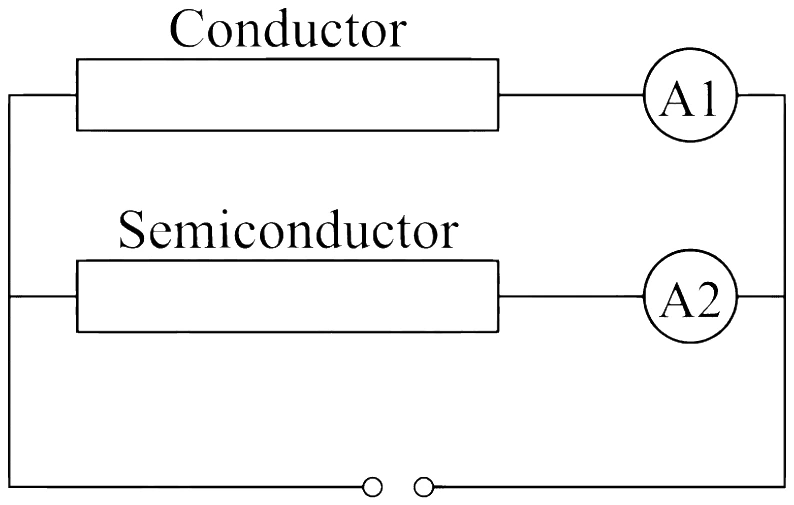
Answer: (a)
Step-by-step solution coming soon.
Ohm's Law, Resistivity & Temperature
The resistance of a field coil measures at and at . The temperature coefficient of resistance is
Answer: (b)
Step-by-step solution coming soon.
Ohm's Law, Resistivity & Temperature
The dimensional formula for specific resistance is:
Answer: (b)
Step-by-step solution coming soon.
Ohm's Law, Resistivity & Temperature
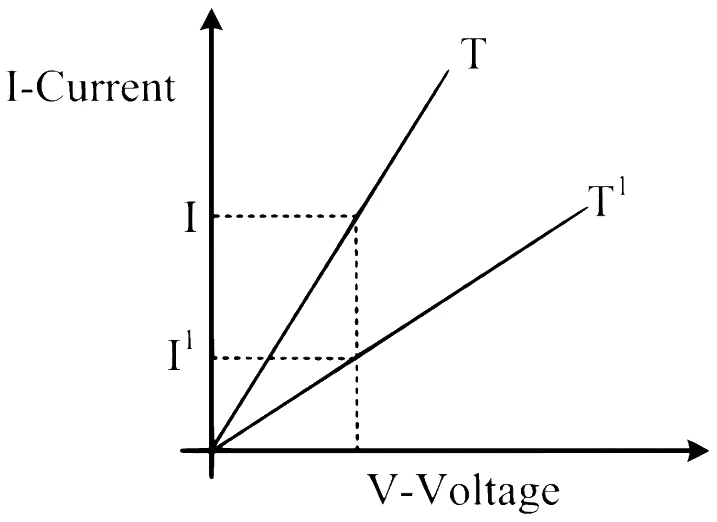
The voltage-current graph for a metal wire of uniform area of cross section at two different temperatures and is shown. Then choose the correct statement:
Answer: (c)
Step-by-step solution coming soon.
Ohm's Law, Resistivity & Temperature
A wire of length has a resistance of at . It is uniformly stretched so that its length increases by . Assuming the volume of the wire remains constant, the percentage change in resistance is . Alternatively, if the wire is heated [without stretching] through a temperature of and if the temperature coefficient of resistance of the material of the wire is , the percentage change in resistance is . The values of and are:
Answer: (b)
Step-by-step solution coming soon.
Ohm's Law, Resistivity & Temperature
The resistance of the conductor is . The angle made by the V-I graph with the voltage axis is .
Answer: (b)
Step-by-step solution coming soon.
Ohm's Law, Resistivity & Temperature
The resistance of a wire is at and at . The resistance of the wire at is
Answer: (a)
Step-by-step solution coming soon.
Ohm's Law, Resistivity & Temperature
The resistance of a long wire is . Its length is increased by by stretching the wire uniformly. The new resistance is
Answer: (b)
Step-by-step solution coming soon.
Ohm's Law, Resistivity & Temperature
The resistance of a wire at room temperature is found to be . If resistance of the wire increases by , then the temperature of the wire will be (The temperature coefficient of the material of the wire is )
Answer: (d)
Step-by-step solution coming soon.
Ohm's Law, Resistivity & Temperature
The current through a conductor is when the temperature is . It is when the temperature is . The current through the conductor at is
Answer: (c)
Step-by-step solution coming soon.
Ohm's Law, Resistivity & Temperature
A resistor of wire length and resistance is stretched in to a uniform wire of length, then the new resistance will be :
Answer: (a)
Step-by-step solution coming soon.
Ohm's Law, Resistivity & Temperature
The SI unit of electrical conductivity is :
Answer: (c)
Step-by-step solution coming soon.
Ohm's Law, Resistivity & Temperature
The resistance of a wire is ohm. If it is melted and stretched to times its original length, its new resistance will be
Answer: (c)
Step-by-step solution coming soon.
Ohm's Law, Resistivity & Temperature
Which of the following circuits is correct for verification of Ohm's law?
Answer: (b)
Step-by-step solution coming soon.
Ohm's Law, Resistivity & Temperature
Given below are two statements:
Statement-I: The resistivity of a conductor is independent of its temperature.
Statement-II: The resistivity of a semiconductor decreases with increase in temperature.
Select the correct option.
Answer: (d)
Step-by-step solution coming soon.
Ohm's Law, Resistivity & Temperature
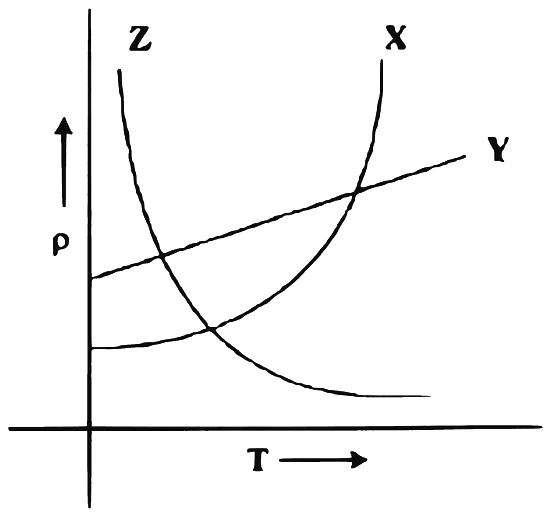
The variations of resistivity with absolute temperature for three different materials , and are shown in the graph below. Identify the materials , and .
Answer: (d)
Step-by-step solution coming soon.
Ohm's Law, Resistivity & Temperature
The graph between variation of resistance of a metal wire as a function of its diameter keeping other parameters like length and temperature constant is
Answer: (c)
Step-by-step solution coming soon.
Ohm's Law, Resistivity & Temperature
The range of electrical conductivity () and resistivity () for metals, among the following, is
Answer: (d)
Step-by-step solution coming soon.
Ohm's Law, Resistivity & Temperature
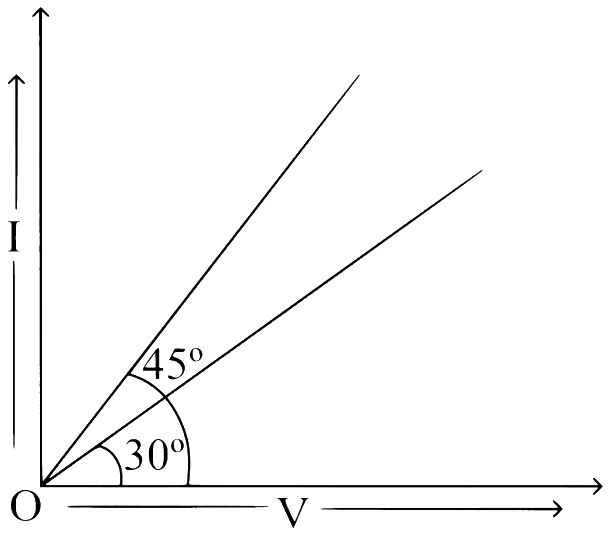
The graph for a conductor at two different temperatures and is as shown in the figure. The temperature coefficient of resistance of the conductor is about (in per degree Celsius)
Answer: (a)
Step-by-step solution coming soon.
Ohm's Law, Resistivity & Temperature
The resistance of a carbon resistor is . The colour of the third band is
Answer: (b)
Step-by-step solution coming soon.
Ohm's Law, Resistivity & Temperature
The four bands of a colour coded resistor are of the colours grey, red, gold and gold. The value of the resistance of the resistor is
Answer: (c)
Step-by-step solution coming soon.
Ohm's Law, Resistivity & Temperature
Wire bound resistors are made by winding the wires of an alloy of
Answer: (c)
Step-by-step solution coming soon.
Ohm's Law, Resistivity & Temperature
A wire of a certain material is stretched slowly by . Its new resistance and specific resistance becomes respectively
Answer: (a)
Step-by-step solution coming soon.
Ohm's Law, Resistivity & Temperature
A wire of resistance is stretched to twice its original length. The resistance of the new wire will be
Answer: (d)
Step-by-step solution coming soon.
Ohm's Law, Resistivity & Temperature
A metal rod of length and a rectangular cross-section of is connected to a battery across opposite faces. The resistance will be
Answer: (a)
Step-by-step solution coming soon.
Ohm's Law, Resistivity & Temperature
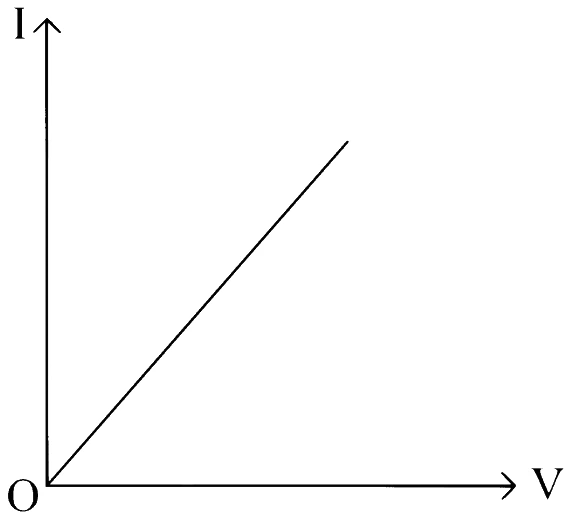
characteristic of a copper wire of length and area of cross-section is shown in figure. The slope of the curve becomes
Answer: (d)
Step-by-step solution coming soon.
Ohm's Law, Resistivity & Temperature
Masses of three wires of copper are in the ratio and their lengths are in the ratio . The ratio of their electrical resistance are
Answer: (d)
Step-by-step solution coming soon.
Ohm's Law, Resistivity & Temperature
Ohm's law is applicable to
Answer: (d)
Step-by-step solution coming soon.
Ohm's Law, Resistivity & Temperature
If the last band on the carbon resistor is absent, then the tolerance is
Answer: (b)
Step-by-step solution coming soon.
Ohm's Law, Resistivity & Temperature
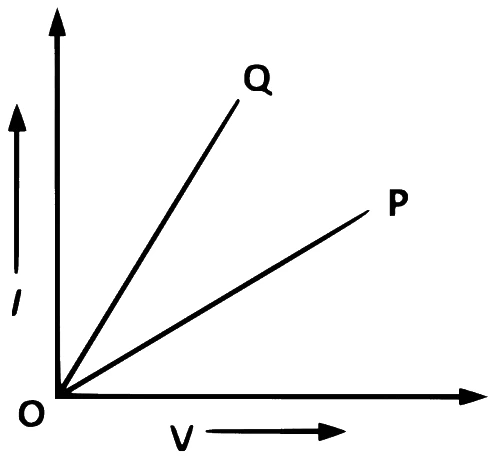
The graphs for two different electrical appliances P and Q are shown in the diagram. If and be the resistances of the devices, then
Answer: (b)
Step-by-step solution coming soon.
Ohm's Law, Resistivity & Temperature
Of the following graphs, the one that correctly represents the characteristics of a 'Ohmic device' is
Answer: (b)
Step-by-step solution coming soon.
Ohm's Law, Resistivity & Temperature
A piece of copper is to be shaped into a conducting wire of maximum resistance. The suitable length and diameter are ______ and ______ respectively.
Answer: (a)
Step-by-step solution coming soon.
Ohm's Law, Resistivity & Temperature
A resistor has three colour bands, Orange, Red and Black from left to right respectively, the value of resistance is
Answer: (b)
Step-by-step solution coming soon.
Ohm's Law, Resistivity & Temperature
A copper wire has a resistance of at , and its temperature coefficient of resistivity is . At , it carries a current of when a constant voltage is applied across its ends. If the wire is heated to , what is the current flowing through the wire now?
Answer: (c)
Step-by-step solution coming soon.
Ohm's Law, Resistivity & Temperature
The length and area of cross-section of a copper wire are respectively and . If the resistivity of copper is , then the resistance of the wire is
Answer: (c)
Step-by-step solution coming soon.
Ohm's Law, Resistivity & Temperature
A wire of resistance is stretched, so that its length increases by . The stretched wire is then bent in the form of a rectangle whose length and breadth are in the ratio . The effective resistance between the ends of any diagonal of the rectangle is
Answer: (a)
Step-by-step solution coming soon.
Ohm's Law, Resistivity & Temperature
Resistance of a wire is . It is drawn in such a way that it experiences a longitudinal strain of . The final resistance of the wire is
Answer: (b)
Step-by-step solution coming soon.
Ohm's Law, Resistivity & Temperature
A block has dimensions , and . The ratio of the maximum resistance to minimum resistance between any pair of opposite faces of the block is
Answer: (a)
Step-by-step solution coming soon.
Ohm's Law, Resistivity & Temperature
A lamp is rated at . When in use the resistance of the filament of the lamp is times that of cold filament. The resistance of the lamp when not in use is
Answer: (d)
Step-by-step solution coming soon.
Ohm's Law, Resistivity & Temperature
A uniform metal wire carries a current of when an ideal cell of is connected across it. The wire has mass , density and resistivity . Then the length of the wire is
Answer: (c)
Step-by-step solution coming soon.
Ohm's Law, Resistivity & Temperature
The resistance of wire at is . If the temperature coefficient of the resistance is . The temperature at which the resistance will be double of that at is
Answer: (b)
Step-by-step solution coming soon.
Ohm's Law, Resistivity & Temperature
The conductivity of a conductor decreases with temperature because, on heating
Answer: (a)
Step-by-step solution coming soon.
Ohm's Law, Resistivity & Temperature
The potential difference between the ends of a wire at all temperatures is constant and is . When the temperature of the wire is increased from to , its resistance increases by . If the temperature coefficient of resistance of the material of the wire is , then the current through the wire at is
Answer: (b)
Step-by-step solution coming soon.
Ohm's Law, Resistivity & Temperature
The lengths of two copper wires A and B are and respectively. If the mass of wire A is twice the mass of wire B and the electrical resistance of wire A is , then the electrical resistance of wire B is
Answer: (a)
Step-by-step solution coming soon.
Ohm's Law, Resistivity & Temperature
The resistance of a wire is at a temperature . If the temperature coefficient of resistance of the material of the wire is , its resistance at a temperature is nearly.
Answer: (a)
Step-by-step solution coming soon.
Ohm's Law, Resistivity & Temperature
When the temperature of a wire is increased from to , the resistance of the wire increases by . The temperature coefficient of resistance of the material of the wire is
Answer: (a)
Step-by-step solution coming soon.
Ohm's Law, Resistivity & Temperature
A conductor of length and area of cross-section has electrical resistance of . The current density in the conductor for an electric field of is
Answer: (d)
Step-by-step solution coming soon.
Ohm's Law, Resistivity & Temperature
A wire of resistance is stretched such that its length is doubled. Then the increase in its resistance is
Answer: (a)
Step-by-step solution coming soon.
Ohm's Law, Resistivity & Temperature
The electric resistance of a certain wire of iron is . If its length and radius are both doubled, then
Answer: (b)
Step-by-step solution coming soon.
Ohm's Law, Resistivity & Temperature
Two wires made of the same material have lengths in the ratio and radii in the ratio . If the same potential difference is applied across the ends of the wires, the ratio of the electric currents flowing through them is
Answer: (d)
Step-by-step solution coming soon.
Ohm's Law, Resistivity & Temperature
If the masses of three wires of same material are in the ratio of and their lengths are in the ratio of , then electrical resistances of these wires are in the ratio
Answer: (d)
Step-by-step solution coming soon.
Ohm's Law, Resistivity & Temperature
A cylindrical metallic wire is stretched to increase its length in such a way that the metallic wire changes its resistance by . The percentage increase in its length is
Answer: (c)
Step-by-step solution coming soon.
Ohm's Law, Resistivity & Temperature
The resistivity of a material is found to be , then the material would be
Answer: (a)
Step-by-step solution coming soon.
Ohm's Law, Resistivity & Temperature
A metal wire of length and radius has a resistance . If a wire of the same metal of length and radius is taken, then what will be its resistance?
Answer: (a)
Step-by-step solution coming soon.
Ohm's Law, Resistivity & Temperature
Statement I Specific resistance depends on nature of material and independent of temperature of the material.
Statement II A wire of resistance is drawn out, so that its new length is four times its original length. The resistance of the new wire is .
Statement III Drift velocity is the average constant velocity acquired by free electrons inside a metal by the application of an electric field which results in current. Which of the following is correct?
Answer: (c)
Step-by-step solution coming soon.
Ohm's Law, Resistivity & Temperature
The resistance of a wire is . It is stretched, so that the length becomes three times, then the new resistance of the wire will be
Answer: (d)
Step-by-step solution coming soon.
Ohm's Law, Resistivity & Temperature
A cylindrical wire has resistance . A second wire has length and diameter half that of . If the material of both the wires is same, then resistance of wire is
Answer: (b)
Step-by-step solution coming soon.
Ohm's Law, Resistivity & Temperature
A conductor of length and area of cross-section carries a current of . If the resistivity of the material of the conductor is , then the electric field across the conductor is
Answer: (a)
Step-by-step solution coming soon.
Ohm's Law, Resistivity & Temperature
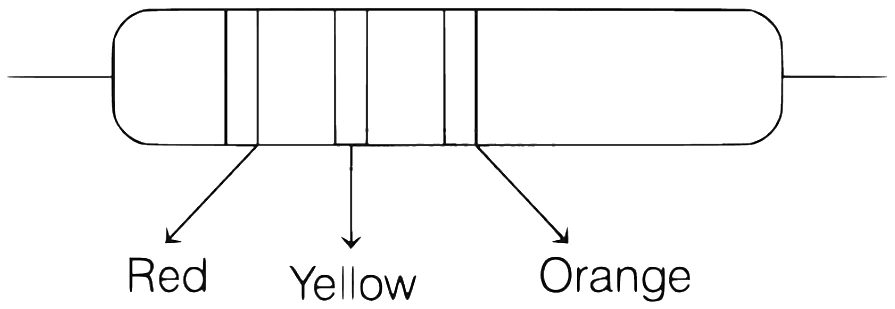
The carbon resistor with colour code is shown in the figure. There is no fourth band in the resistor. The value of the resistance is
Answer: (c)
Step-by-step solution coming soon.
Ohm's Law, Resistivity & Temperature
Two wires of same radius having lengths and and resistivities and are connected in series. The equivalent resistivity will be
Answer: (b)
Step-by-step solution coming soon.
Ohm's Law, Resistivity & Temperature
A wire of length and cross-sectional area has resistance . It carries a current when a voltage is applied to its ends. The wire is melted and drawn to double its length. If the same voltage were to be applied across the wire then
Answer: (d)
Step-by-step solution coming soon.
Ohm's Law, Resistivity & Temperature
Two wires and are made of the same material. The wire has twice the diameter and half the length as that of wire . If the resistance of wire is , the resistance of the wire will be
Answer: (c)
Step-by-step solution coming soon.
No questions match these filters.