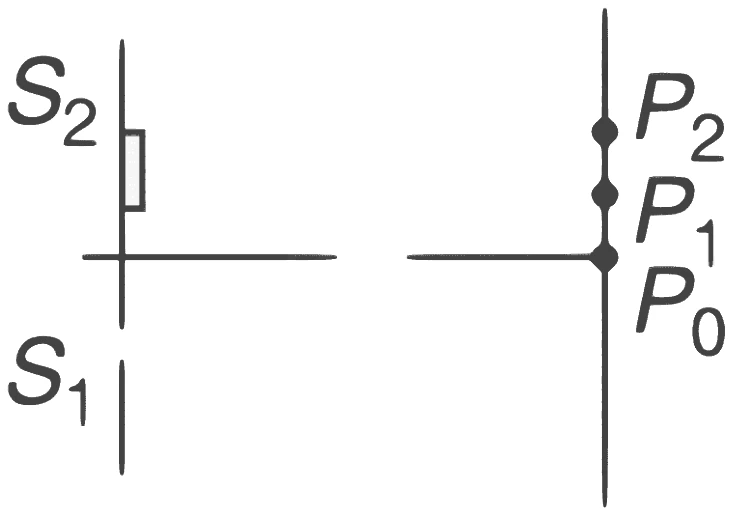
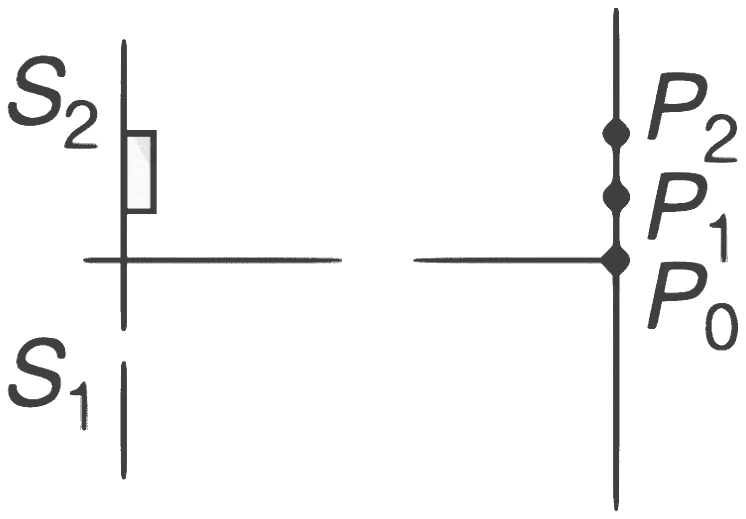
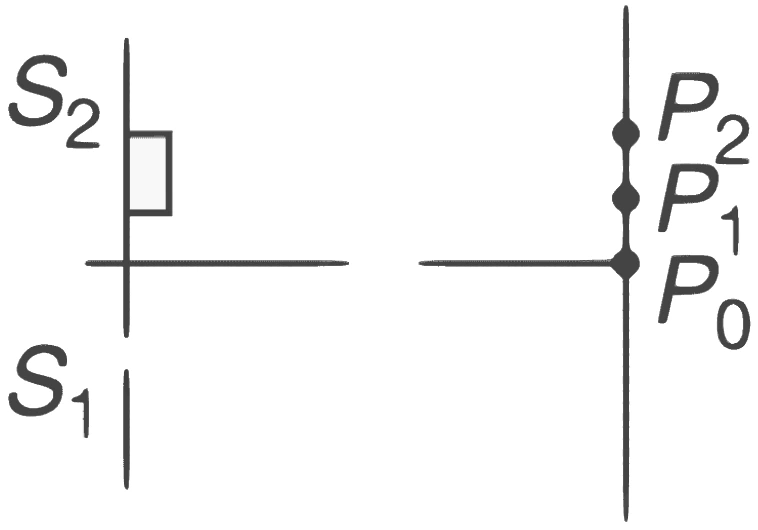
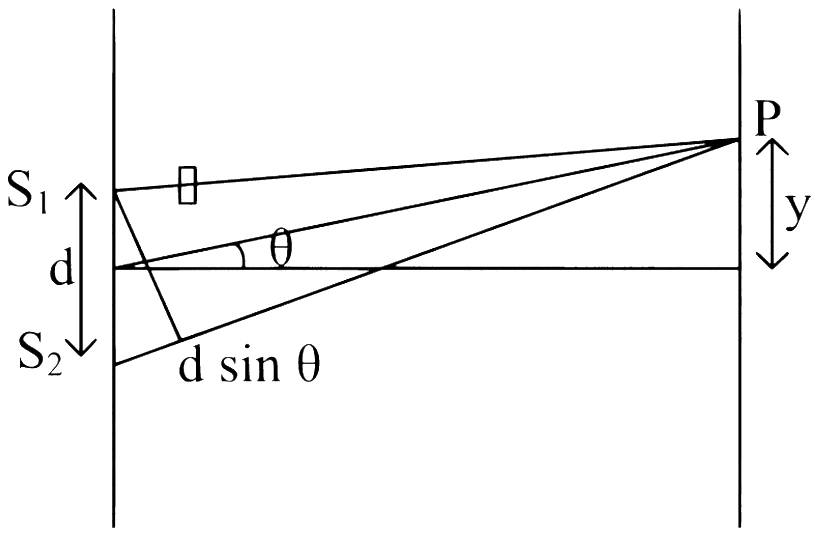
The thickness of a plate (refractive index μ) which will produce a change in optical path equal to half the wavelength λ of the light passing through it normally, is
A double slit experiment is immersed in water of refractive index 1.33. The slit separation is 1 mm, distance between slit and screen is 1.33 m. The slits are illuminated by a light of wavelength 6300 \AA. The fringewidth is x×10−4 m. The value of ′x′ is
A double slit experiment is immersed in water of refractive index 1.33. The slit separation is 1 mm, distance between slit and screen is 1.33 m. The slits are illuminated by light of wavelength 6300 \AA. The fringe width is
In Young's double slit experiment, the angular width of a fringe is found to be 0.2∘ on a screen placed 1m away. The wavelength of light used in 600 nm. If the entire apparatus is immersed in water of refractive index 4/3. the angular width of the fringe will be
In Young's double slit experiment, the fringe width of the interference pattern produced on the screen is 2.4μm. If the experiment is carried out in another medium having refractive index 1.2, the fringe width will be μm.
In the Young's double slit experiment, when a glass plate of thickness 't' is introduced in the path of one of the slits, the intensity at the position where the central maximum occurred previously remains unchanged. The minimum thickness of glass plate is [refractive index of glass plate = 1.5, wavelength of light in vacuum is λ]
In Young's experiment, one of the slit is covered with a transparent sheet of thickness 3.6×10⁻³ cm due to which position of central image shifts to a position originally occupied by 30th bright fringe. The refractive index of the sheet is (λ=6000 \AA)
A double slit experiment is performed with light of wavelength 500 nm. A thin film of thickness 2μm and refractive index 1.5 is introduced in the path of the upper beam. The location of the central maximum
In Young's double slit experiment, the slit width is 1 mm and screen is at a distance 2 m from slits. Light of 600 nm is used. If a thin glass plate of refractive index 1.5 of thickness 0.06 mm is placed over one of the slits then there will be a lateral displacement of the fringes by
When a glass plate of refractive index 1.44 is introduced in the path of one of the interfering beams, the fringes are displaced by a distance 'y'. If this plate is replaced by another plate of same thickness but of refractive index 1.66, the fringes will be displaced by a distance
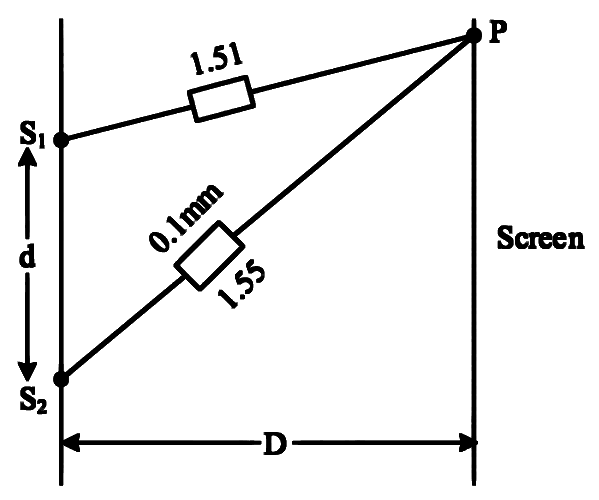
In Young's double slit experiment, two slits S1 and S2 are 'd' distance apart and the separation from slits to screen is D. Now if two transparent slabs of equal thickness 0.1 mm but refractive index 1.51 and 1.55 are introduced in the path of beam (λ=4000 Å) from S1 and S2 respectively. The central bright fringe spot will shift by ___ number of fringes.
In a double slit experiment the distance between the slits is 0.1 cm and the screen is placed at 50 cm from the slits plane. When one slit is covered with a transparent sheet having thickness t and refractive index n(=1.5), the central fringe shifts by 0.2 cm. The value of t is
In a double slit experiment, when one of the slits is covered by a transparent mica sheet of refractive index 1.56, the central fringe shifts to the position of 7th bright fringe, obtained with both slits uncovered. If the light source wavelength is 450 nm, the thickness of mica sheet is α×10−9 m. The value of α is
______.
Numerical answer type. Work it out, then open the answer.
In a Young's double slit experiment set up, the two slits are kept 0.4 mm apart and screen is placed at 1 m from slits. If a thin transparent sheet of thickness 20μm is introduced in front of one of the slits then center bright fringe shifts by 20 mm on the screen.
The refractive index of transparent sheet is given by 10α, where α is ______.
Numerical answer type. Work it out, then open the answer.
In an interference experiment, the mth bright fringe for light of wavelength λ1 coincides with the nth dark fringe for light of wavelength λ2. The ratio λ1λ2 is
In Young's double slit experiment, the distance between the slits is 3 mm and the slits are 2m away from the screen. Two interference patterns can be obtained on the screen due to light of wavelength 480 nm and 600 nm respectively. The separation on the screen between the 5th order bright fringes on two interference patterns is
A beam of light consisting of wavelengths 650 nm and 550 nm illuminates the Young's double slits with separation of 2 mm such that the interference fringes are formed on a screen, placed at a distance of 1.2 m from the slits. The least distance of a point from the central maximum, where the bright fringes due to both the wavelengths coincide, is ________ ×10−5 m.
Numerical answer type. Work it out, then open the answer.
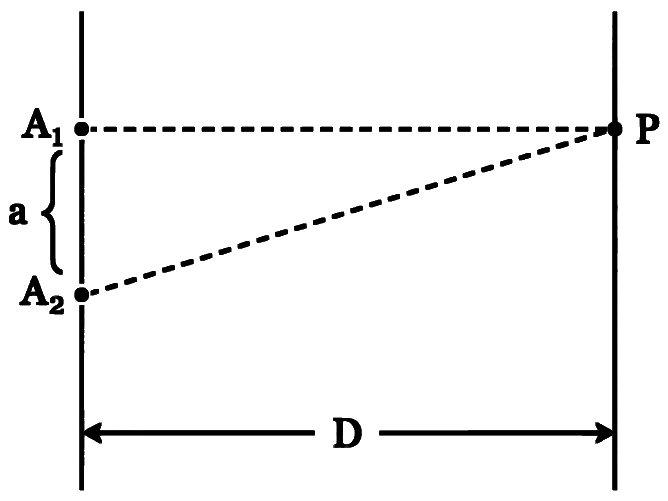
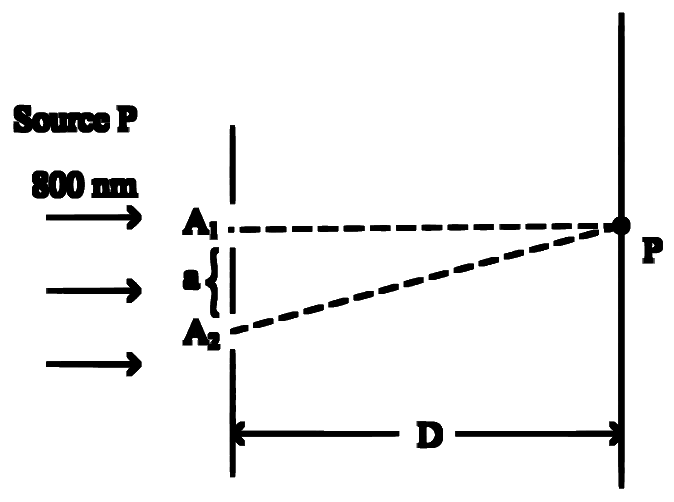
In Young's double slit experiment, two slits are illuminated with a light of wavelength λ. The line joining A1P is perpendicular to A1A2 as shown in figure. If the first minimum is detected at P, the value of slits separation 'a' will be
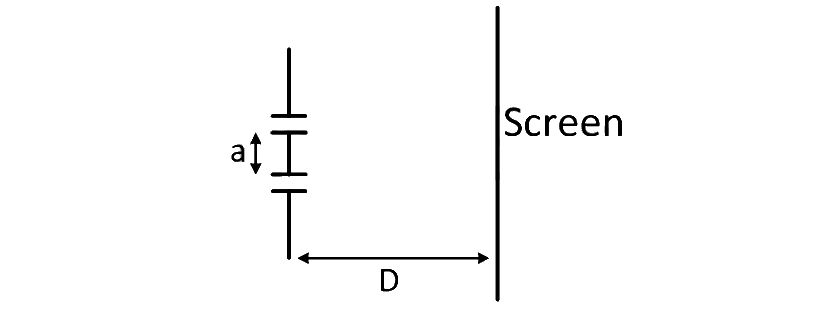
In Young's double slit experiment, in an interference pattern, a minimum is observed exactly in front of one slit. The distance between the two coherent sources is 'd' and 'D' is the distance between source and screen. The possible wavelengths used are inversely proportional to
The maximum intensity in a Young's double slit experiment is I0. Distance between the slits (d) is 5λ, where λ is the wavelength of light used. The intensity of the fringe, exactly opposite to one of the slits on the screen, placed at D=10d is ______.
A ray of light from a monochromatic point source of light is incident at a point on the screen. If a thin mica film of thickness ' t ' and refractive index ' n ' is introduced in its path, then the optical path
In Young's double slit experiment, the distance between screen and aperture is 1 m. The slit width is 2 mm. Light of 6000A˚ is used. If a thin glass plate ( μ=1.5) of thickness 0.04 mm is placed over one of the slits, then there will be a lateral displacement of the fringes by
Young's double slit interference apparatus is immersed in a liquid of refractive index 1.44. It has slit separation of 1.5 mm. The slits are illuminated by a parallel beam of light whose wavelength in air is 690 nm. The fringe-width on a screen placed behind the plane of slits at a distance of 0.72 m, will be:
In Young's double slit experiment, the distance between the slits is 2 mm and the slits are 1 m away, from the screen. Two interference patterns can be obtained on the screen due to light of wavelength ' λ1 ' and ' λ2 ' respectively. The separation on the screen between the 3rd order bright fringes on the two interference patterns is ( λ2=1.5λ1)
The Young's double slit interference experiment is performed using light consisting of 480 nm and 600 nm wavelengths to form interference patterns. The least number of the bright fringes of 480 nm light that are required for the first coincidence with the bright fringes formed by 600 nm light is
In Young's double slit experiment, in an interference pattern second minimum is observed exactly in front of one slit. The distance between the two coherent sources is ' d ' and the distance between source and screen is ' D '. The wavelength of light source used is
In Young's double slit experiment, in an interference pattern, a minimum is observed exactly in front of one slit. The distance between the two coherent sources is d and D is the distance between source and screen. The possible wavelengths used are proportional to
In Young's double slit experiment let 'd' be the distance between two slits and 'D' be the distance between the slits and the screen. Using a monochromatic source of wavelength ' λ ', in an interference pattern, third minimum is observed exactly in front of one of the slits. If at the same point on the screen first minimum is to be obtained, the required change in the wavelength is [ d&D are not changed].
Two light rays having the same wavelength ' λ ' in vacuum are in phase initially. Then, the first ray travels a path ' L1 ' through a medium of refractive index ' μ1 ' while the second ray travels a path of length ' L2 ' through a medium of refractive index ' μ2 '. The two waves are then combined to observe interference. The phase difference between the two waves is
Monochromatic light of wavelength 500 nm is used in Young's double slit experiment. An interference pattern is obtained on a screen. When one of the slits is covered with a very thin glass plate (refractive index =1.5), the central maximum is shifted to a position previously occupied by the 4th bright fringe. The thickness of the glass-plate is __________ μm.
Numerical answer type. Work it out, then open the answer.
In an interference experiment, the nth bright fringe for light of wavelength λ1(n=0,1,2,3…) coincides with the mth dark fringe for light of wavelength λ2(m=1,2,3…). The ratio λ2λ1 is
Two wavelengths λ1 and λ2 are used in Young's double slit experiment. λ1=450 nm and λ2=650 nm. The minimum order of fringe produced by λ2 which overlaps with the fringe produced by λ1 is n. The value of n is _______.
Numerical answer type. Work it out, then open the answer.
In Young's double slit experiment, the distance between the two coherent sources is ' d ' and the distance between the source and screen is ' D '. When the wavelength (λ) of light source used is 3Dd2, then nth dark fringe is observed on the screen, exactly in front of one of the slits. The value of ' n ' is
In Young's double slit experiment, in an interference pattern, second minimum is observed exactly in front of one slit. The distance between the two coherent sources is ' d ' and the distance between the source and screen is ' D '. The wave length of light (λ) used is
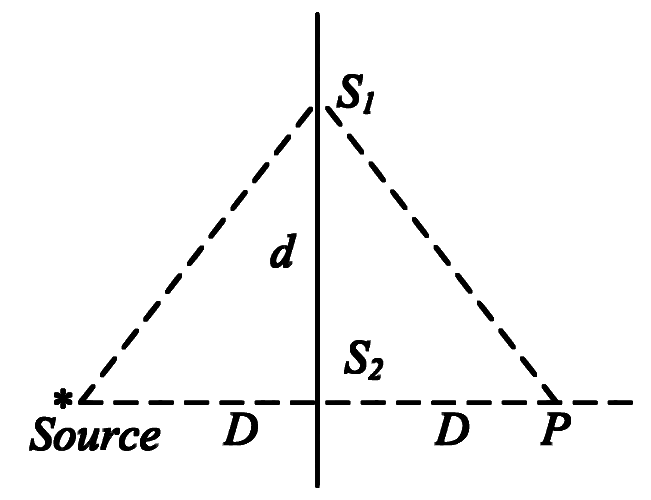
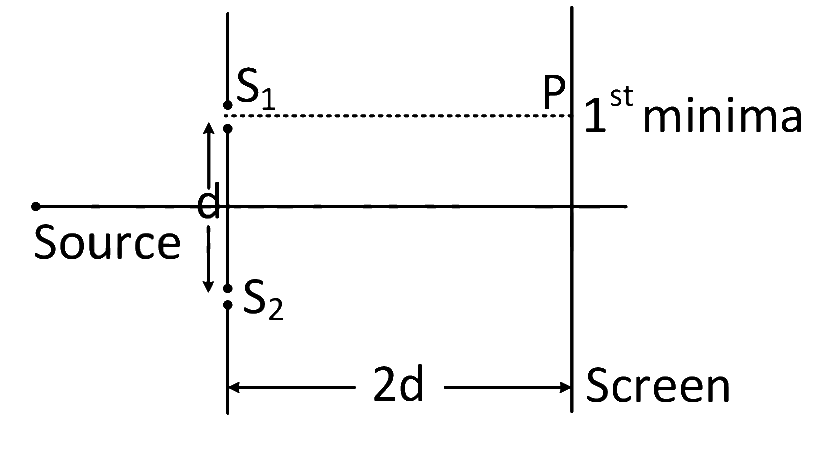
In a double slit experiment shown in figure, when light of wavelength 400 nm is used, dark fringe is observed at P. If D=0.2 m, the minimum distance between the slits S1 and S2 is _________ mm.
Numerical answer type. Work it out, then open the answer.
A double slit experiment is immersed in water of refractive index 1.33. The slit separation is 1 mm, distance between slit and screen is 1.33 m The slits are illuminated by a light of wavelength 6300A˚. The fringe width is
On placing a thin film of mica of thickness 12×10−5 cm in the path of one of the interfering beams in Young's double slit experiment using monochromatic light, the fringe pattern shifts through a distance equal to the width of bright fringe. If λ=6×10⁻⁵ cm, the refractive index of mica is
In Young's double slit experiment when a glass plate of refractive index 1.44 is introduced in the path of one of the interfering beams, the fringes are displaced by a distance 'y'. If this plate is replaced by another plate of same thickness but of refractive index 1.66, the fringes will be displaced by a distance
One of the slits in Young's double slit experiment is covered with a transparent sheet of thickness 2.9×10⁻³ cm. The central fringe shifts to a position originally occupied by the 25th bright fringe. If λ=5800A˚, the refractive index of the sheet is
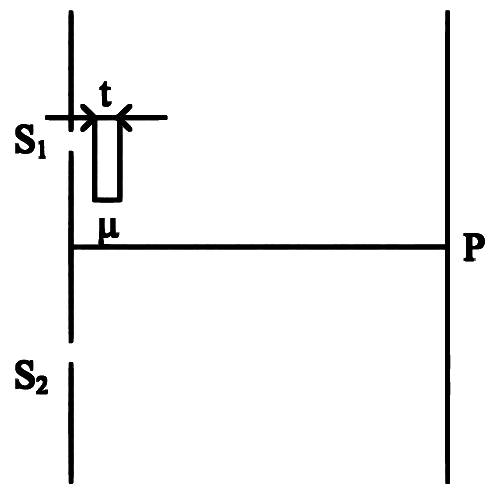
As shown in the figure, in Young's double slit experiment, a thin plate of thickness t=10μm and refractive index μ=1.2 is inserted in front of slit S1. The experiment is conducted in air (μ=1) and uses a monochromatic light of wavelength λ=500 nm. Due to the insertion of the plate, central maxima is shifted by a distance of xβ0.β0 is the fringe-width before the insertion of the plate. The value of the x is _____________.
Numerical answer type. Work it out, then open the answer.
In Young's double slit experiment, two slits S1 and S2 are 'd' distance apart and the separation from slits to screen is D (as shown in figure). Now if two transparent slabs of equal thickness 0.1 mm but refractive index 1.51 and 1.55 are introduced in the path of beam (λ=4000A˚) from S1 and S2 respectively. The central bright fringe spot will shift by ___________ number of fringes.
Numerical answer type. Work it out, then open the answer.
A beam of light consisting of two wavelengths 7000A˚ and 5500A˚ is used to obtain interference pattern in Young's double slit experiment. The distance between the slits is 2.5 mm and the distance between the plane of slits and the screen is 150 cm. The least distance from the central fringe, where the bright fringes due to both the wavelengths coincide, is n×10−5 m. The value of n is __________.
Numerical answer type. Work it out, then open the answer.
In Young's double slit experiment, the two slits are 'd' distance apart. Interference pattern is observed on a screen at a distance 'D' from the slits. A dark fringe is observed on a screen directly opposite to one of the slits. The wavelength of light is
In a Young's double slit experiment, two slits are illuminated with a light of wavelength 800 nm. The line joining A1P is perpendicular to A1A2 as shown in the figure. If the first minimum is detected at P, the value of slits separation 'a' will be:
Two light waves of wavelengths 800 and 600 nm are used in Young's double slit experiment to obtain interference fringes on a screen placed 7 m away from plane of slits. If the two slits are separated by 0.35 mm, then shortest distance from the central bright maximum to the point where the bright fringes of the two wavelength coincide will be ______ mm.
Numerical answer type. Work it out, then open the answer.
In Young's double slit experiment, the fringe width is 12 mm. If the entire arrangement is placed in water of refractive index 34, then the fringe width becomes (in mm):
In a Young's double slit experiment, an angular width of the fringe is 0.35∘ on a screen placed at 2 m away for particular wavelength of 450 nm. The angular width of the fringe, when whole system is immersed in a medium of refractive index 7/5, is α1. The value of α is ___________.
Numerical answer type. Work it out, then open the answer.
In Young's double slit experiment performed using a monochromatic light of wavelength λ, when a glass plate (μ = 1.5) of thickness xλ is introduced in the path of the one of the interfering beams, the intensity at the position where the central maximum occurred previously remains unchanged. The value of x will be:
In Young's double slit experiment the two slits are 0.6 mm distance apart. Interference pattern is observed on a screen at a distance 80 cm from the slits. The first dark fringe is observed on the screen directly opposite to one of the slits. The wavelength of light will be ____________ nm.
Numerical answer type. Work it out, then open the answer.
A double slit experiment is immersed in water of refractive index 1.33. The slit separationis 1 mm and the distance between slit and screen is 1.33 m. The slits are illuminated by a light of wavelength 6300A˚. The fringewidth is
The difference in the number of waves when yellow light propagates through air and vacuum columns of the same thickness is one. The thickness of the air column is ___________ mm. [Refractive index of air = 1.0003, wavelength of yellow light in vacuum = 6000 A˚]
Numerical answer type. Work it out, then open the answer.
In Young's double slit experiment, in an interference pattern, a minimum is observed exactly in front of one slit. The distance between the two coherent sources is 'd' and 'D' is the distance between the source and screen. The possible wavelengths used are inversely proportional to
Two light waves having the same wavelength λ in vacuum are in phase initially. Then the first wave travels a path L1 through a medium of refractive index n1 while the second wave travels a path of length L2 through a medium of refractive index n2. After this the phase difference between the two waves is:
In a double slit experiment, when light of wavelength 400 nm was used, the angular width of the first minima formed on a screen placed 1m away, was found to be 0.2°. What will be the angular width of the first minima, (μwater = 4/3) if the entire experimental apparatus is immersed in water?
In a double slit experiment, when a thin film of thickness t having refractive index μ. is introduced in front of one of the slits, the maximum at the centre of the fringe pattern shifts by one fringe width. The value of t is (λ is the wavelength of the light used):
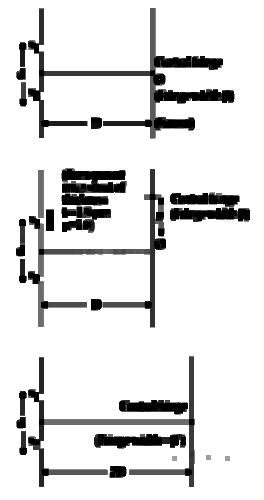
The figure shows a Young's double slit experimental setup. It is observed that when a thin transparent sheet of thickness t and refractive index μ is put in front of one of the slits, the central maximum gets shifted by a distance equal to n fringe widths. If the wavelength of light used is λ, t will be:
In Young's double slit experiment fifth dark fringe is formed opposite to one of the slits. D is the distance between the slits and the screen and d is the separation between the slits, then the wavelength of light used is
Consider a Young’s double slit experiment as shown in figure. What should be the slit separation d in terms of wavelength λ such that the first minima occurs directly in front of the slit (S1)?
In a Young's double slit experiment, the slits are placed 0.320 mm apart. Light of wavelength λ = 500 nm is incident on the slits. The total number of bright fringes that are observed in the angular range − 30°≤θ≤30° is:
Young's double slit experiment is first performed in air and then in a medium other than air. It is found that 8th bright fringe in the medium lies where 5th dark fringe lies in air. The refractive index of the medium is nearly
In a Young’s double slit experiment, slits are separated by 0.5 mm, and the screen is placed 150 cm away. A beam of light consisting of two wavelengths, 650 nm and 520 nm, is used to obtain interference fringes on the screen. The least distance from the common central maximum to the point where the bright fringes due to both the wavelengths coincide is
The intensity at the maximum in a Young's double slit experiment is I0. Distance between two slits is d = 5λ, where λ is the wavelength of light used in the expreriment. What will be the intensity in front of one of the slits on the screen placed at a distance D = 10d?
A thin glass plate of thickness 32500λ (λ is wavelength of light used) and refractive index μ=1.5 is inserted between one of the slits and the screen in Young's double slit experiment. At a point on the screen equidistant from the slits, the ratio of the intensities before and after the introduction of the glass plate is:
In Young's double slit experiment, the slits are 2 mm apart and are illuminated by photons of two ∘∘
wavelengths λ1 = 12000 A˚ and λ2 = 10000 A˚. At what minimum distance from the common central bright fringe on the screen 2 m from the slit will a bright fringe from one interference pattern coincide with a bright fringe from the other?
The source that illuminates the double-slit in 'double-slit interference experiment' emits two distinct monochromatic waves of wavelength 500 nm and 600 nm, each of them producing its own pattern on the screen. At the central point of the pattern when path difference is zero, maxima of both the patterns coincide and the resulting interference pattern is most distinct at the region of zero path difference. But as one moves out of this central region, the two fringe systems are gradually out of step such that maximum due to one wavelength coincides with the minimum due to the other and the combined fringe system becomes completely indistinct. This may happen when path difference in nm is:
A mixture of light, consisting of wavelength 590 nm and an unknown wavelength, illuminates Young's double slit and gives rise to two overlapping interference patterns on the screen. The central maximum of both lights coincide. Further, it is observed that the third bright fringe of known light coincides with the 4th bright fringe of the unknown light. From this data, the wavelength of the unknown light is:
Interference was observed in interference chamber where air was present, now the chamber is evacuated, and if the same light is used, a careful observer will see
In Young's double slit experiment, the fringe width is found to be 0.4 mm. If the whole apparatus is immersed in water of refractive index 34, without disturbing the geometrical arrangement, the new fringe width will be
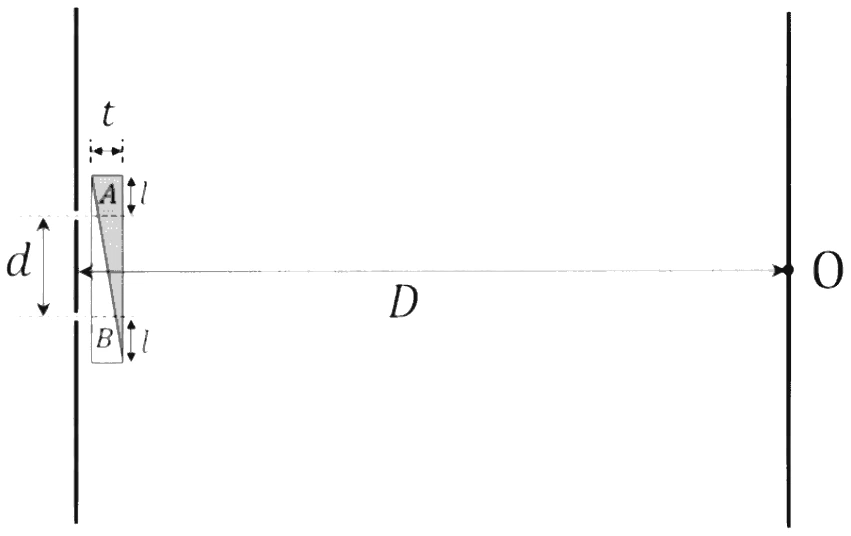
In a Young's double slit experiment, a combination of two glass wedges A and B, having refractive indices 1.7 and 1.5, respectively, are placed in front of the slits, as shown in the figure. The separation between the slits is d=2mm and the shortest distance between the slits and the screen is D=2m. Thickness of the combination of the wedges is t=12μm. The value of l as shown in the figure is 1mm. Neglect any refraction effect at the slanted interface of the wedges. Due to the combination of the wedges, the central maximum shifts (in mm) with respect to O by ______.
Numerical answer type. Work it out, then open the answer.
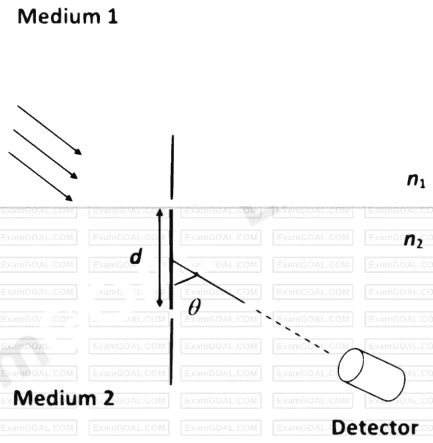
A double slit setup is shown in the figure. One of the slits is in medium 2 of refractive index n2. The other slit is at the interface of this medium with another medium 1 of refractive index n1(=n2). The line joining the slits is perpendicular to the interface and the distance between the slits is d. The slit widths are much smaller than d. A monochromatic parallel beam of light is incident on the slits from medium 1. A detector is placed in medium 2 at a large distance from the slits, and at an angle θ from the line joining them, so that θ equals the angle of refraction of the beam. Consider two approximately parallel rays from the slits received by the detector.
Which of the following statement(s) is(are) correct?
More than one option can be correct. Tap every correct option, then tap Check.
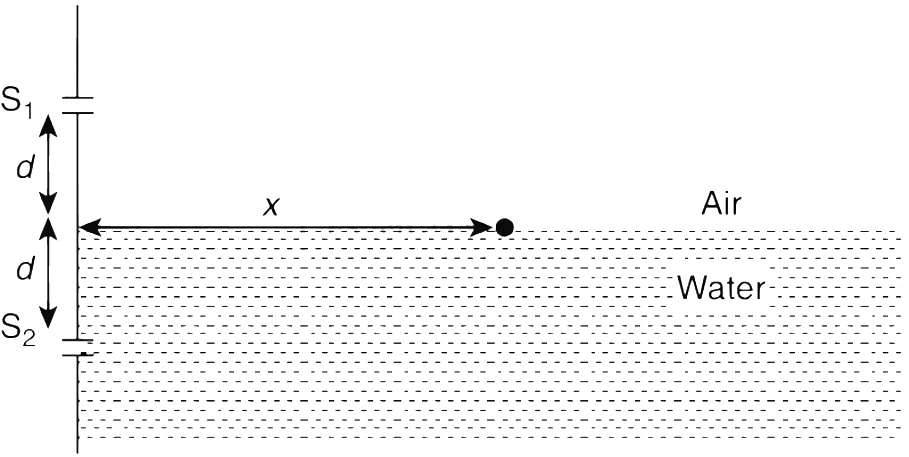
A Young's double slit interference arrangement with slits S1 and S2 is immersed in water (refractive index =4/3) as shown in the figure. The positions of maxima on the surface of water are given by x2=p2m2λ2−d2, where λ is the wavelength of light in air (refractive index =1). 2d is the separation between the slits and m is an integer. The value of p is
Numerical answer type. Work it out, then open the answer.
A light source, which emits two wavelengths λ1=400nm and λ2=600nm, is used in a Young's double-slit experiment. If recorded fringe widths for λ1 and λ2 are β1 and β2 and the number of fringes for them within a distance y on one side of the central maximum are m1 and m2, respectively, then
More than one option can be correct. Tap every correct option, then tap Check.
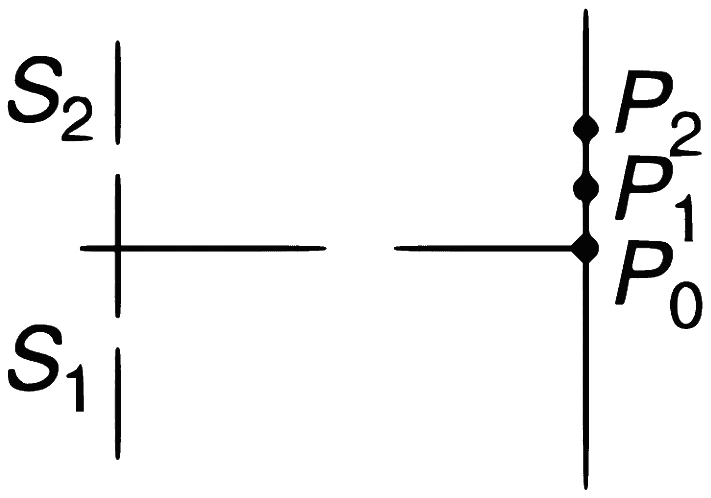
Column I shows four situations of standard Young's double slit arrangement with the screen placed far away from the slits S1 and S2. In each of these cases, S1P0=S2P0, S1P1−S2P1=λ/4 and S1P2−S2P2=λ/3, where λ is the wavelength of the light used. In the cases B, C and D, a transparent sheet of refractive index μ and thickness t is pasted on slit S2. The thickness of the sheets are different in different cases. The phase difference between the light waves reaching a point P on the screen from the two slits is denoted by δ(P) and the intensity by I(P). Match each situation given in Column I with the statement(s) in Column II valid for that situation:
Assertion: If a glass slab is placed in front of one of the slits, then fringe width will decrease. Reason: Glass slab will produce an additional path difference.
Assertion: The pattern and position of fringes always remain same even after the introduction of transparent medium in a path of one of the slit. Reason: The central fringe is bright or dark depends upon the initial phase difference between the two coherence sources.
In each of the following questions a statement of Assertion is given followed by a corresponding statement of Reason just below it. Of the statements mark the correct answer is Assertion: In Young's double slit experiment the two slits are at distance d apart. Interference pattern is observed on a screen at distance D from the slits. At a point on the screen when it is directly opposite to one of the slits, a dark fringe is observed. Then, the wavelength of wave is proportional to square of distance of two slits. Reason: For a dark fringe intensity is zero.
Assertion: The pattern and position of fringes always remain same even after the introduction of transparent medium in a path of one of the slits. Reason: The central fringe is bright or dark does not depend upon the initial phase difference between the two coherence sources.
A monochromatic beam of light is used for the formation of fringes on the screen by illuminating the two slits in Young's double slit interference experiment. When a thin film of mica is interposed in the path of one of the interfering beams, then
White light is used to illuminate two slits in Young's double slit experiment. The separation between the slits is b and the screen is at a distance d(≫b) from the slits. At a point on the screen directly in front of one of the slits, which wavelengths are missing?
In a YDSE, the light of wavelength λ=5000A˚ is used, which emerges in phase from two slits at a distance d=3×10⁻⁷m apart. A transparent sheet of thickness t=1.5×10⁻⁷m and refractive index μ=1.25 is placed over one of the slits. What is the new angular position of the central maxima of the interference pattern, from the centre of the screen? Find the value of y.
In a Young's double slit arrangement, fringes are produced using light of wavelength 4000A˚. One slit is covered by a thin plate of glass of refractive index 1.4 and the other with another glass plate of same thickness but of refractive index 1.7. By doing so the central bright fringe shifts to original sixth fringe from centre. Thickness of glass plate is ______.
In Young's double slit experiment the two slits are illuminated by light of wavelength 5890A˚ and the angular distance between the fringes obtained on the screen is 0.2∘. If the whole apparatus is immersed in water, then the angular fringe width will be (refractive index of water is 4/3)
When a plastic thin film of refractive index 1.45 is placed in the path of one of the interfering waves, the central fringe is displaced through the width of five fringes. The thickness of the film, if the wavelength of light is 5890A˚, will be
Two light rays having the same wavelength in vacuum are in phase initially. Then, the first ray travels a path L1 through a medium of refractive index μ1 while the second ray travels a path L2 through a medium of refractive index μ2. The two waves are then combined to observe interference. The phase difference between the two waves is
Two light rays having the same wavelength λ in vacuum are in phase initially. Then the first ray travels a path l1 through a medium of refractive index n1 while the second ray travels a path of length l2 through a medium of refractive index n2. The two waves are then combined to observe interference. The phase difference between the two waves is
The width of the fringes obtained with a light of wavelength λ is 1.82mm. If the whole apparatus is immersed in a liquid of refractive index 1.3, what will be the width of the resulting fringe?
In a Young's double slit experiment, the slit separation is 1.5mm. The setup is illuminated simultaneously by light of wavelengths 6000A˚ and 8000A˚. The screen is placed at a distance of 1.5m from the slits. It is observed that at a certain point P on the screen which is 4.8mm from the central maximum, fringes due to both the wavelengths coincide. Which of the following options are correct? A. Light of wavelength 6000A˚ produces a dark fringe and light of wavelength 8000A˚ produces a bright fringe at P B. Light of wavelength 6000A˚ produces a bright fringe and light of wavelength 8000A˚ produces a dark fringe at P C. Light of wavelength 6000A˚ and light of wavelength 8000A˚ both produce a dark fringe at P D. Light of wavelength 6000A˚ and light of wavelength 8000A˚ both produce a bright fringe at P
A monochromatic light of wave length 6000A˚ is passed through two media A and B of thickness 10cm and 16cm respectively. The number of waves in A is 21 that of B. If the refractive index of A is 34, find the refractive index of B.
In Young's double slit experiment light of wavelength 500nm is used to form interference pattern. A uniform glass plate of refractive index 1.5 and thickness 0.1mm is introduced in the path of one of the interfering beams. The number of fringes that will shift due to this is
The width of the fringes obtained in the Young's double slit experiment is 2.6mm when light of wavelength 6000A˚ is used. If the whole apparatus is immersed in a liquid of refractive index 1.3, the new fringe width will be :
In the Young's double slit experiment nth bright for red coincides with (n+1)th bright for violet. Then the value of n is: (given: wavelength of red light =6300A˚ and wavelength of violet =4200A˚).
In Young's double slit experiment, the fringe width is found to be 0.4mm. If the whole apparatus is immersed in a liquid of refractive index 34 without changing geometrical arrangement, the new fringe width will be
In Young's double slit experiment, how many maxima can be seen on a screen (including central maxima) if d=25λ (where λ is wavelength of light and d is distance between the two slits)?
In Young's double slit experiment, the distance between the slits and the screen is 1.2m and the distance between the two slits is 2.4mm. If a thin transparent mica sheet of thickness 1μm and refractive index 1.5 is introduced in the path of one of the interfering beams, the shift in the position of the central bright fringe is
In Young's double slit experiment, two wavelengths λ1=780nm and λ2=520nm are used to obtain interference fringes. If the nth bright band due to λ1 coincides with the (n+1)th bright band due to λ2, then the value of n is
In Young's double slit experiment, slits are separated by 2mm and the screen is placed at a distance of 1.2m from the slits. Light consisting of two wavelengths 6500A˚ and 5200A˚ is used to obtain interference fringes. Then, the separation between the fourth bright fringes of the two different patterns produced by the two wavelengths is
Interference fringes produced by a double slit arrangement using monochromatic light of wavelength 5890A˚ have an angular fringe width 0.28∘. If the entire arrangement is immersed in water, the new angular fringe width will be (aμw=4/3)
Young's double slit experiment is conducted in water. The refractive index of water is 1.33. The wavelength of incident light is 6000A˚ and the separation between the slits is 2mm. The fringe width is 0.63mm. The distance between the screen and the slits is
In Young's double slit experiment, the Y-coordinates of the central maximum and the 10th maximum are 2cm and 5cm respectively. When this apparatus is immersed in a liquid of refractive index 1.5, the corresponding Y-coordinates will be
In Young's double slit experiment, the wavelengths of red and blue lights used are 7.5×10⁻⁵cm and 5×10⁻⁵cm respectively. If the nth bright fringe of red colour coincides with the (n+1)th bright fringe of blue colour, then the value of n is
Young's double slit experiment is conducted with monochromatic light of wavelength 5000A˚, with slit separation 3mm and the observer 20cm away from the slits. If a 1mm thick transparent plate is placed in front of one of the slits, the fringes shift by 6mm. The refractive index of the transparent plate is
In Young's double slit experiment the slits are 3mm apart and are illuminated by light of two wavelengths 3750A˚ and 7500A˚. The screen is placed at 4m from the slits. The minimum distance from the common central bright fringe on the screen at which a bright fringe of one interference pattern coincides with a bright fringe of the other is
When Young's double slit experiment is performed in air, the Y-coordinates of the central maximum and the 10th maximum are 2cm and 5cm respectively. If the apparatus is immersed in a liquid of refractive index 1.5, the corresponding Y-coordinates will be
In a double slit experiment performed in air, the angular width of a fringe is found to be 0.15∘ on a screen placed 80cm away. The wavelength of light used is 490nm. The angular width of the fringe, if the entire apparatus is immersed in a medium of refractive index 35, is
A Young's double slit experiment apparatus has slits separated by 0.2mm and a screen 60cm away from the slits. The whole apparatus is immersed in a liquid medium of refractive index 11/9 and the slits are illuminated with green light (λ=550nm in vacuum). Find the fringe width of the pattern formed on the screen.
In Young's double slit experiment, for what order n does the wavelength of red light (λ=780nm) coincide with the (n+1)th order of blue light (λ=520nm)?
The angular width of a fringe in a double slit experiment is found to be 0.2∘ on a screen 1m away. The wavelength of light used is 600nm. The change in angular width of the fringe, if the entire measurement system is immersed in water, is [use refractive index of water as 4/3]
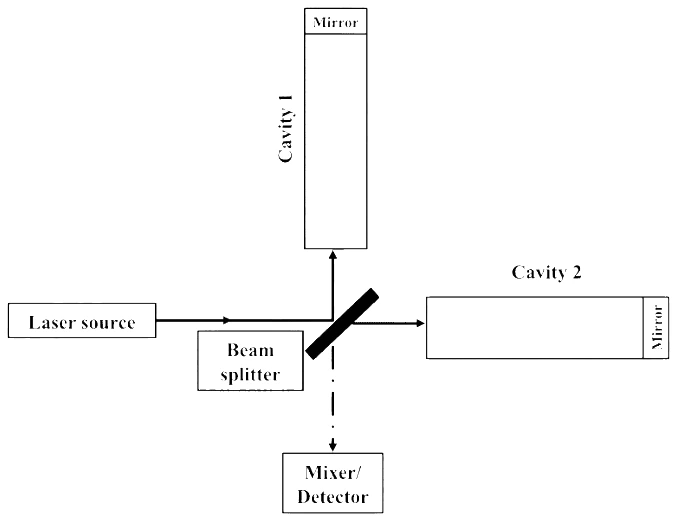
A laser beam of wavelength 1μm is split and sent into two vacuum cavities of equal length L as shown in the figure. A detector can register an interference signal only if the phase difference between the returning beams is at least 5×10⁻¹¹rad. A certain physical effect changes the length of cavity 2 by an amount ΔL such that ΔL/L≃10−21. The minimum cavity length (in km) needed for measuring this physical effect is approximately
In a Young's double slit experiment 10 fringes are observed in a given segment of the screen when light of wavelength 500.0nm is used. When the experiment is performed in a medium of refractive index 1.2, the number of fringes observed in the same segment remains 10. The wavelength of light used in this case is
Two coherent point radio sources S1 and S2, separated by a distance d=2.3cm, are radiating radio waves of wavelength λ=1cm. A detector is moved in the plane of the sources along a circular path of radius R with centre at the midpoint between S1 and S2, R≫d. The number of interference maxima that will be detected as the detector completes one circle is
A Young's double-slit experimental set up is kept in a medium of refractive index (34). Which maximum in this case will coincide with the 6th maximum obtained if the medium is replaced by air?